Listen to New Voices on Studs Terkel our partnership with 826CHI-here! Read the Story


Showing 931 - 945 of 1649 results
-

Dr. Quentin Young discusses his work at Cook County Hospital
Aug. 20, 1974 Dr. Young talks about his policy about addictive medications at Cook County Hospital, and about the financially driven connections between pharmaceutical companies and doctors.
-
Dr. Meir Yoeli discusses medicine
1969 It is not enough to just treat a disease, explained Dr. Meir Yoeli. Dr. Yoeli said there needs to be a bridge for both science and for the truth of the heart. Also a poet, Dr. Yoeli reads a poem in English and then in Hebrew.
-
Dr. John C. Lilly discusses his book "Center of the Cyclone"
Feb. 22, 1972 Discussing the book "Center of the Cyclone: An Autobiography of Inner Space" with the author Dr. John C. Lilly.*Please note: some sections have been edited out from the original recording due to copyright considerations
-
Dr. Dalma Hunyadi Brunauer sings and discusses Bulgarian folk music ; part 1
Oct. 16, 1962 *Please note: some sections have been edited out from the original recording due to copyright considerations
-
Dr. Charles Clements discusses his book "Witness to War"
Apr. 29, 1985 After having flown 50 missions in Vietnam, Charles Clements went to medical school and became a physician and a human rights activist. Dr. Clements talks about his observations in the poorest sections of Nicaragua. Because medicine for the poor people was considered contraband, Clements had to resort to putting rusty nails into a cup of water and having his patients drink the water for iron supplements. Clements reminds the audience if we don't know our history, we are bound to repeat it.
-
Dr. Carlo Levi discusses Italian literature; Julio & Phillipo sing nursery rhymes, Maria Caniglia discusses opera; part 2
1962 Dr. Carlo Levi talks about the differences in Italian and American literature in the first part. In the second part, children Julio and Phillipo sing Italian nursery rhymes. In the last part, Maria Caniglia and husband Pino Donati discuss opera; part 2.
-
Dr. Carlo Levi discusses his exile and humanity in southern Italy after WW2; part 1
1962 Dr. Carlo Levi talks about his book "Christ Stopped at Eboli", the human condition, and compassion for those suffering during and after World War 2.
-
Dr. C. L. R. James discusses his book "Black Jacobins"
1970 Trinidadian historian Dr. C.L.R. James discusses his book "The Black Jacobins: Toussaint L'Ouverture and the San Domingo Revolution." The book was originally published in 1938. At the end of the interview, the song "Voodoo American: Bya Bulako" by Michel LaRue is played (00:46:26-00:51:
-

Dr. Benjamin Spock and Dr. Michael B. Rothenberg discuss the 40th anniversary of the book “Baby and Child Care”
Mar. 11, 1985 Dr. Benjamin Spock and Dr. Michael B. Rothenberg discuss the 40th anniversary edition of the book “Baby and Child Care.” The two discuss the changes they've made to the book, criticism they’ve faced since releasing the book, and how they’ve rethought gender roles in childcare. Studs plays “Hush Little Baby” - The Weavers (1955).
-
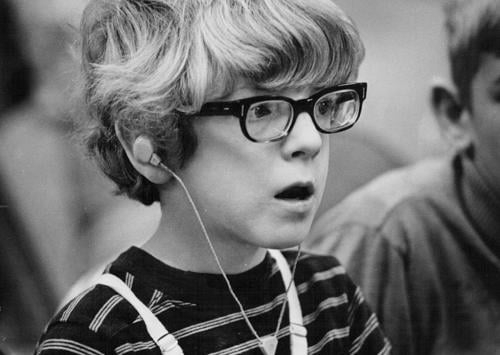
Dr Eugene Mindel discusses the book "They Grow in Silence: The Deaf Child and His Family"
1970 Dr. Eugene Mindel, child psychologist and author, discusses his book, "They Grow in Silence: The Deaf Child and His Family,". Dr. Mindel and Studs talk about deaf children and how they learn to communicate without the ability to hear or speak. Studs reads an excerpt from the book about a deaf person feeling locked into themselves. Studs and Dr. Mindel talk about the the book "In this sign" by Joanne Greenberg a novel that portrays the isolation and loneliness of the deaf couple and the struggle of their hearing daughter.
-
Douglas W. Druick discusses the book "Odilon Redon: Prince of Dreams, 1840-1916"
Aug. 30, 1994 Douglas W. Druick, scholar and curator of the Art Institute of Chicago, discusses his book "Odilon Redon: Prince of Dreams, 1840-1916." The interview explores Redon's life and art work, including his techniques he developed because of the time period he lived in.
-
Douglas Dowd discusses his book "Blues For America: A Critique, A Lament, and Some Memories"
May. 5, 1997 Author Douglas Dowd discusses topics from his book "Blues For America: A Critique, A Lament, and Some Memories," including war, religion, and American history.
-
Douglas Clayton discusses his book "Floyd Dell"
Dec. 27, 1995 Douglas Clayton's book, "Floyd Dell: The Life and Times of an American Rebel" is a biography of a well-known author of his time. Clayton pointed out what's covered in his book. Not only did Dell write a number of books, but he also wrote a play. He was also charged twice for his subversive literature. He worked for the WPA under FDR in 1935.
-
Doug Marlette discusses "There's No Business Like Soul Business"
May. 15, 1987 Reverend Will B. Dunn and Mother Teresa are among the many subjects of Doug Marlette's book, "There's No Business Like Soul Business." Marlette explained his cartoons are either political or they deal with the religious right and race relations. The majority of the interview consists of Marlette and Studs Terkel reading lines from the cartoons in the book.
-
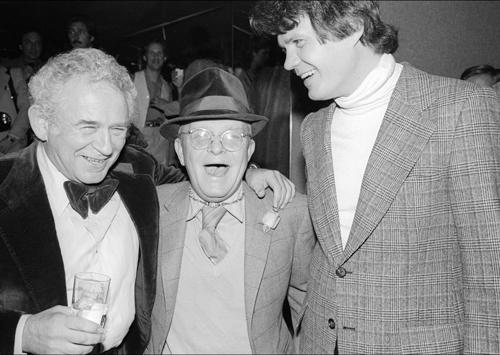
Dotson Rader discusses his book "I ain't marchin'anymore" with Studs Terkel
Feb. 26, 1971 The program starts with a short clip of Studs Terkel interviewing Peggy Terry talking about The Great Depression and American propaganda during Vietnam War. After that clip. Dotson Rader starts to talk about his book "I ain't marchin' anymore"