

-

Interview with Barbara Cartland
Mar. 5, 1970 Interviewing Barbara Cartland at her castle and a Welsh physician in Tavistock Square while Studs was in England.
-
Howard Wolinsky and Tom Brune discuss their book “The Serpent on the Staff: The Unhealthy Politics of the American Medical Association”
Sep. 8, 1994 Authors and journalists Howard Wolinsky and Tom Brune discuss their book “The Serpent on the Staff: The Unhealthy Politics of the American Medical Association.” They discuss the political aspects of the healthcare and medical industry in the United States, with particular emphasis placed on the business-side of the American Medical Association (AMA). This program includes an excerpt of an interview with Dr. Quentin Young discussing the AMA. Studs plays "Like a Surgeon" - "Weird Al" Yankovic (1985).
-
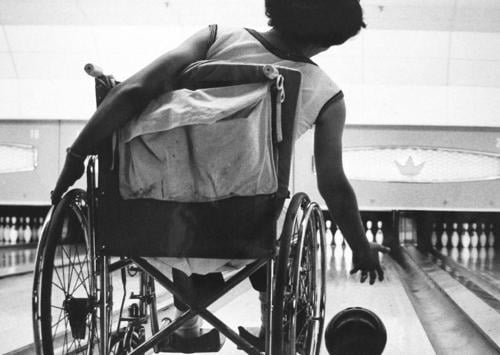
Hollie Brock and Jim Potter both paraplegics, discuss what it is to "be" a paraplegic
1968 Mr. Brock, a recreational therapist, and Mr. Hollie, a nurse, discuss paraplegia. Each of the gentlemen discuss the individual accidents that caused their injuries, their recovery and how they got through it. They talk to Studs about the things they enjoy doing and goals they are trying to reach.
-

Garrett O'Connor discusses "Reflections in the rubble."
Feb. 1, 1970 Psychiatrist Dr. Garrett O'Connor discusses his article "Reflections in the rubble: some thoughts in the aftermath of civil disorder." Topics of conversation include his experiences working in community clinics with blue collar workers and African Americans; the ways that poverty, racism, and classism are maintained by the American economy; the Martin Luther King, Jr.
-
-
Edward de Bono discusses his book “The Five-Day Course in Thinking” ; part 2
Author, physician, and inventor Edward de Bono discusses his book “The Five-Day Course in Thinking,” and touches on ideas like lateral thinking and vertical thinking. Includes an interview with Peter Lyon.
-
Edward de Bono discusses his book “The Five-Day Course in Thinking” ; part 1
Author, physician, and inventor Edward de Bono discusses his book “The Five-Day Course in Thinking,” and touches on ideas like lateral thinking and vertical thinking.
-
Drs. Quentin Young, Ron Shansky and Mike Gray talks with Studs Terkel
Dec. 3, 1975 Interviewing Dr. Quentin Young and others about Cook County Hospital and public health services in Chicago and throughout the country.
-
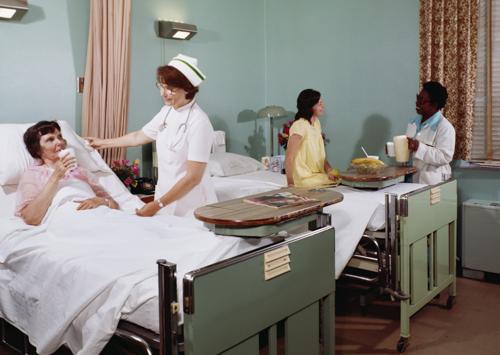
Drs. Quentin Young, Lambert King and Robert Maslansky discuss public hospitals in the United States
Apr. 26, 1976 Drs. Quentin Young, Lambert King and Robert Maslansky discuss public hospitals in the United States. Young is the chairman of the Department of Medicine at Cook County Hospital, King is the medical director of Cermak Memorial Hospital, and Maslansky is the director of medical education at Cook County Memorial Hospital.
-
Dr. Willard Gaylin discusses his book "Rediscovering Love"
Oct. 10, 1986 Thinking a person is special and trusting that person and committing yourself to that person are two steps for real love, as covered in Dr. Willard Gaylin's book, "Rediscovering Love". One can not go through life in an armored car but rather Gaylin talks about taking risks. One of Gaylin's last points, if you find yourself in a loveless life, to compensate, give love away.
-
Dr. Willard Gaylen discusses his book "Feelings" and how humanity and feelings are connected
Feb. 23, 1979 Dr. Williard Gaylen, a physician and professor of psychiatry at Columbia, discusses how feelings define humanity. He explains that there are no "bad" or "good" feelings, because even anxiety and guilt are strictly human emotions. Dr. Gaylen also talks about how envy is the only useless feeling. Two recordings of people talking about pride and guilt are also played.
-
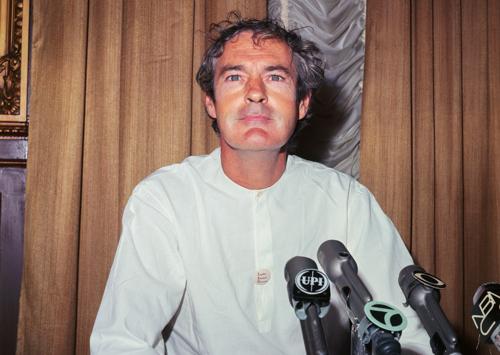
Dr. Timothy Leary discusses the stages of the psychadelic experience of turning on and his role as a Shaman ; part 2
Dec. 1, 1966 Studs interviews Dr. Timothy Leary about the three stages of the psychadelic experience: turning on, tuning in, and dropout. Leary discusses how his life changed from being a successful psychologist and professor at Harvard to renewing his life as a religious teacher. He shares how the drug LSD is used in the tribal communities who turn on and also explains the values of those who practice turning on. Leary also describes other methods used to turn on, which he considers a religious experience. Studs reads what Richard Goldstein said about Dr. Leary.
-
Dr. Theodor Rosebury discusses his book "Microbes and Morals" and the cultural history of communicable diseases and infections
1970 Dr. Theodor Rosebury discusses the history and myths of communicable and sexually transmitted infections, how they are represented in media, and the impact of shame.
-
Dr. Theodor Rosebury discusses his book "Life on Man"
1969 Dr. Theodor Rosebury dissects cultural ideas around cleanliness and shame as presented in his book "Life of Man".
-
Dr. Samuel Epstein reads from and discusses his book, "The Politics of Cancer"
Nov. 18, 1978 Making people aware that toxic chemicals in our everyday lives can cause cancer has been one of Dr. Samuel Epstein’s main goals. According to his book, “The Politics of Cancer,” the government really won’t step in until there is a public outcry.