

-

P. David Finks discusses his book "The Radical Vision of Saul Alinsky"
Sep. 7, 1984 Before he became an author, P. David Finks was a priest and he met Saul Alinsky in Rochester in 1964. Finks' book, "The Radical Vision of Saul Alinsky," covers Alinsky's plans of reorganizing community groups and being an outsider agitator. Alinsky, explained Finks, knew the importance of getting people involved. Two excerpts of interviews with Saul Alinsky are included.
-
-
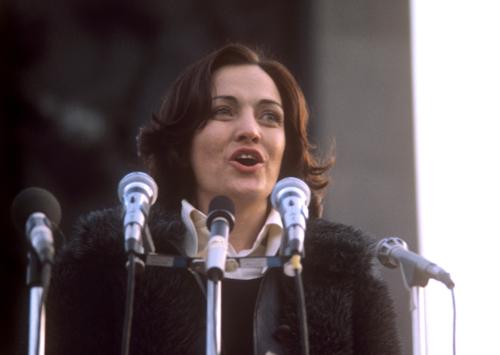
Nobel Peace Prize recipient Mairead Corrigan Maguire discusses the struggle for peace in Northern Ireland, and around the world
Dec. 1, 1993 Nobel Peace Prize recipient Mairead Corrigan Maguire discusses the struggle for peace in Northern Ireland, and around the world. Maguire, an Irish peace activist, founded Community of Peace People.
-
Nicola Geiger discusses her background and her time spent in the far east
Oct. 21, 1974 Born in Hamburg, Nicola Geiger, recalls her upbringing and her life under Nazi Germany. She lost two children in World War II. Later in life, she worked in both Japan and Korea. Geiger knew that she alone could not change the world but that she worked tirelessly to get other people to work on peace, too.
-
-
Nicholas Von Hoffman discusses his novel, "Two Three Many More" with Studs Terkel
1970 Nicholas Van Hoffman discusses the characters of his novel, "Two Three Many More" about campus protests against the Vietnam War. Political viewpoints, regulations, and character analysis are discussed. Von Hoffman opens the interview with a reading from the opening of the book that mentions peace, solidarity, and disunity. Terkel and Von Hoffman read excerpts together from the book.
-
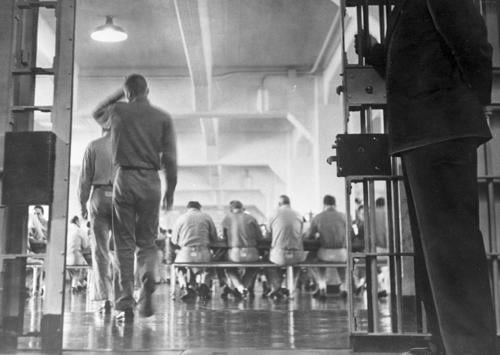
Nelson Algren, Nathan Kantrowitz, and David Maurer discuss language and characteristics of the criminal underworld
Jan. 29, 1967 Nelson Algren, Nathan Kantrowitz, and David Maurer discuss language and criminal subculture, including the development of institutional slang at different prisons, the nature of drug addiction and its influence on criminal language and vocabulary, and the myth of the criminal mind. Includes an Interview with an inmate at a Chicago prison.
-
Nelson Algren discusses capital punishment
1965 Discussing capital punishment with author Nelson Algren. Includes interviews with William (Bill) Witherspoon, a death row inmate; Jack Johnson, warden of Cook County Jail; and an [unidentified woman] who marched in protest at the execution of James Dukes in 1962.
-
Myra Alexander discusses what's wrong with Chicago
1980 Content Warning: This conversation includes racially and/or culturally derogatory language and/or negative depictions of Black and Indigenous people of color, women, and LGBTQI+ individuals. Rather than remove this content, we present it in the context of twentieth-century social history to acknowledge and learn from its impact and to inspire awareness and discussion. A citizen of Chicago, Myra Alexander, believes Chicago is lost and hopeless. Chicago, she explains, will always have its problems with its one party system. Alexander said prejudice is wide-spread in Chicago.
-
Mrs. Bailey Bishop and Edith Neisser talk about education of children, part 2
1965 Part 2 of a series sponsored by the national conference of Christians and Jews. Includes "Rearing the Child of Good Will" and "The Child and the Changing World." Mrs. Bailey Bishop and Ms. Neisser discuss the importance of an open mind and a accepting environment in education and at home, and how this helps the children to accept change as it happens.
-
Mrs. Bailey Bishop and Edith Neisser talk about education of children, part 1
1965 Part 1 of a series sponsored by the national conference of Christians and Jews Titles discussed include "Rearing the Child of Good Will" and "The Child and the Changing World." Includes interviews of Mrs. Bailey Bishop and Edith Neisser. They discuss the importance of an open mind and accepting environment in education and at home, and how this helps the children to accept change as it happens. Excerpt of "Jimmy" discussing his feelings about school (unsure of record number the quote comes from).
-

Mothers discuss the hardships of living on welfare
1968 Five mothers from Chicago discuss the hardships of living in poverty and how little welfare actually helps with Studs Terkel.
-
Morris Dees discusses his latest book "A Season for Justice: the Life and Times of Civil Rights Lawyer Morris Dees"
May. 31, 1991 Southern Poverty Law Center founder and attorney Morris Dees discusses his career and pursuit of ending racism. Some cases associated with Morris Dees include NAACP v. Dothard and Person v. Carolina Knights of the Ku Klux Klan.
-
Molapantene Collins Ramusi discusses his book "Soweto, My Love"
Apr. 10, 1989 In his book, "Soweto, My Love: A Testimony to Black Life in South Africa" Molapantene Collins Ramusi talks about the love for his homeland and one day hoping to see it free. Ramusi also talks about going to the 1st grade when he was 17. Ramusi became a lawyer to defend the defenseless. He was a warrior in the courts, defending widows who were told they were breaking the law by living in an apartment that belonged to their dead husbands.
-
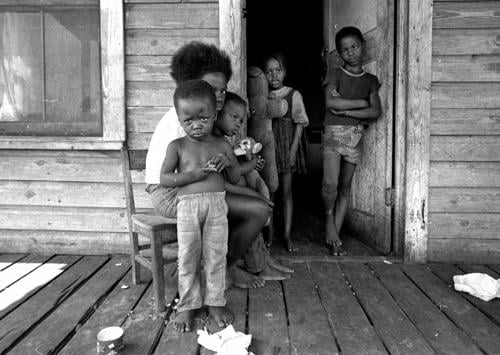
Mitchell Ginsberg, Edward Schwartz and Daniel Thurz discuss poverty in America and War on Poverty legislation
Dec. 8, 1964 Mitchell Ginsberg, Edward Schwartz and Daniel Thurz discuss poverty in America and War on Poverty legislation. Ginsberg is the associate dean of the School of Social Work at Columbia University, Schwartz is the George Herbert Jones professor of social work in the School of Social Service Administration at the University of Chicago, and Thurz is an associate professor of social work at the University of Maryland.