Listen to New Voices on Studs Terkel our partnership with 826CHI-here! Read the Story


Showing 361 - 375 of 390 results
-

Citizens Action Program Senior Citizen Panel
Nov. 20, 1973 Interviewing Paul Booth, Casey Lewan, and Margaret Person at a Senior Citizen's Panel sponsored by Citizens Action Program in Chicago.
-
Christopher Lasch discusses his book "The New Radicalism in America"
1968 Discussing the book "The New Radicalism in America" and interviewing the author Christopher Lasch.
-
Christopher Lasch discusses his book "The New Radicalism in America"
1968 Discussing the book "The New Radicalism in America" and interviewing the author Christopher Lasch"
-
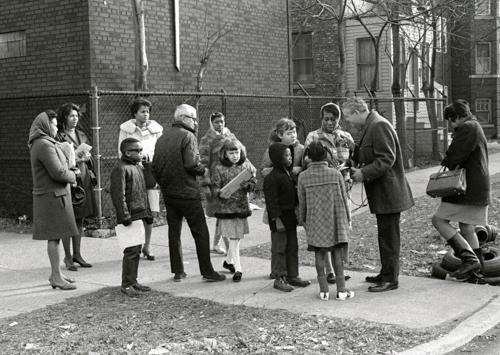
Chicago school teachers and principals discuss Chicago schools
1970 Discussing the state of West side Chicago schools with a panel of teachers and principals from four different schools.
-
Charlotte Strongaard talks with Studs Terkel
1968 Interviewing Charlotte Strongaard while Studs was in Denmark.
-
Charlie Litkey discusses the impact and significance of winning a Congressional Medal of Honor
Feb. 3, 1987 Discussing the impact and significance of winning a Congressional Medal of Honor with recipient Charlie Litkey. A chaplain with the 25th Infantry in 1967, Litkey received the Medal of Honor for pulling several wounded soldiers to safety without regard to his own safety.
-
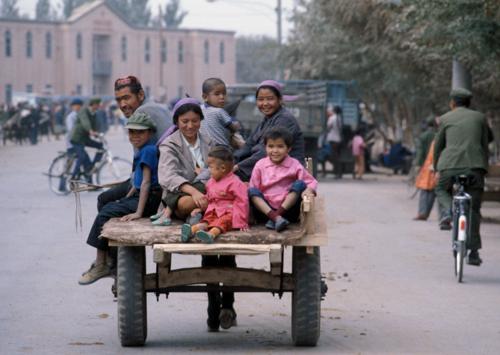
Charles and Sylvia Fischer and Robert Weissbourd talk with Studs Terkel
Jun. 19, 1975 Charles and Sylvia Fischer and Robert Weissbourd discuss their time spent living and working in China.
-
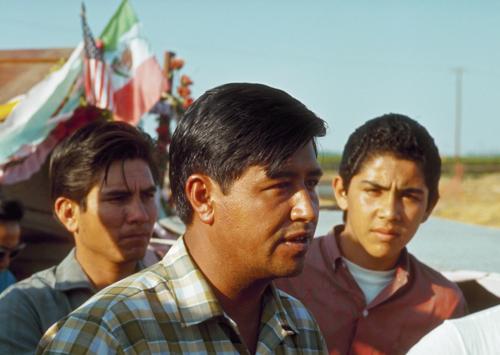
Cesar Chavez discusses farm labor rights
1967 Cesar Chavez discusses the United Farm Workers effort to gain rights for farm laborers and his childhood that led him to become a labor rights activist.
-
Bruce Kent discusses the peace movement
Mar. 14, 1996 A retired admiral told Bruce Kent, without even making a single request, they receive lots of money for weapons. Kent explained that currently, he believes both the right and left sides are willing to see reform in the United Nations. Kent was surprised at Americans' silent opinions when it came to nuclear arms, noting that they could blow up the world 50 times over. There is an excerpt of James Cameron talking about nuclear disarmament.
-
Born to Live ; part 2
1970 Studs Terkel plays a variety of audio clips pertaining to the concepts of life and mankind destroying itself. The audio clips featured are from various established and respected writers, social leaders, and musicians.
-
Bernadette Devlin McAliskey discusses the lack of civil rights in Northern Ireland
The government, explains Bernadette Devlin McAliskey, is to blame for the slums they've built and for not providing proper housing. McAliskey contends there are no Black or white problems but rather that the slums and ghettos exist in the first place.
-
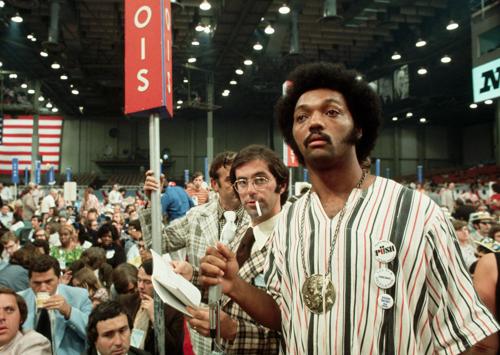
Barbara Reynolds discusses her book "Jesse Jackson, the Man, the Movement, the Myth"
May. 27, 1975 Discussing "Jesse Jackson, the Man, the Movement, the Myth" and interviewing the author Barbara Reynolds.
-
Barbara Kingsolver discusses her book "Holding the Line: Women in the Great Arizona Mine Strike of 1983"
Sep. 17, 1990 Since no men were allowed to picket against the Phelps Dodge Corp., Mexican American women showed up and according to Kingsolver’s book, “Holding the Line,” the picket lines were a brand new experience for the women. Some of the women had to get their husbands’ permission to picket. The group of women found their lives transformed not only with their cause but with new bonds of friendship from the other women.
-
Barbara Blaine, Ruth Graff, and Nina Polcyn-Moore discuss the Catholic Worker Movement
1986 Interviewing Catholic workers Barbara Blaine, Ruth Graff, and Nina Polcyn-Moore. They discuss their lives, Catholic worker houses, and poverty. Includes an interview with Dorothy Day. Content Warning: This conversation has the presence of outdated, biased, offensive language. Rather than remove this content, we present it in the context of twentieth-century social history to acknowledge and learn from its impact and to inspire awareness and discussion.
-
Auburn University student discusses the Civil Rights march on campus and his involvement
1965 Studs interviews a white student on the Auburn University campus after a Civil Rights march. The student explains that he is there to be sure a white face is present and to stand up for democracy. He describes the event and speaks to his family background. The student expresses the experience of black students on the integrated campus and how it has changed. (Tape 6, part 2)