

-

On location in Melun, France at Maison Central Melun prison ; part 1
1962 Studs tours the prison and speaks with prison director Jean Blayrat and a lady referred to as Madame B translates. They talk about the crimes of the a few of the prisoners and the rehabilitation programs the prison system uses in France.
-

Norman Thomas talks with Studs Terkel
1968 Interviewing Norman Thomas on the occasion of his 80th birthday.
-
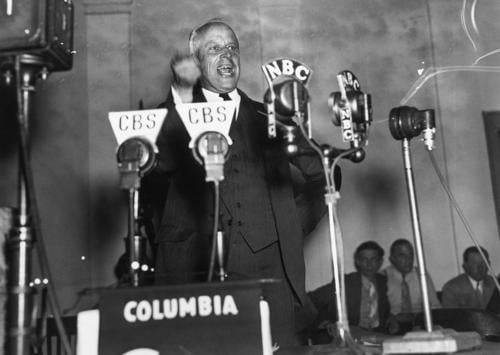
Norman Thomas discusses social progress ; part 2
Dec. 30, 1964 Socialist Party leader and Presbyterian minister Norman Thomas discusses social progress, his political views, and where society is headed with Studs Terkel. This is the final part of his interview.
-
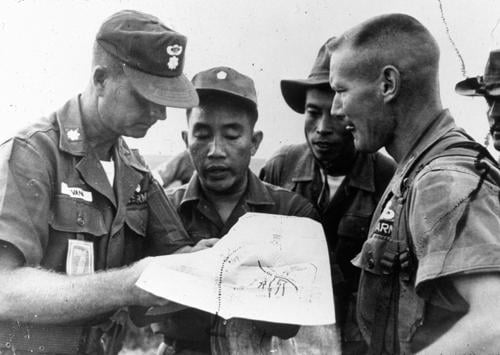
Neil Sheehan discusses his book "A Bright Shining Lie"
Nov. 1, 1988 With his book, "A Bright Shining Lie: John Paul Vann and America in Vietnam", Neil Sheehan wanted to tell what happened in Vietnam and why it happened through telling the story of Lt. Colonel John Paul Vann. Sheehan said Vann had a keen sense of reality. Vann knew if they didn't change the Saigon government into something decent that would appeal to its own people, they'd never succeed at anything other than getting American soldiers killed for nothing. Although readers will find painful experiences in the book, Sheehan explained that his book is not an anti-war book.
-
Mohammed Milham and Joseph Abileah discuss Israeli-Palestinian issues
May. 8, 1981 Mohammed Milham, Mayor of Halhoul, and musician Joseph Abileah discuss their lives and Israel-Palestinian issues. The two men discuss the creation of Israel after World War II and the tensions that caused with Palestine, Jordan, and Syria. They also talk about their views on how to fix the problem such as an autonomy plan or teaching children to not hate.
-
Maude DeVictor discusses Veterans Affairs and Agent Orange
Oct. 12, 1981 Maude DeVictor, a Veterans Affairs worker, talks about how she discovered Agent Orange after a Vietnam Veteran's widow called asking for help. DeVictor recalls her time spent calling Universities and Government Agencies trying to figure out what chemical caused the cancer and then trying to bring light to her discoveries. Studs reads two passages from Jacques Cousteau's "The Cousteau Almanac: An Inventory of Life on our Water Planet."
-
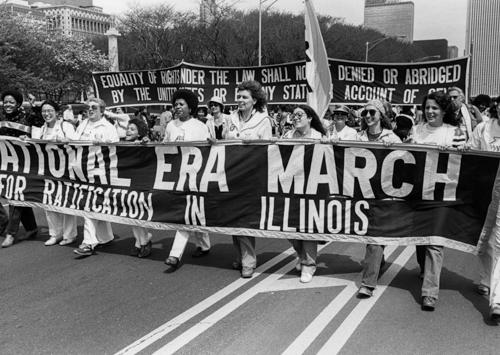
Marianne Bell, Shirley Wallace and Illinois Rep. Susan Catania discuss the Equal Rights Amendment
Jun. 2, 1982 Interviewing Equal Rights Amendment activists, Marianne Bell and Shirley Wallace, who were fasting as a political statement, and Illinois state representative and outspoken advocate of ERA, Susan Cantania.
-
Maria Cerda and Dick Simpson discuss Chicago: An Agenda for Change, with a focus on education ; part 3
Oct. 8, 1974 Chicago: An Agenda for Change. Part 3 of 5. Maria Cerda is a former Chicago Board of Education member.
-
Marcel Ophuls discusses his documentary films
Apr. 30, 1984 Discussing the showing of his films with film maker Marcel Ophuls.
-
-
-
Louis Untermeyer reads from and discusses "The Library of Great American Writing" ; part 3
1960 Lastly, with his book, "The Library of Great American Writing," Louis Untermeyer talks about Mark Twain, Emily Dickinson and personal friends of his, Robert Frost and Carl Sandburg. Twain, said Untermeyer, started out as a humorist but then became more pessimistic with "The Adventures of Huckleberry Finn". Emily Dickenson wrote in secret and she only gave permission for six of her poems to be published.
-
Louis Untermeyer reads from and discusses "The Library of Great American Writing" ; part 2
1960 Interviewing Louis Untermeyer [1 of 3 parts].
-

Louis Font and Ed Fox discuss their time in the military and the Vietnam War
Jun. 11, 1971 Louis Font and Ed Fox discuss their time in the military, the Vietnam War, military rituals, and West Point military academy. They express their anti-war sentiments and describe atrocities committed in Vietnam.
-
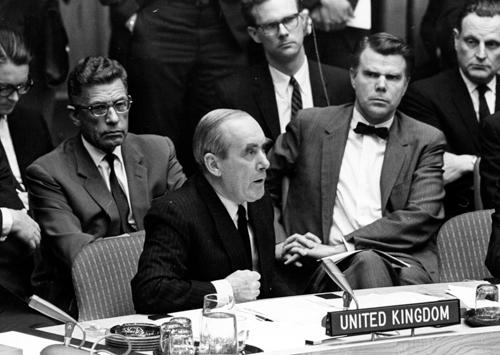
Lord Caradon discusses the United Nations
1967 Lord Caradon discusses the United Nations and its efforts.