

-

Daniel Ellsberg discusses nuclear warfare and its worldwide impact
Feb. 14, 1994 Interviewing former government official, Vietnam War opponent, and political activist Daniel Ellsberg. Program includes an excerpt of a 1980 interview with Ellsberg. Includes a test tone lasting about 20 seconds. Content Warning: This conversation has the presence of outdated, biased, offensive language. Rather than remove this content, we present it in the context of twentieth-century social history to acknowledge and learn from its impact and to inspire awareness and discussion.
-
Daniel Ellsberg discusses his family and his beliefs about the hydrogen bomb ; part 2
Dec. 31, 1979 Daniel Ellsberg, political activist, discusses the creation and use of the atomic and hydrogen bombs. He discusses his family including how his son helped him leak the Pentagon Papers and has since protested with him, including being jailed. He also talks about his father who quit his job over the creation of the hydrogen bomb and how his father's choice helped him to decide to release the Pentagon Papers.
-
Conor Cruise O'Brien discusses politics and the book "Writers and politics: essays and criticisms"
1980 Connor Cruise O'Brien, Irish politician, writer, historian and academic scholar, discusses politics and the book "Writers and Politics: Essays and Criticisms".
-
Charles Hardin discusses his book, "Presidential Power and Accountability: Toward a New Constitution"
Jun. 26, 1974 Charles M. Hardin, political science professor, discusses his book, "Presidential Power and Accountability: Toward a New Constitution." Hardin discusses presidents from Roosevelt to Nixon and explores political parties and the Constitution and the role both play in the American Government. He explains his studies in political science and how he has come to believe that the Constitution should be re-written and creating more political parties could limit presidential powers, which he believes could cause problems in the future.
-
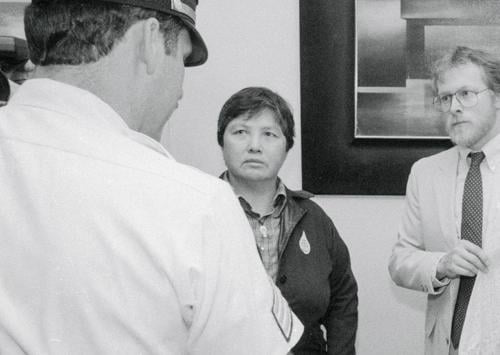
Charito Planas discusses his testimony before the U.S. Congress
Aug. 21, 1981 Discussing with Charito Planas his testimony before the U.S. Congress: "On the Withdrawal of U.S. Bases from the Philippines."
-
Carlos Fuentes discusses his books "Burnt Water" and "Distant Relations"
Jun. 6, 1982 Discussing the books "Burnt water" and "Distant relations" with the author Carlos Fuentes.
-
Blanche Wiesen Cook discusses her book, "The Declassified Eisenhower: A Divided Legacy of Peace and Political Warfare"
Aug. 6, 1981 Blanche Wiesen Cook, historian, professor, and author discusses her book, "The Declassified Eisenhower," and explains Eisenhower's peace and war beliefs. She describes his beliefs at the end of World War II and his relationships with fellow generals and leaders.
-
Bill Mauldin reads from and discusses his book "The Brass Ring"
1970 As a teenager growing up, Bill Mauldin thought he’d be an airline pilot or a submarine captain. He didn’t have ambitions to be a cartoonist until he realized that drawing was the one thing he was good at. Mauldin’s book, “The Brass Ring: A Sort of Memoir,” covers his background, his influences, and stories from time spent in the Army.*Please note: some sections have been edited out from the original recording due to copyright considerations
-
Bill Cunningham discusses court cases he has participated in
Jan. 5, 1979 Bill Cunningham, Jesuit priest and lawyer, discusses some court cases he has participated in. He talks about the Berrigan Brothers who protested against the Vietnam War. Cunnginham also talks about the Rice-Poindexter case, where two Black Panther Party members were charged for murder. He also discussed the Freedom of Information Act and the COINTELPRO the FBI's Counter Intelligence Program. Studs reads poetry from David Rice and plays a song by Hank Ferguson.
-
Bernadette Devlin McAliskey discusses the lack of civil rights in Northern Ireland
The government, explains Bernadette Devlin McAliskey, is to blame for the slums they've built and for not providing proper housing. McAliskey contends there are no Black or white problems but rather that the slums and ghettos exist in the first place.
-
-
Barbara Gaines in conversation with Studs Terkel
Feb. 6, 1992 Discussing a production of the play "Pericles," with Barbara Gaines, Director of the Shakespeare Repertory theater. Program includes an excerpt of a November 1962 interview with French actor, director and producer Jean Louis Barrault.
-
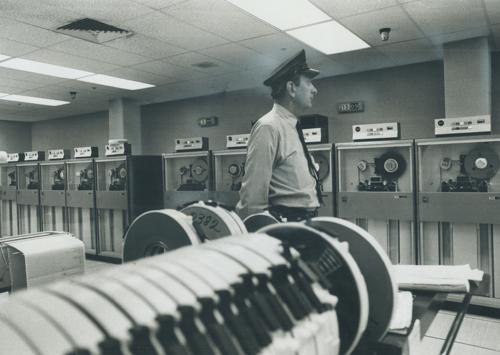
Arthur Miller and John O'Brien discuss privacy and surveillance
1970 Arthur Miller, author of "Assault on Privacy: Computers, Data Banks, and Dossiers," and John O'Brien discuss issues relating to technological privacy and surveillance.
-
Arnold A. Hutschnecker discusses his book "The Drive For Power"
Jan. 8, 1975 Arnold A. Hutschnecker, a doctor with specialization in psychiatry, talks about his book, "The Drive For Power." He explores mental illness and its negative connotation. He explores how people who look for power tend to need mental help, but that the negative stigma around it tends to make them shy away, which leads to national aggravation and war. He also recalls his meetings with Richard Nixon from before he was president and how continued help may have changed the Vietnam War.
-

Andrea Rozran, Alex Polikoff, and Dick Simpson discuss "Chicago: An Agenda for Change" ; part 5
Oct. 14, 1974 Chicago: An Agenda for Change with Andrea Rozran, Alex Polikoff, and Dick Simpson; part 5 of 5. The participants discuss the topic "Freedom of Information" and the city government in Chicago.