Listen to New Voices on Studs Terkel our partnership with 826CHI-here! Read the Story


Showing 1 - 15 of 33 results
-

-
Talking music, with George T. Simon
Dec. 7, 1979 The American jazz writer and historian shares stories of the lives, careers, and personalities of some of the most popular performers of the 20th Century in his book, The Best of the Music Makers.*Please note: some sections have been edited out from the original recording due to copyright considerations
-
Talking about musicals, with Albert Johnson
Nov. 8, 1979 The African American film scholar discusses the history of American musical films, especially during the Depression and into the 1950's.*Please note: some sections have been edited out from the original recording due to copyright considerations
-
-
Richard Wang discusses Charles Mingus' "Epitaph"
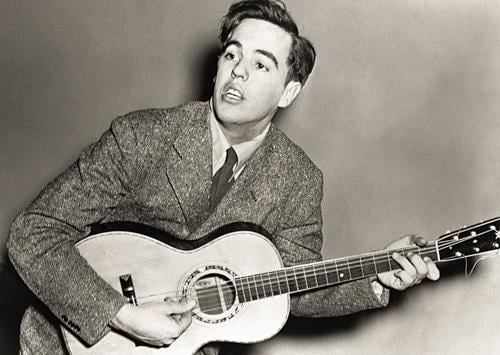
Aug. 23, 1990 Jazz scholar and historian Richard Wang discusses Charles Mingus' "Epitaph", a 4,237 measure-long composition. Wang discusses Mingus’ upbringing and how he was trained on the trombone originally. Throughout the interview, performances of the Epitaph are played and Wang notes in the composition where listeners can hear Mingus’ classical training, as well as where other classical musicians, such as Duke Ellington and Claude Debussy, most likely were referenced as inspiration in the composition.
-
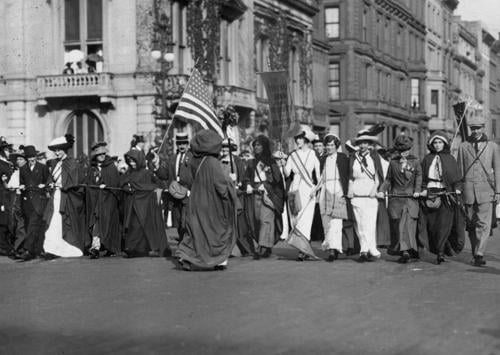
Paul Angle, historian and writer, and Win Stracke, folk musician, discuss "Crossroads: 1913," part 3
Jul. 1, 1963 Paul Angle discusses his book "Crossroads: 1913," and Win Stracke provides a musical review. The three gentlemen talk in depth about the book with live and recorded music interspersed. Music: "Water--Oh!, Water For Me" and "The Rosary." "The Voice of Vienna" (a waltz).
-
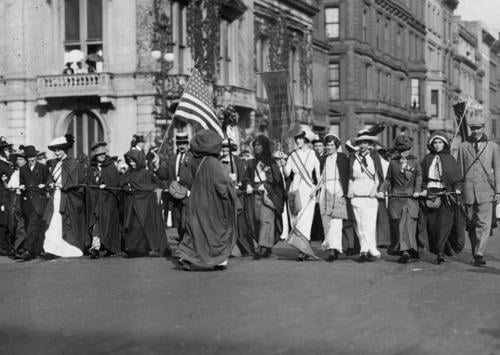
Paul Angle, historian and writer, and Win Stracke, folk musician, discuss "Crossroads: 1913," part 2
Jul. 1, 1963 Paul Angle discusses his book "Crossroads: 1913," and Win Stracke provides a musical review. The three gentlemen talk in depth about the book with live and recorded music interspersed. Songs include: "Casey Jones - The Union Scab," "Sweet Adeline," "We Shall Overcome," "Oh, Dear, What Can the Matter Be," and "Immortality" by William Jennings Bryan (1908).
-
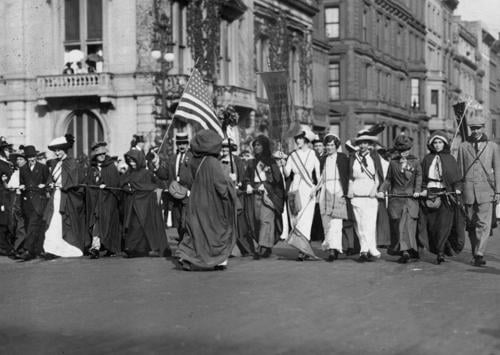
Paul Angle, historian and writer and Win Stracke folk musician discuss "Crossroads: 1913," ; part 1
Jul. 1, 1963 Paul Angle, director of the Chicago Historical Society, discusses his new book "Crossroads: 1913." Win Stracke, musician, provides a musical review of Angle's book.
-
Martin Duberman discusses his book "Paul Robeson"
Feb. 28, 1989 Martin Duberman, historian and biographer, discusses his latest work which focuses on the singer, actor, and political activist Paul Robeson. Robeson was known for his performance in Showboat and Emperor Jones.
-
Lawrence Cohn discusses his book Nothing But the Blues: The Music and Musicians
Dec. 20, 1993 The originator of the Roots ‘N’ Blues series and Grammy winner and nominee Lawrence Cohn discusses his latest work which focuses on the life and times of blues and the musicians that helped the genre become what it is today.
-
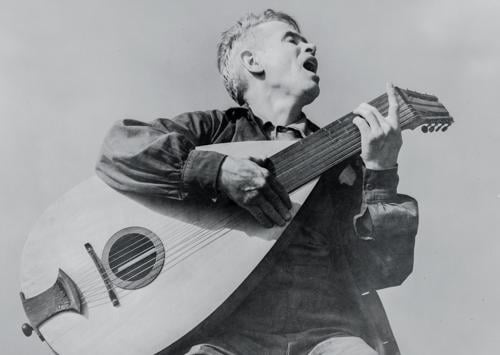
John Jacob Niles discusses his music
May. 10, 1957 The dulcimer is not only a musical instrument that John Jacob Niles plays, but he builds them too. Playing some scales, Niles gives a brief demonstration of the dulcimer, Niles explained people often requested he play his love songs. Niles believed love is something that is easily relatable to many people.
-
Interviewing St. Clair Drake, author of "Black Metropolis: A Study of Negro Life in a Northern City."
May. 10, 1976 A discussion with sociologist and anthropologist St. Clair Drake at the time of his receiving an honorary award from Roosevelt University on the themes of his convocation address. A fascinating deep-dive into race relations from the Revolution to the Bicentennial, touching on the contradictions, crises, and struggles that led to Black institutions and liberation. Studs plays several excerpts from previous programs with St.
-
-
-