Listen to New Voices on Studs Terkel our partnership with 826CHI-here! Read the Story


Showing 91 - 105 of 281 results
-
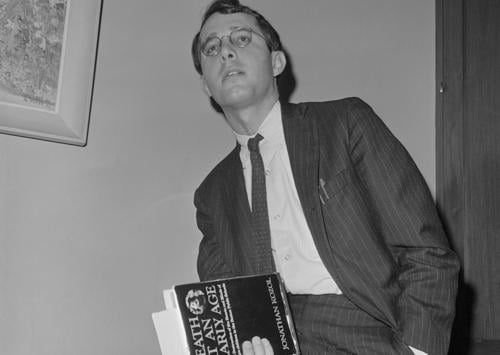
Jonathan Kozol discusses his book "Illiterate America"
Dec. 1, 1985 Jonathan Kozol discusses his book "Illiterate America." Includes an interview of a black teenager student named Jimmy.
-
Jonathan Kozol discusses his book "Children of the Revolution: A Yankee Teacher in the Cuban Schools"
Nov. 10, 1978 Studs has a spirited discussion with Jonathan Kozol who shares his adventures and learnings in Cuba that formed the basis of his book "Children of the Revolution: A Yankee Teacher in the Cuban Schools." Kozol explains the ambitious Cuban Literacy Campaign begun in the 1960s that aimed to educate the entire population, tells of children teaching adults in remote villages by lantern light, and the unity and national pride that resulted. He and Studs explore the idea of generative words in literacy education and contemplate Kozol's hope to adapt a similar approach to American education.
-

John T. Scopes discusses the "Scopes Monkey Trial" of 1925
Oct. 20, 1960 John T. Scopes was a young teacher who taught biology. He was arrested because in Tennessee, no theory of the origin of man could be taught in schools. Clarence Darrow, an attorney from Chicago, defended Scopes in the "Scopes Monkey Trial" of 1925. Scopes was found guilty and was fined $100.
-
John Dominic Crossan in conversation with Studs Terkel
Apr. 10, 1995 Discussing the book "Who Killed Jesus?: Exposing the Roots of Anti-Semitism in the Gospel Story of the Death of Jesus," (published by Harper San Francisco) with the author, teacher John Crossan.
-
-
Jim Grigsby discusses art classes with sound
Artist Jim Grigsby and other unnamed guests talk about introducing sound into art classes. Includes an unrehearsed production by a woodworking class.
-
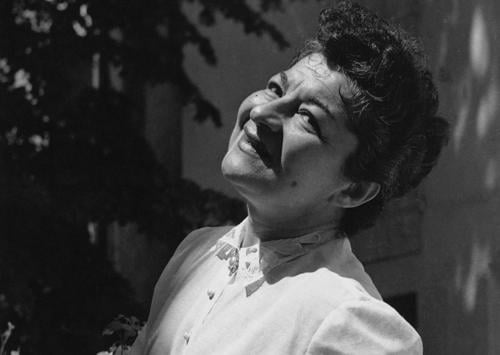
Jennie Tourel discusses her career with some comments by her accompanist Simon Sargon
Nov. 8, 1970 Jennie Tourel discusses her career with some comments by her accompanist Simon Sargon.
-
Jean-Pierre Debris and Andres Menras discuss their experiences as political prisoners in Vietnam
Mar. 9, 1973 French schoolteachers Jean-Pierre Debris and Andres Menras discuss their experiences as political prisoners in Vietnam
-
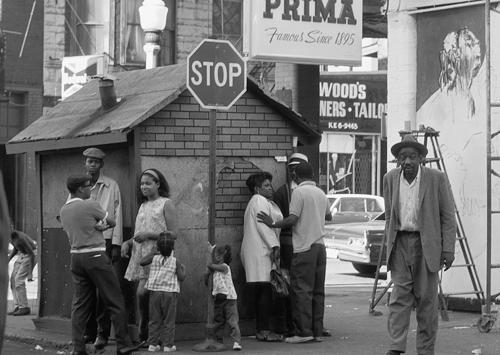
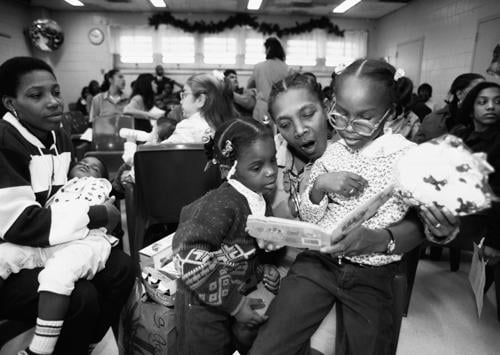
Jan Hestor, Curtiss Brooks and Dr. Philip Hauser discuss racial discrimination in Chicago ; part 5
1965 The discussion of discrimination in metropolitan Chicago continues with Jan Hestor, Curtiss Brooks and Dr. Philip Hauser talking about bigotry, prejudices, open occupancy and education. Included in this part of the interview is an excerpt of 17 year-old Jimmy talking about how his grandmother would rather work than be on welfare.
-
James McPherson discusses his book "Battle Cry of Freedom: The Civil War Era" ; part 2
Jun. 6, 1989 Historian James McPherson discusses the his book, "Battle Cry of Freedom: The Civil War Era." McPerson explores the American Civil War and introduces some Civil War music. He talks about black soldiers, photography, and reconstruction. Content Warning: This conversation has the presence of outdated, biased, offensive language. Rather than remove this content, we present it in the context of twentieth-century social history to acknowledge and learn from its impact and to inspire awareness and discussion.
-
James McPherson discusses his book "Battle Cry of Freedom: The Civil War Era" ; part 1
Jun. 6, 1989 Historian James McPherson discusses the his book, "Battle Cry of Freedom: The Civil War Era." McPerson explores the American Civil War and talks about some Civil War music. He also discusses the reasoning behind the Civil War and some of the key figures during that time and how many songs came to be written about the battles and leaders.
-
James Graham-Lujan discusses the works of Federico Garcia Lorca; part 2
1964 James Graham-Lujan concludes by talking about Garcia Lorca's most celebrated plays, Blood Wedding, Yerma, and The House of Bernarda Alba. Tragedy is brought about due to the passion of a woman in each of the plays.
-
James Graham-Lujan discusses the works of Federico Garcia Lorca; part 1
1964 Discussing the works of Federico Garcia Lorca with translator James Graham-Lujan. Garcia Lorca was a great poet and playwright and he re-vitalized Spanish theater with his eleven plays, according to Graham-Lujan. Garcia Lorca's life was joyous and full of life unlike the theme of his plays, which was tragedy and death.
-
James Clement, Mrs. Barry Norton, and Pearl Shaw discuss Chicago schools ; part 1
1965 Discussing the "Chicago Schools Challenge " and interviewing James Clement, Mrs. Barry Norton, and Pearl Shaw.
-
Jaime Escalante discusses his career as a mathematics teacher
Aug. 5, 1988 Studs interviews educator Jaime Escalante about his successful work as a mathematics teacher at Garfield High School in East Los Angeles, which is represented in the film “Stand and Deliver.” Includes an interview with Edward James Olmos.