

-
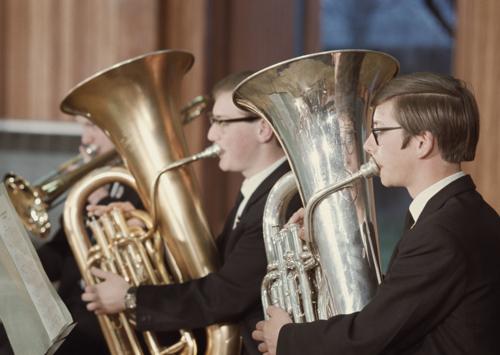
Presenting music and discussing the tuba with tubists Arnold Jacobs, Harvey Phillips, Fritz Kaenzig, and Richard Frazier
Feb. 20, 1987 Presenting music and discussing the tuba with tubists Arnold Jacobs, Harvey Phillips, Fritz Kaenzig, and Richard Frazier. This mixdown includes recorded and live music in the last three minutes.
-

Presenting a program of Russian music with Irwin Weil, Northwestern University professor of Slavic languages and literatures
May. 9, 1985 Presenting Russian music with Irwin Weil
-
Peter Schickele performs and lectures on the music of composer P.D.Q. Bach
Dec. 1, 1988 Peter Schickele, the man behind the pseudonymous musical persona P.D.Q. Bach, gives a lecture on the oft-forgotten composer and sibling of Johann Sebastian Bach, playing and discussing a number of works by the fictitious composer.
-
Paul Fussell in conversation with Studs Terkel
Oct. 16, 1996 Discussing the book "Doing Battle: The Making of a Skeptic" (published by Little Brown) with author Paul Fussell.
-
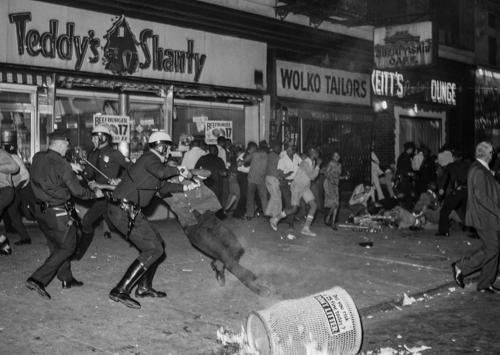
Paul Chevigny discusses his book "Police Power"
According to Paul Chevigny’s book, “Police Power: Police Abuses in New York," disobeying the police is what precipitated violence. Chevigny explained some of the police felt if they had to deal with the undesirables, whether they were criminals or not, anything goes on the street to get these guys and anything goes in court to make a conviction stick.
-
Paul Boyer discusses his book "By the Bomb's Early Light"
Jan. 9, 1986 In the book, "By the Bomb's Early Light: American Thought and Culture at the Dawn of the Atomic Age," Paul Boyer covers people's feelings and attitudes after the bomb was dropped in Hiroshima. Boyer admits he, himself, when he was a young boy, he sent away for a free atomic ring that was being advertised. The program includes an excerpt of David Lilienthal talking.
-
Patrick Zimmerman discusses his teaching methods for childhood education in low-income neighborhoods ; part 2
Sep. 1, 1970 Former public school teacher Patrick Zimmerman continues discussing his alternative teaching methods for childhood education in low-income and underrepresented communities in Chicago. Zimmerman discusses how the scientific emphasis of schooling today is stifling a child’s success in the classroom and calls instead for a balance between a scientific approach and a free-school approach.
-
Patrick Zimmerman discusses his teaching methods for childhood education in low-income neighborhoods ; part 1
Sep. 1, 1970 Former public school teacher Patrick Zimmerman discusses education and the free school movement for low-income and underrepresented communities in Chicago. Zimmerman discusses his time spent as a public school teacher and how this inspired his transition to teaching using alternative schooling methods in childhood education.
-
Orletta Ryan, Mary Frances Greene, Karen and Lucille discuss difficulties they face as teachers and students; part 1
1966 Educators Orletta Ryan and Mary Frances Greene, and school children Karen and Lucille talk about their approaches to teaching, fighting in school, and expectations for learning.
-
Orletta Ryan, Mary Frances Greene, Karen and Lucille discuss a variety of experiences in a New York City school; part 2
1966 Educators Orletta Ryan and Mary Frances Greene, along with school children Karen and Lucille speak to the different experiences they have in their roles at school; part 2.
-
Norman Maclean reads from and discusses his book "A River Runs Through It"
Jun. 8, 1976 Fly fishing, relationships and people Norman Maclean has met are all apart of his book, "A River Runs Through It." Maclean's father taught Maclean and his brother the art of fly fishing. Maclean's book is semi-autobiographical with three short stories.
-
Norma Field reads from and discusses the book "In the Realm of a Dying Emperor"
Jan. 22, 1992 "In the Realm of a Dying Emperor: A Portrait of Japan at Century's End," is Norma Field's story of dissenters against Emperor Hirohito. There's the story of Mr. Chibana, a supermarket owner, who was arrested for burning the flag of the Rising Sun because he learned of the mass suicides by the people of Okinawa. There were also some that believed Emperor bore some responsibility for WWII when being told it was imperative to fight the sacred war.
-
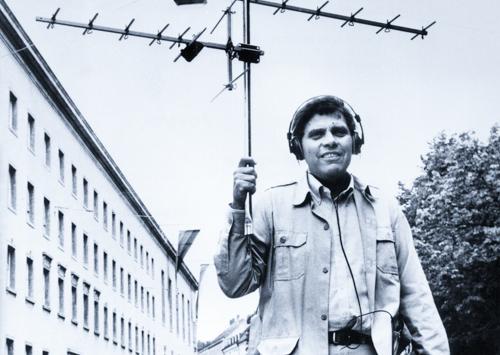
Neil Postman discusses the book, "The School Book: For People Who Want to Know What All the Hollering Is About,".
Feb. 8, 1974 Neil Postman, an author, educator, media theorist and cultural critic discusses his book; "The School Book: For People Who Want to Know What All the Hollering Is About,". Mr Postman and Studs talk about his definition of what school is for and it's worth, and they converse about several sections of the book. Mr. Postman reads an excerpt from his book to begin the interview.
-
Neil Postman discusses his book "Teaching as a Conserving Activity"
Nov. 6, 1979 In schools, reading, writing and speech are all on the decline because there are too many visual images from the TV, according to Neil Postman’s book, “Teaching as a Conserving Activity”. Postman criticized “Sesame Street” for its instantaneity. There are no short cuts in teaching, said Postman. He believed the worst thing a teacher could do was to make teaching entertaining for their students.
-
Nadia Barova discusses childhood education
Feb. 12, 1988 Kohl Education Award winner Nadia Barova discusses childhood education and the similarities and differences between education in America and the Soviet Union.