Listen to New Voices on Studs Terkel our partnership with 826CHI-here! Read the Story


Showing 166 - 180 of 200 results
-

David Hockney discusses his book "Cameraworks"
Dec. 3, 1984 According to David Hockney, all photographs have perspective in them. With pictures, there is no time and there are no close ups, said Hockney. As for a picture on the television, Hockney said a picture of grief stricken poverty can bring on an emotional toll but then because the next picture of image appears, we immediately forget about the poverty image.
-
David Douglas Duncan discusses his career in photojournalism
1970 David Duncan Douglas traveled all over the world. Douglas' goal was to show the honesty of a person when taking his/her photograph. Taking pictures started out as a hobby for Douglas. He had captured some pictures of John Dillinger, but admitted that he didn't know who Dillinger was at the time.
-
Daniel Bluestone discusses his book “Constructing Chicago”
Nov. 13, 1991 Daniel Bluestone, architectural historian, discusses modern architecture and the endurance and legacies of 19th century designs in Chicago. Includes a 20 seconds test tone.
-
Cornell Capa discusses his book "Concerned Photographer"
Feb. 27, 1974 According to Cornell Capa, the best pictures of his book "Concerned Photographer" are the ones that deal with overpopulation. Capa hoped to make people aware of what's going on in the world and he further hoped people would do something about what they saw in the photographs.*Please note: some sections have been edited out from the original recording due to copyright considerations
-
Cleopatre Bourdelle, the wife of artist and sculptor Antoine Bourdelle, speaks of her husbands life and art. ; part 2
Oct. 28, 1962 On location at Musee Bourdelle in Paris, France, Ms Bourdelle discusses the life and art of her late husband Antoine Bourdelle.
-
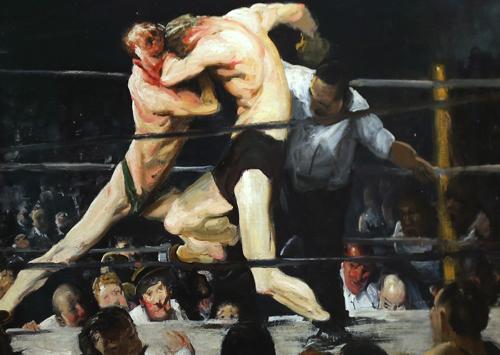
Charles Grant discusses George Bellows, and Captain Herbert Anderson discuss life on a tugboat
Jun. 19, 1962 Charles Grant discusses painter George Bellows; also includes anecdotes about his life, including being the first passenger on an airplane and meeting Buffalo Bill. Captain Herbert Anderson's conversation begins at 34:44.
-
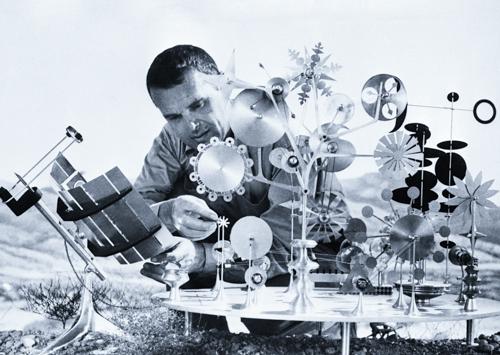
Charles Eames discusses his life of travel and his study of design and architecture, part 2
Oct. 1, 1965 Charles Eames an architect, designer, artist, filmmaker and student of human nature talks with Studs about his years of travel in India and Europe. He discusses studying architecture and working as an architect and the nature of his film making.
-
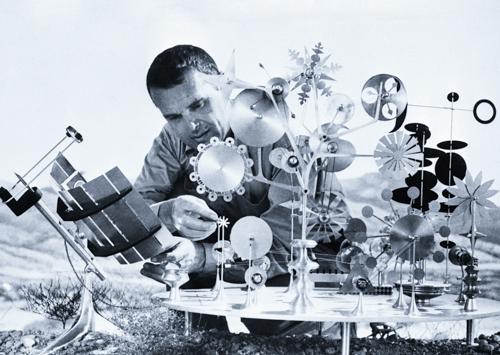
Charles Eames discusses his life of travel and his study of design and architecture, part 1
Oct. 1, 1965 Charles Eames, an architect, designer, artist, filmmaker and student of human nature, talks with Studs about his years of travel in India and Europe. He discusses studying architecture and working as an architect and the nature of his film making. (Part 1 of 2)
-
Charles Capen McLaughlin discusses landscape architect Frederick Law Olmsted
Jun. 27, 1977 Historian Charles Capen McLaughlin discusses landscape architect Frederick Law Olmsted and how Olmsted worked to create spaces where the working class could enjoy nature in industrialized areas. Studs plays "Whose Garden Was This" - Tom Paxton (1970) and "Tapestry" - Don McLean (1970).
-
Carole Gallagher in conversation with Studs Terkel
Apr. 5, 1993 Discussing the book "American Ground Zero: The Secret Nuclear War" (published by MIT Press) with author and photographer Carole Gallagher.
-
Carol Wald discusses and reads from her book "Myth America"
Dec. 5, 1975 Carol Wald's book, "Myth America: Picturing Women, 1865-1945", came about after she saw some pictures of women and how they were depicted. Wald asked herself if the images of the tacky, frail American women represented her. Various images like sheet music, postcards, and advertisement posters showed women as good girls, nice girls, pious and pure. Wald's point is women are not perfect angels nor are they angelic all the time.
-
Carol Beckwith and Angela Fisher discuss their book “African Ark: People and Ancient Cultures of Ethiopia and the Horn of Africa”
Nov. 9, 1990 Photographers Carol Beckwith and Angela Fisher discuss their book “African Ark: People and Ancient Cultures of Ethiopia and the Horn of Africa.” The two discuss the cultural traditions of the indigenous groups from this region in Africa and the relationships they formed with these communities during this photography project. Studs plays an unnamed traditional Surma warrior song.
-
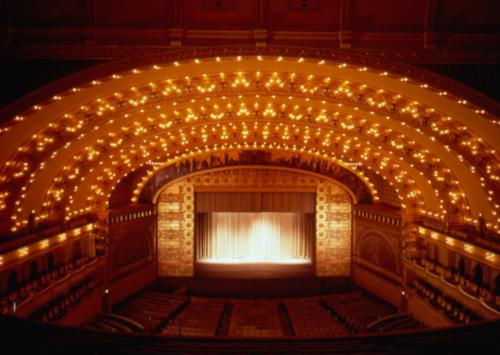
Carl Condit, Richard Nickel and Ben Weese discuss architecture ; part 2
Discussing Chicago architecture and interviewing Carl Condit, Richard Nickel and Ben Weese.
-
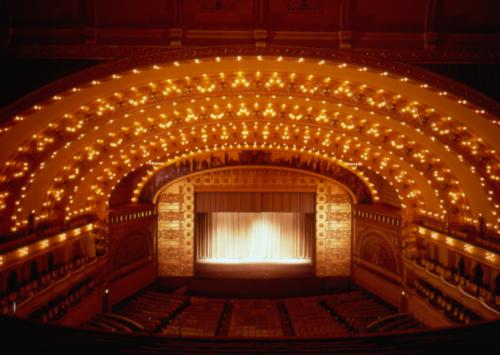
Carl Condit, Richard Nickel and Ben Weese discuss architecture ; part 1
Discussing Chicago architecture and interviewing Carl Condit, Richard Nickel and Ben Weese.
-
Cao Ngoc Phuong discusses being a Buddhist in Southern Vietnam and starting the Buddhist School of Youth for Social Service
Feb. 25, 1970 Discussion with Cao Ngoc Phuong a Buddhist educator from Southern Vietnam and, one of the founding members of the Buddhist Student Movement, and the Buddhist School of Youth for Social Service. Includes poetry reading by Thich Nhat Hanh from his book "Vietnam: Lotus in a sea of fire-a Buddhist proposal for peace" Includes songs sung by Cao Ngoc Phuong: "The old man and the child" by Trinh Cong Son, "The Cio Linh mother" by Pham Duy, and "Lullaby" by Chinh Ba and Nhat Hanh.