Listen to New Voices on Studs Terkel our partnership with 826CHI-here! Read the Story


Showing 76 - 90 of 95 results
-

-
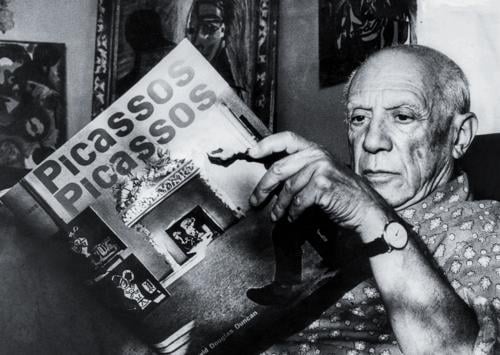
Discussing the book "Good Bye, Picasso"
Nov. 27, 1974 David D. Duncan discusses his book "Goodbye, Picasso" and talks about the artwork of Pablo Picasso and his friendship with him. The program opens with Gertrude Stein reading from her poem "If I told him". Excerpts from the dedication of "The Picasso" statue in Daley Plaza. Studs speaks with residents of Chicago and gets their thoughts on the sculpture.
-
-
Designer and instructor John E. Walley discusses design work
Apr. 22, 1959 Institute of Design instructor John E. Walley discusses teaching techniques and design trends.
-
David Douglas Duncan discusses his career in photojournalism
1970 David Duncan Douglas traveled all over the world. Douglas' goal was to show the honesty of a person when taking his/her photograph. Taking pictures started out as a hobby for Douglas. He had captured some pictures of John Dillinger, but admitted that he didn't know who Dillinger was at the time.
-
Cornell Capa discusses his book "Concerned Photographer"
Feb. 27, 1974 According to Cornell Capa, the best pictures of his book "Concerned Photographer" are the ones that deal with overpopulation. Capa hoped to make people aware of what's going on in the world and he further hoped people would do something about what they saw in the photographs.*Please note: some sections have been edited out from the original recording due to copyright considerations
-
Cleopatre Bourdelle, the wife of artist and sculptor Antoine Bourdelle, speaks of her husbands life and art. ; part 2
Oct. 28, 1962 On location at Musee Bourdelle in Paris, France, Ms Bourdelle discusses the life and art of her late husband Antoine Bourdelle.
-
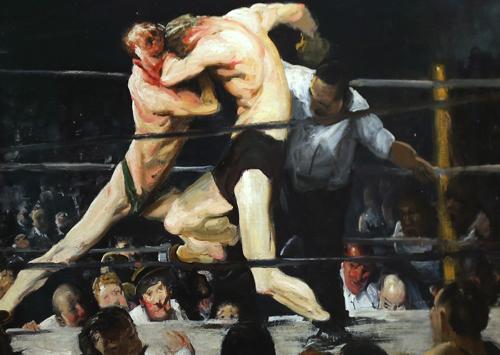
Charles Grant discusses George Bellows, and Captain Herbert Anderson discuss life on a tugboat
Jun. 19, 1962 Charles Grant discusses painter George Bellows; also includes anecdotes about his life, including being the first passenger on an airplane and meeting Buffalo Bill. Captain Herbert Anderson's conversation begins at 34:44.
-
Carol Wald discusses and reads from her book "Myth America"
Dec. 5, 1975 Carol Wald's book, "Myth America: Picturing Women, 1865-1945", came about after she saw some pictures of women and how they were depicted. Wald asked herself if the images of the tacky, frail American women represented her. Various images like sheet music, postcards, and advertisement posters showed women as good girls, nice girls, pious and pure. Wald's point is women are not perfect angels nor are they angelic all the time.
-
Carol Beckwith and Angela Fisher discuss their book “African Ark: People and Ancient Cultures of Ethiopia and the Horn of Africa”
Nov. 9, 1990 Photographers Carol Beckwith and Angela Fisher discuss their book “African Ark: People and Ancient Cultures of Ethiopia and the Horn of Africa.” The two discuss the cultural traditions of the indigenous groups from this region in Africa and the relationships they formed with these communities during this photography project. Studs plays an unnamed traditional Surma warrior song.
-
Bob and Joan Ericksen discuss the literary work of Peter Weiss and environmental ecology
1967 Bob and Joan Ericksen, both educators, artists, and environmental ecologists, discuss the literary work of Peter Weiss' "I Come Out of My Hiding Place" and environmental ecology. Excerpt of Peter Weiss reading from "I Come Out of My Hiding Place." The book speaks of why he writes and why he pursues his art (unknown source). The interview ends with a reading by Studs of an excerpt fro, Gustav Meyrink's "The Green Face."
-
Bill Mauldin reads from and discusses his book "The Brass Ring"
1970 As a teenager growing up, Bill Mauldin thought he’d be an airline pilot or a submarine captain. He didn’t have ambitions to be a cartoonist until he realized that drawing was the one thing he was good at. Mauldin’s book, “The Brass Ring: A Sort of Memoir,” covers his background, his influences, and stories from time spent in the Army.*Please note: some sections have been edited out from the original recording due to copyright considerations
-
Anna Ticho discusses her artistic process and exhibition of prints and drawings at the Art Institute of Chicago
1964 Israeli woman artist Anna Ticho discusses her artistic process and how the landscape of Jerusalem inspires her work, much of it on display at the Art Institute of Chicago. Studs plays "Sadot Shebe'emek (Fields fo the Valley)" - Netania Davrath & Robert DeCormier and His Orchestra.*Please note: some sections have been edited out from the original recording due to copyright considerations
-
An interview with Jane B. Katz
Feb. 13, 1981 Visual arts and literature are covered in Jane B. Katz's book, This Song Remembers: Self-Portraits of the Native Americans in the Arts. When talking to artists, Katz learns that they aren't just capturing their past, but that they're keeping their cultures alive for future generations.*Please note: some sections have been edited out from the original recording due to copyright considerations
-
An interview with Bernard F. Stehle
Jul. 24, 1985 The author and photographer discusses companionship, intimacy, friendship, and love among the abled and disabled, as further described in his book, Incurably Romantic.*Please note: some sections have been edited out from the original recording due to copyright considerations