

-
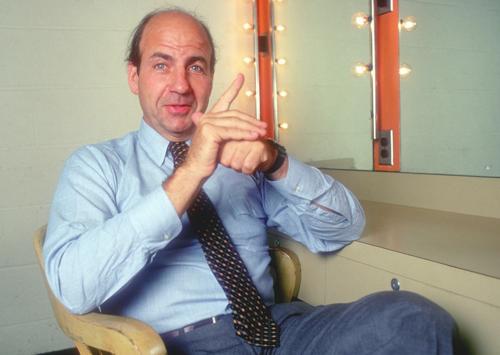
Calvin Trillin discusses his book “Third Helpings”
Apr. 22, 1983 Writer Calvin Trillin talks about his book “Third Helpings” and different regional foods and the ethnicities that influence them. Both Studs Terkel and Calvin Trillin read excerpts from Trillin’s book, and a soundbite from the former Commissioner of Immigration, Leonel Castillo, is played.
-
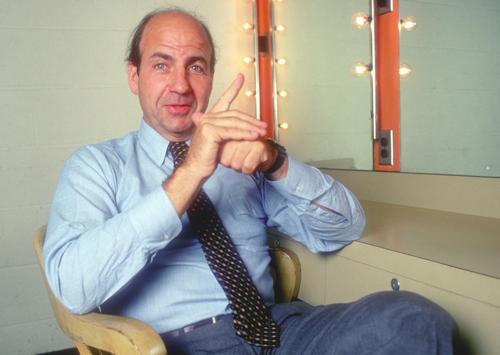
Calvin Trillin discusses his book “Killings”
Feb. 13, 1984 Writer Calvin Trillin discusses his book “Killings” and the murder cases included in the book. Trillin also reads a poem written by one of the victims.
-

-
-

Bob Greene discusses his book "Billion Dollar Baby"
Nov. 20, 1974 Journalist Bob Greene joins Studs Terkel to talk about his book “Billion Dollar Baby” and about his experience on tour with rock and roll band Alice Cooper. Greene talks about the band’s inception and their grotesque performance style, and comments on society’s (particularly the youth’s) acceptance and adoration of this band despite their violent message, and the irony of that adoration. Studs connects the band’s success to the society’s acceptance to the Vietnam War.
-
Bill McKibben discusses his book "The End of Nature"
Oct. 13, 1989 Bill McKibben, author and environmentalist discusses his book "The End of Nature." McKibben talks about climate and weather, greenhouse gasses, fossil fuels, chlorofluorocarbons, and carbon dioxide. He also explains how climate change could damage the ecosystems including birds. He ends the interview discussing what can be changed such as solar power.
-
-
Bill Leonard discusses the history of baseball and baseball today
Apr. 1, 1971 The game of baseball today is very different from when Bill Leonard was a young boy. Today, the last names of baseball players are on the backs of their uniforms. When Leonard was a boy, his father would tell him who was up to bat solely by the player's walk or his stance. The selling of players' contracts to other teams is when Leonard believes the business of baseball changed. This recording includes snippets of author Lawrence Ritter's interviews with early 20th century ballplayers Sam Crawford, Goose Goslin, Fred Snodgrass, Rube Marquard, and Chief Meyers.
-
Bill Leahy discusses his views on the political and social struggles in the Republic of Ireland and Northern Ireland
Oct. 20, 1975 Studs interview with Irishman, Bill Leahy, on the political complexities surrounding Ireland in the 1960s-1970s. Leahy provides some historical background of the IRA and British colonial occupation of Ireland. They discuss Irish music, the Civil Rights Movement in Ireland, and contemporary myths about Ireland. Several Irish songs were played, but many of the titles were not captured. Planksty's music was played twice.
-
Barbara Garson discusses her book "The Electronic Sweatshop"
Jun. 16, 1988 According to Barbara Garson's book, "The Electronic Sweatshop: How Computers are Transforming the Office of the Future into the Factory of the Past," companies are trying to make jobs so simple, as a result, kids in jobs are as replaceable as paper plates. Some companies don't want their employees to have to think but rather they need them to push buttons on machinery to get jobs accomplished.
-
Barbara Ehrenreich discusses her book "Fear of Falling: The Inner Life of the Middle Class"
Sep. 18, 1989 Discussing the book "Fear of Falling: The Inner Life of the Middle Class" (published by Pantheon) with the author, political essayist Barbara Ehrenreich.
-
Author Ronald Steel discusses his book "Walter Lippmann and the American Century."
Nov. 1981 Ronald Steel goes in-depth about his biography of journalist Walter Lippman.
-
Art Shay discusses his book, "Nelson Algren's Chicago," and his friendship with Algren
Dec. 20, 1988 Studs interview with Art Shay opens and closes with a slow blues piece. Shay discusses his picture book, "Nelson Algren's Chicago." He and Studs discuss the people and events in a number of pictures from the book. Studs plays a recording of Algren reading from one of his novels. Studs quotes critic, Rick Kogan of the Tribune.
-
Art Shay discusses his book, "Nelson Algren's Chicago," and his friendship with Algren
Dec. 20, 1988 Studs interview with Art Shay opens and closes with a slow blues piece. Shay discusses his picture book, "Nelson Algren's Chicago." He and Studs discuss the people and events in a number of pictures from the book. Studs plays a recording of Algren reading from one of his novels. Studs quotes critic, Rick Kogan of the Tribune.
-
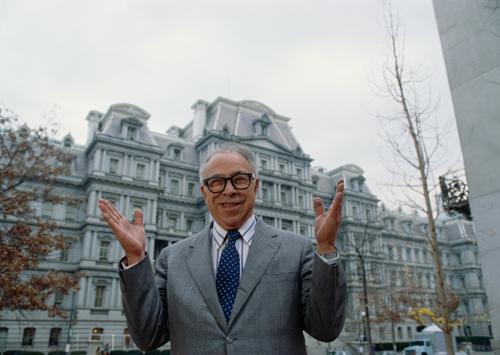
Art Buchwald reads from and discusses his book "Laid Back in Washington"
Feb. 1982 Discussing the book "Layed back in Washington" and interviewing Art Buchwald.