Listen to New Voices on Studs Terkel our partnership with 826CHI-here! Read the Story


Showing 76 - 90 of 535 results
-

Sammy Drechsel and Jurgen Scheller discuss Germany and their work, part 2
1968 Political comedian and reporter Sammy Drechsel and actor Jurgen Scheller discuss Germany and their work. The exchange is aided by interpreter Margot Steeger. Part 2 of 2.
-
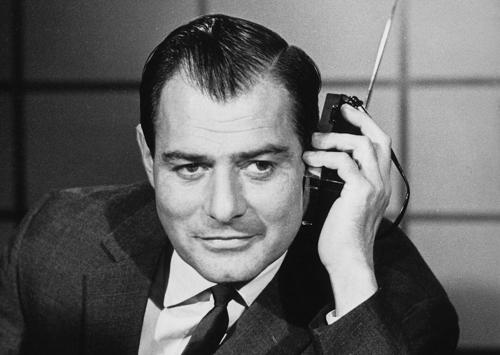
Sammy Drechsel and Jurgen Scheller discuss Germany and their work, part 1
1968 Political comedian and reporter Sammy Drechsel and actor Jurgen Scheller discuss Germany and their work. The exchange is aided by interpreter Margot Steeger. Jurgen Scheller joins the conversation towards the end of this recording. Part 1 of 2.
-

Sally Belfrage discusses her book “Living with War: A Belfast Year”
Oct. 23, 1987 Investigative journalist Sally Belfrage discusses her book “Living With War: A Belfast Year.” Belfrage discusses the complexities of the British and Irish relationship in Belfast and how opinions on this subject change from generation to generation. Studs plays Ireland's national anthem “Amhrán na bhFiann / The Soldier’s Song”; a traditional Irish song “The Sash My Father Wore”; and "Four Green Fields" - Tommy Makem and The Clancy Brothers (1969).
-

Ronnie Dugger discusses his book "Politician: The Life and Times of Lyndon Johnson"
Jul. 15, 1982 Ronnie Duggar’s book, “Politician: The Life and Times of Lyndon Johnson,” shows Johnson’s rise to power. Duggar explained that from a young age, Johnson knew to court power. While at the Teachers College in Texas, Johnson told his cousin, “It starts at the president’s office,” where Johnson was the president’s right arm man. Once in the Senate, Johnson chose to be on the Armed Services Committee because he knew Senator Richard Russell ran the Senate. Johnson courted powerful men and in exchange, these men would advance his career.
-
Ronnie Dugger discusses his book "On Reagan: The Man & His Presidency"
Nov. 29, 1983 Past radio transcripts of former President Ronald Reagan were being hidden or suppressed. Ronnie Dugger worked tirelessly at getting the transcripts so that people would learn the truth about Reagan. In Dugger’s book, “On Reagan: The Man & His Presidency,” Dugger points out that President Reagan was against the ERA. He didn’t believe in anti-trust, and he opposed every civil rights act every placed in front of him. Dugger said Reagan’s genius was that he’d get elected without people knowing of his records.
-
Roger Wilkins discusses his book "A Man's Life"
Aug. 30, 1982 Discussing the book "A man's life" with the author Roger Wilkins.
-
Roger Kahn talks about his book "Boys of Summer"
1970 Content Warning: This conversation includes racially and/or culturally derogatory language and/or negative depictions of Black and Indigenous people of color, women, and LGBTQI+ individuals. Rather than remove this content, we present it in the context of twentieth-century social history to acknowledge and learn from its impact and to inspire awareness and discussion. Kahn talks about Jackie Robinson and the integration of baseball. Includes an excerpt from an interview with early player Sam Crawford.
-
Robert Scheer talks with Studs Terkel
Jun. 25, 1965 Discussing Vietnam and interviewing Robert Scheer.
-
Robert Cromie reads from and discusses his book "Where the Steel Winds Blow"
1968 "Where the Steel Winds Blow" is Robert Cromie's anthology of 210 war poems. With his book, Cromie wanted to point out the impact of war. There are also war-related songs throughout the program.
-
-
Robert Caro discusses his book, "The Power Broker: Robert Moses and the Fall of New York"
Oct. 30, 1974 Robert Caro, journalist, discusses his book, "The Power Broker: Robert Moses and the Fall of New York." Caro talks about Robert Moses and the power he had over New York for 44 years. He talks about parks, bridges, highways, and housing that Moses built as he challenged mayors, governors, and the working class.
-
Robert Bendiner discusses his book "Just Around the Corner" ; part 2
Aug. 23, 1967 In Robert Bendiner's book, "Just Around the Corner: A Highly Selective History of the Thirties," Bendiner covered Herbert Hoover's ineptness and Franklin Roosevelt's heroism. Bendiner also remembers vividly the moment when Huey Long did a jig on the Senate floor. Long further explained that the New Deal had to happen because it was what all the people, of both parties needed.*Please note: some sections have been edited out from the original recording due to copyright considerations
-
Robert Bendiner discusses his book "Just Around the Corner" ; part 1
Aug. 23, 1967 Although he was not a historian, Robert Bendiner said he believed he could provide accounts of events through a journalist's eyes with his book "Just Around the Corner: A Highly Selective History of the Thirties". It was a depressing time, recalls Bendiner, a time he hopes no one has to experience again. Businesses needed people to buy goods but there wasn't enough money for people to buy food let alone goods and materials. Bendiner recalls Riverside Drive was once affluent and picturesque. The view then turned to one full of Hooverville shacks.
-
Richard Reeves his book "A Ford, not a Lincoln"
Oct. 30, 1975 Richard Reeves his book "A Ford, not a Lincoln," about Gerald Ford and the politics of the 1970s. He also discusses journalism and White House reporting.
-
Richard Elman discusses his book "The Poorhouse State"
Oct. 31, 1966 Poor people, welfare, and egalitarianism are among the topics in Richard Elman's book, "The Poorhouse State: The American Way of Life on Public Assistance." Elman shares some people's individual stories and he points out the problems with the system.*Please note: some sections have been edited out from the original recording due to copyright considerations