Listen to New Voices on Studs Terkel our partnership with 826CHI-here! Read the Story


Showing 31 - 45 of 70 results
-

Jadwiga Lopez and Andrew Patner discuss their recent visits to Poland
Sep. 10, 1981 Jadwiga Lopez and Andrew Patner discuss Poland and tell stories about their latest visits before and during the Poland Crisis of 1980-1981. Topics discussed include the economic hardships, food shortages, the Solidarity Union, politics, and the arts. Parts of polish music is played at the start and end.
-
-
-
-
Interviewing Harrison Salisbury
Nov. 13, 1975 The New York Times correspondent in Moscow discusses and reads from his novel, The Gates of Hell. The book closely mirrors the life of Russian novelist and Soviet dissident Aleksandr Isayevich Solzhenitsyn.*Please note: some sections have been edited out from the original recording due to copyright considerations
-
Interviewing Donald Woods
Sep. 17, 1981 The South African journalist and anti-apartheid activist talks about his friendship with fellow activist Steve Biko, and the many threats they faced, as further described in the book, Asking for Trouble: The Autobiography of a Banned Journalist.*Please note: some sections have been edited out from the original recording due to copyright considerations
-
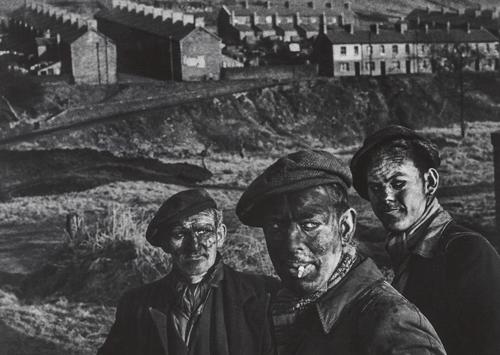
Interviewing Aileen and W. Eugene Smith
May. 22, 1975 Aileen and Eugene Smith discuss their photographic essay book, "'Minamata', Words and Photographs," documenting the mercury poisoning of residents and their legal battles with the polluting company Chisso.
-
Interview with Yoram Binur
Mar. 22, 1989 Discussing "My Enemy, My Self" (published by Doubleday) with author Yoram Binur.
-
Interview with Scott Anderson and John Lee Anderson discussing the World Anti-Communist League
1980 Discussing "Inside the League: The Shocking Expose of How Terrorists, Nazis, and Latin American Death Squads have Infiltrated the World Anti-Communist League" (published by Dodd Mead & Co.) with the authors, journalists Scott Anderson and Jon Lee Anderson.
-
Interview with Raymond Bonner
Apr. 29, 1993 Interviewing foreign correspondent and author Raymond Bonner.
-
Interview with Gordon Thomas
Jan. 30, 1976 Co-author of Guernica: The Crucible of World War II*Please note: some sections have been edited out from the original recording due to copyright considerations
-
Interview with British journalist and writer James Cameron
Nov. 3, 1976 Discussing the election with James Cameron.
-
Helen Vlachos discusses her career and her book "House Arrest"
1970 In 1967, because Helen Vlachos spoke freely and called someone in the junta a clown, she was placed under house arrest. Artists took part in a type of silent resistance, as there was no new music, no new paintings, no new poems or writings that were created. Freedom isn't allowed, explained Vlachos, as people aren't allowed to use their own minds.
-
Harrison Salisbury discusses the book "The New Emperors: China in the Era of Mao and Deng", and his time in China
Mar. 31, 1992 American author, journalist, and one time New York Times correspondent in Moscow, Harrison Salisbury, discusses his book "The New Emperors: China in the Era of Mao and Deng" They discuss the politics of China and Mr Harrison shares stories of the politicians, and Chinese people he spent time with. Studs shares an excerpt of an interview with physician George Hatem regarding China and her people. The interview closes with; "Che lai" performed by Paul Robeson
-
Harrison Salisbury discusses his book "The Long March"
Oct. 15, 1985 "The Long March: The Untold Story" is a piece of history that took place but wasn't reported by anyone until Harrison Salisbury wrote his book. Salisbury was 75 when he returned to China to talk to people who marched back in October of 1934. Most of the boys and some girls who went on the 6,000 mile/march were peasants.