Listen to New Voices on Studs Terkel our partnership with 826CHI-here! Read the Story


Showing 91 - 105 of 261 results
-

Jean Shepherd discusses his career ; part 1
Aug. 9, 1962 Storyteller, humorist, and radio personality Jean Shepherd joins Studs for a wide-ranging discussion of his career up that point.*Please note: some sections have been edited out from the original recording due to copyright considerations
-
Jean Davies discusses life and culture in Australia ; part 1
Aug. 10, 1966 Australian journalist Jean Davies discusses life and culture in Australia.
-
James Mills discusses his book "Report to the Commissioner," his newest publication
Oct. 3, 1972 James Mills, a novelist and journalist, talks to Studs about his book "Report to the Commissioner". Mr. Mills and Studs discuss the story and Mr. Mills goes in depth into the process of police detectives working a case. Studs plays an excerpt of a Chicago policeman talking about working on the tactical squad on the police force. The policeman tells of how they go into a neighborhood as civilians to stop crime.
-
James David Barber discusses his book, "The Pulse of Politics: Electing Presidents in the Media Age," with the author James David Barber
May. 30, 1980 James David Barber, author and political scientist, discusses his book, "The Pulse of Politics: Electing Presidents in the Media Age." He explains the premise of his beliefs that presidential elections run a cycle of "conflict, conscience, conciliation," and how media affects this. He uses examples of elections from Teddy Roosevelt to Jimmy Carter. Presidential campaign songs are played throughout the interview. A record is played to hear the voices of Teddy Roosevelt and Franklin D. Roosevelt.
-
James Cameron discusses journalist responsibility and expectations of political leaders with Studs in Ashburn Gardens, London ; part 2
1970 Studs Terkel interview with James Cameron, Brittish journalist. They discuss the objective truth and facts of journalism. Cameron shares his experience with a dying Winston Churchill and his views on science and human values. Politics, youth, and the atomic bomb are also topics in this interview. Studs quotes Albert Einstein and Sidney Burnstein, while Cameron quotes Oliver Cromwell. James Cameron's book, "Point of Departure" is also mentioned in the interview.
-
James Cameron discusses his experiences as a Brittish Journalist and his political and social beliefs ; part 4
Jun. 4, 1973 Studs Terkel interview with James Cameron, Brittish journalist. They discuss a variety of topics with politics and young people's attitudes the majority of the interview. This interview is done in Chicago, while the other three parts were done at Lewis and Clark College.
-
James Cameron discusses his experiences as a Brittish journalist and his book "Point of Departure" ; part 3
Jun. 4, 1973 Studs Terkel interviews James Cameron about his experiences as a journalist that includes thoughts about Cameron's book, "Point of Departure." They talk about his relationships with Winston Churchill, Lord Beaverbrook, Charlie Templeton, and Bertrand Russell. Cameron discusses his education, poverty, and the depression during his youth. They talk about Cameron's career with the "News Chronicle" and his home of Dundee, Scotland. This is part 3 of a total of 4 parts. The interview takes place at Lewis and Clark Community College.
-
James Cameron discusses his career ; part 1
Jun. 4, 1973 James Cameron reflects on his life in journalism and his near death experience in India which led to his heart operation in London. Cameron turned that near death experience into a BBC play called "The Pump". Cameron discusses that with Terkel as well as his autobiography, "Points of Departure". Cameron also discusses the June War or Six Day War with Terkel. Cameron reflects on the role youth play in society whether in Israel or Northern Ireland and how they should understand they possess a greater potential. The interview breaks at 27:18 and continues.
-
James Cameron and Studs Terkel discuss their experience in Lincoln Park and how the peaceful demonstration changed to violence with the use of police tear gas ; part 1
Aug. 28, 1968 Studs Terkel and James Cameron talk about their witness of the peaceful demonstration at Lincoln Park the night before. They discuss the kind and caring interaction between older adults and the young. Both reflect on how the event changed from peaceful to somewhat violent when police gathered and used tear gas on the crowd.
-
Jack Newfield discusses his book "Robert Kennedy: A Memoir"
Oct. 31, 1978 According to Jack Newfield's book, "Robert Kennedy: A Memoir," Robert Kennedy spent a good part of his first 38 years of life in service to his brother. Robert was JFK's campaign manager, advisor, and Attorney General. Objectivity and seeking the truth as a journalist is also discussed in the interview.
-
Jack Fuller in conversation with Studs Terkel
May. 11, 1992 Interviewing editor and Chicago Tribune jazz critic Jack Fuller.
-
Irv Kupcinet discusses his autobiography "Kup: A Man, An Era, A City"
Dec. 8, 1988 Irv Kupcinet said he was embarrassed to admit how many hours he'd spend per day working on one story for his column. Kup explained his work life, his social life and personal life all gelled together because he was working about 18 hours a day. Reading papers every morning and making phones to his various contacts were the main ways Irv Kupcinet got his information.
-
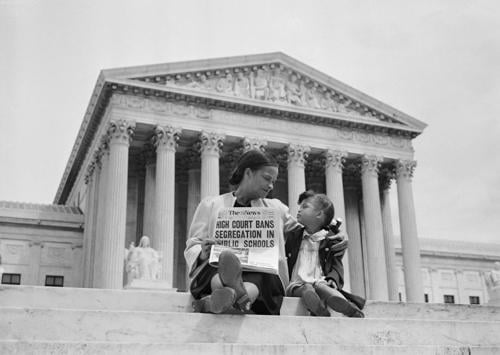
Ira B. Harkey discusses the south, civil rights, race relations, racism, his newspaper, and his career ; part 1
1966 Ira B. Harkey discusses the south, civil rights, race relations, racism, his newspaper, and his career. Includes Ira Harkey reading his writing from his newspaper the Mississippi "Chronicle-Star."
-
Interviewing Yehuda Lev
Jan. 17, 1963 Journalist and columnist Yehuda Lev reported on the trial of Holocaust perpetrator Adolph Eichmann for WFMT. Here, he joins Studs to discuss the aftermath of the trial and the importance of covering such issues.*Please note: some sections have been edited out from the original recording due to copyright considerations
-