Listen to New Voices on Studs Terkel our partnership with 826CHI-here! Read the Story


Showing 556 - 570 of 3671 results
-

-
Robert Joffrey and Gerald Arpino discuss the 30th Anniversary of Joffrey and the new production "Birthday"
Mar. 4, 1986 Studs Terkel interviews Robert Joffrey and Gerald Arpino on the 30th anniversary of Joffrey Ballet.
-
Robert Joffery and Gerald Arpino discuss dance, then and now
Jan. 14, 1976 Studs Terkel discusses the history of dance and its future with Robert Joffrey and Gerald Arpino.
-
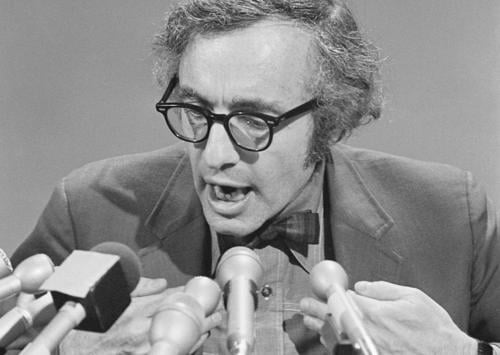
Robert Jay Lifton discusses his book "Living and Dying"
Jan. 6, 1975 With his book, "Living and Dying," Robert Jay Lifton, said the point he wanted to make clear is that individuals have to confront death in order to live well. Lifton also talks about deniers of death and their numbing feelings. Social change with regards to death, explained Lifton, will need to occur.
-
Robert Jay Lifton discusses his book "Home from the War"
Jun. 21, 1973 In his book, "Home From the War: Learning from Vietnam Veterans", Robert Jay Lifton reflects on what he's learned from talking with soldiers who came home from the Vietnam War. For some men, guilt and betrayal were common issues -- guilt in what they had done while in Vietnam and betrayal of what their superiors and the government had told them about the war itself.
-
Robert Falls and Brian Dennehy discuss the play “Galileo”
Oct. 3, 1986 Director Robert Falls and actor Brian Dennehy discuss the playwright Bertolt Brecht and their production of his play “Galileo.”
-
-
Robert Del Tredici discusses his book "At Work in the Fields of the Bomb"
Jun. 6, 1988 Robert del Tredici photographer, artist, and author discusses the history of nuclear weapon production plants around the United States and the effects of nuclear radiation.
-
Robert Coover reads from and discusses his book "John's Wife"
Dec. 4, 1996 Robert Coover's "John's Wife" is about a made-up town, with its various townspeople and their interactions with one another and with John. What's also brought up is the fact that the wife has no name, mostly because John's wife does not exist.*Please note: some sections have been edited out from the original recording due to copyright considerations
-
-
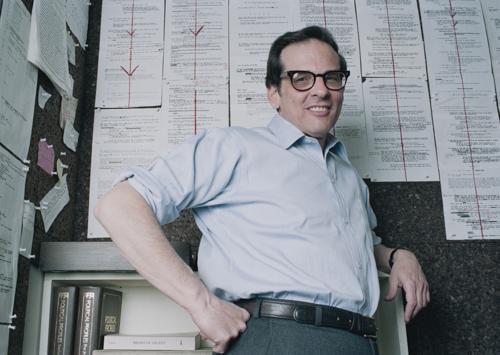
Robert Caro reads from and discusses his book "The Years of Lyndon Johnson"
Dec. 9, 1982 Discussing "The years of Lyndon Johnson, Vol 1: the path to power" with the biographer Robert Caro.
-
Robert Caro discusses his book, "The Power Broker: Robert Moses and the Fall of New York"
Oct. 30, 1974 Robert Caro, journalist, discusses his book, "The Power Broker: Robert Moses and the Fall of New York." Caro talks about Robert Moses and the power he had over New York for 44 years. He talks about parks, bridges, highways, and housing that Moses built as he challenged mayors, governors, and the working class.
-
Robert Brustein discusses the fate of the theatre world
Feb. 20, 1981 Ten years ago, explained Robert Brustein, not for profit theatres were starting to pop up. Brustein was optimistic about these new theatres being available in communities as a way of offering culture. Theatres will not be funded though, because President Reagan cut federal funding to theatres in half. In addition, the National Endowment for the Arts was not growing fast enough to assist all theatres involved.
-
Robert Borisage and Richard Criley discuss secrecy vs. the Constitution
1975 Robert Borisage, founder of the Center for National Security Studies, and Richard Criley, part of the Alliance to End Repression, talk about government spying on citizens and the constitutionality of it. The pair talk about corruption in the CIA and FBI and how new laws can help curb the issues. They also explain the S.1 - Criminal Justice Reform Act 94th Congress (1975-1976).
-
Robert Bly in conversation with Studs Terkel
Nov. 1, 1978 With dulcimer in hand, the poet and essayist Robert Bly pays homage to a wide range of poets that have influenced him, from Anna Akhmatova to Kabir to Pablo Neruda.*Please note: some sections have been edited out from the original recording due to copyright considerations