Listen to New Voices on Studs Terkel our partnership with 826CHI-here! Read the Story


Showing 3331 - 3345 of 3671 results
-

-
-
Bobby Short discusses his career as a vocalist, pianist, and song writer
Feb. 20, 1974 Studs interviews Bobby Short, an African American composer, vocalist, and pianist. Short describes his performances and interpretations of songs by Ira Gershwin, Cole Porter, Noel Coward, and George Gershwin. Studs reads a letter written to short from Coward requesting that Short sing his songs. Studs and Bobby discuss composer and singer styles. The musical pieces are removed from this edited version of the original recording.
-

Bob Sandidge and Kathy Smith discuss a mock ward experiment
May. 17, 1972 Bob Sandidge and Kathy Smith discuss a documentary film directed by Sandidge about a mock ward experiment at the Illinois State Hospital in Elgin, Illinois. The documentary investigates the experiences of hospital staff who participated in an experiment in which some of them were hospital staff and others were patients. Topics of discussion in the interview include the ways that institutionalization shapes behavior and how the experiences influence the way participants believe patients should be treated.
-
Bob Newhart discusses his comedic craft
Apr. 13, 1960 Comedian and actor Bob Newhart discusses his career and his life before becoming a comedian; excerpt from his stand-up performance is played.
-
Bob Koester discusses jazz and blues
Mar. 3, 1993 Bob Koester, record producer and owner of Delmark Records, the United State's oldest independent jazz and blues label, talks about jazz, blues, and bebop musicians.
-
Bob and Joan Ericksen discuss the literary work of Peter Weiss and environmental ecology
1967 Bob and Joan Ericksen, both educators, artists, and environmental ecologists, discuss the literary work of Peter Weiss' "I Come Out of My Hiding Place" and environmental ecology. Excerpt of Peter Weiss reading from "I Come Out of My Hiding Place." The book speaks of why he writes and why he pursues his art (unknown source). The interview ends with a reading by Studs of an excerpt fro, Gustav Meyrink's "The Green Face."
-
Blind John Davis discusses Chicago blues
Sep. 20, 1977 Blind John Davis, Chicago blues pianist, discusses his time playing in Germany and at the Blue Note jazz club, chitlin' parties, growing up on the West side of Chicago. He also recalls meeting and working with musicians like Tampa Red and Big Bill Broonzy. Music has been removed from this recording for copyright reasons.
-
Blanche Wiesen Cook discusses her book, "The Declassified Eisenhower: A Divided Legacy of Peace and Political Warfare"
Aug. 6, 1981 Blanche Wiesen Cook, historian, professor, and author discusses her book, "The Declassified Eisenhower," and explains Eisenhower's peace and war beliefs. She describes his beliefs at the end of World War II and his relationships with fellow generals and leaders.
-
Birgit Nilsson during her time playing Leonore in Fidelio at the Lyric Opera of Chicago ; part 2
Nov. 15, 1961 Studs Terkel interviews Birgit Nilsson about her role Leonore in Fidelio at the Lyric Opera. This is an inverview done in two parts.
-
Birgit Nilsson during her time playing Leonore in Fidelio at the Lyric Opera of Chicago ; part 1
Nov. 15, 1961 Studs Terkel interviews Birgit Nilsson during her time playing Leonore in Fidelio.
-
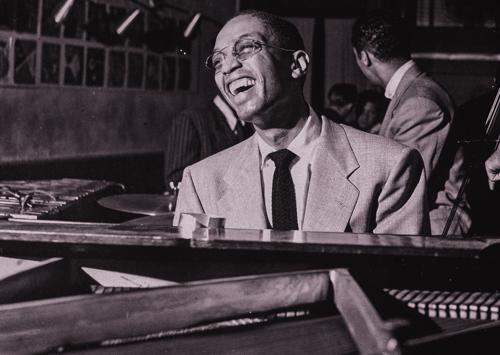
Billy Taylor discusses the role of playing jazz, being creative in your music, and the expansion of the Jazz Mobile
Aug. 28, 1980 Studs interviews Billy Taylor (Jazz pianist and commentator for Jazz Alive radio program), who discusses the creativity of jazz musicians, the Jazz Mobile, and relationships between musicians. Taylor also mentions a large variety of Jazz musician influences. Studs plays various pieces of Jazz from a diverse pool of musicians. Taylor provides details about the Jazz Mobile's traveling show and education of Jazz music. There are no music recordings in this edited version.
-
Billy Taylor discusses the people and music that influenced his career as a jazz composer and pianist
Aug. 24, 1977 Studs interviews Billy Taylor about his performance at the Rick's Cafe at the Holiday Inn in Chicago. They discuss what has influenced Billy Taylor's jazz music. Taylor explains some of his work with various other jazz musicians. This edited version does not include the music recordings.
-
Billy Taylor discusses the Jazz Mobile and the people who have influenced Jazz music
1970 Studs interviews Billy Taylor about his career in Jazz. Taylor shares stories about other Jazz musicians who influenced him. They discuss the improvisation in Jazz music, drug addiction of musicians, and the work Taylor is doing with the Jazz Mobile. Taylor discusses the different sounds of Jazz and describes the White House Jazz Festival that President Jimmy Carter hosted. This edited version does not include the music that is in the original version.
-
Bill Veeck Jr. discusses baseball
Feb. 17, 1981 Content Warning: This conversation has the presence of outdated, biased, offensive language. Rather than remove this content, we present it in the context of twentieth-century social history to acknowledge and learn from its impact and to inspire awareness and discussion. Former Chicago White Sox owner Bill Veeck Jr. reminisces about baseball and the American way of life.