Listen to New Voices on Studs Terkel our partnership with 826CHI-here! Read the Story


Showing 3211 - 3225 of 3671 results
-

-
Clifford Durr and Virginia Durr discuss the Civl Rights Movement, part 3
1965 Alabama lawyer Clifford Durr and his wife, civil rights activist Virginia Durr, discuss the Civil Rights Movement, part 3. The Durrs talk about McCarthyism, The New Deal, and the ostracization they experienced as a result of their support of civil rights in the South.
-
Clifford Durr and Virginia Durr discuss the Civil Rights Movement, part 2
1965 Alabama lawyer Clifford Durr and his wife, civil rights activist Virginia Durr, discuss the Civil Rights Movement, part 2. They talk about segregation, civil rights activist Aubrey Willis Williams, former Alabama attorney general Richmond Flowers, and representing dissidents as a lawyer.
-
Clifford Durr and Virginia Durr discuss the Civil Rights Movement, part 1
1965 Alabama lawyer Clifford Durr and his wife, civil rights activist Virginia Durr, discuss the Civil Rights Movement, part 1 of 3. Discussion topics include the Selma March, Rosa Parks, Montgomery, Alabama, and the "white south."
-

Clifford Burke, Marilyn Nelson and Earl Doty discuss young people ; part 1
1968 Talking to Earl Doty, Clifford Burke, Marilyn Nelson, and West Side kids after the 1968 Chicago Riots. Clifford Burke had already retired from the CTA. As president of the Mile Square Federation, he talks about the youth community of the West side of Chicago, and the need for recreation opportunities for them. Marilyn Nelson is a student from California working in west-side Chicago as an advocate for the community. Studs also talks to Earl Doty, while riding in a car, about the neighborhood youth. There are sounds of hydrants being opened and the children playing.
-
Cliff Norton discusses his career
1960 When Cliff Norton performed his first live gig, he tried out his comedy on the band. Norton credits having good performances because of being given good material, funny material. Norton further explained that being an entertainer, one always has to be writing in order to maintain their creative edge.
-
Cleveland Amory strikes back
Nov. 14, 1979 The outspoken reporter, critic, and commentator joins Studs to discuss his book, The Trouble with Nowadays: A Curmudgeon Strikes Back.*Please note: some sections have been edited out from the original recording due to copyright considerations
-

Cleve Jones talks about the NAMES Project Foundation and AIDS quilt
Sep. 7, 1988 Cleve Jones talks about the AIDS quilt (NAMES project) that he started, the politics surrounding treating AIDS, and the compassionate feelings that the quilt engenders (compared to American barn raisings). There is a postscript with Mike Savage from Dignity Chicago, a lesbian and gay Catholic organization.
-
Cleopatre Bourdelle, the wife of artist and sculptor Antoine Bourdelle, speaks of her husbands life and art. ; part 2
Oct. 28, 1962 On location at Musee Bourdelle in Paris, France, Ms Bourdelle discusses the life and art of her late husband Antoine Bourdelle.
-
Cleopatre Bourdelle, the wife of artist and sculptor Antoine Bourdelle, speaks of her husbands life and art. ; part 1
Oct. 28, 1962 On location at Musee Bourdelle in Paris, France, Ms Bourdelle discusses the life and art of her late husband Antoine Bourdelle.
-
Claudia Cassidy discusses her career as a critic ; part 2
Nov. 30, 1966 Claudia Cassidy discusses being a critic of theater and opera etc. Includes about 1.5 minutes of another interview.
-
Claudia Cassidy discusses her career as a critic ; part 1
Nov. 30, 1966 Claudia Cassidy discusses being a critic of theater and opera etc. Cassidy also discusses her writing and journalism aspirations.
-
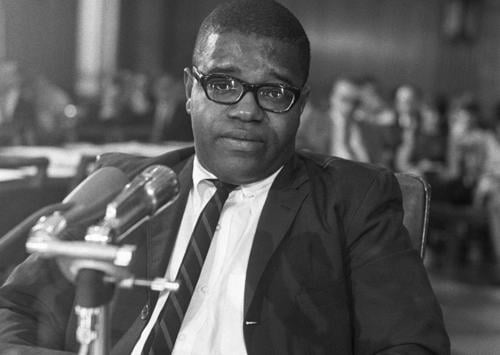
Claude Brown talks with Studs Terkel
Sep. 13, 1965 Discussing the book "Manchild in the Promised Land" with Claude Brown. Brown also discusses growing up in Harlem, New York as an African American man. Includes a clip of a man speaking from the county jail. Includes a song sung by Mahalia Jackson. Includes a clip of children singing.
-
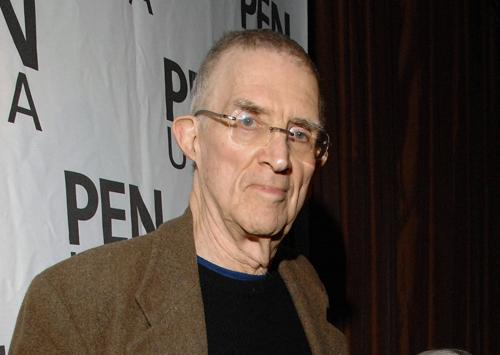
Clancy Sigal discusses his book “Zone of the Interior”
Jun. 11, 1992 Clancy Sigal and Studs Terkel discuss Sigal’s book “Zone of the Interior” and the role that schizophrenia plays in it. Both Sigal and Terkel read excerpts from Sigal’s book.
-
Claire Culhane discusses her time in Vietnam during the war
In 1967, Clair Culhane worked as a hospital administrator at a tuberculosis hospital near Saigon, Vietnam. She discusses what she observed at the hospital and her anti-war work when she returned home.