Listen to New Voices on Studs Terkel our partnership with 826CHI-here! Read the Story


-

Elizabeth Janeway discusses her book "Man's World, Woman's Place"
1970 Elizabeth Janeway discusses her book "Man's World, Woman's Place" and the gender role women are taught since birth; reads passage from book; includes interview at 16:01 with a woman speaking against the Women's Movement during an outdoor protest.
-
Elizabeth Janeway discusses her book "Between Myth and Morning"
Nov. 12, 1974 Elizabeth Janeway discusses the women’s movement and her book, “Between Myth and Morning: Women Awakening.” Topics include dominance and equality, women’s history, the power balance between men and women, and relationships and autonomy. Includes a recorded reading of William Butler Yeat’s Crazy Jane poem, “The Solid Man and the Cockscomb” and an excerpt from a previously recorded interview with Maggie Kuhn, founder of the Gray Panthers.
-
Elizabeth Garry discusses her show, "Victoria"
Nov. 12, 1979 Elizabeth Garry, talks about her one woman show "Victoria." The show tells the story of Victoria C. Woodhull the first women to run for President in 1872. Garry discusses Woodhull's life including her supposed clairvoyant talents, suffragist works, and her work as a broker and publisher. Woodhull's arrest for obscene literature with her newspaper, "Woodhull & Claflin's Weekly," is also discusses and Garry performs the part of her show that describes that event. Garry also breifly explains her research and writing process for the show.
-
Elizabeth Drew discussing her book, "Washington Journal: The Events of 1973-1974"
Oct. 3, 1975 Elizabeth Drew discussing her book, "Washington Journal: The Events of 1973-1974," about the uncertain times during the Watergate scandal. She describes the Saturday Night Massacre and the military alert that were attempts to cover-up Watergate, along with how people working inside the White House felt during these events.
-
Elizabeth Drew discusses her book, "Senator," about U.S. Senator John C. Culver
Jun. 1, 1979 Elizabeth Drew discusses her book, "Senator," about U.S. Senator John C. Culver from Iowa. She explains how she followed Culver for ten days to learn what the day to day business is like for senators. Drew tells about some of the bills and amendments Culver worked on and how much time is spent working on them.
-
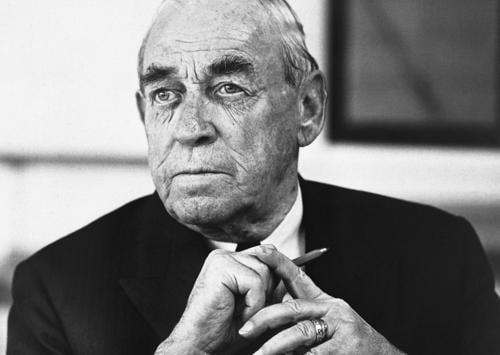
Elissa Aalto and Paul Dukas reflect on architect Alvar Aalto's life
Jun. 17, 1982 Elissa Aalto, architect and widow of Finnish architect Alvar Aalto (first 47 minutes) and architect Paul Dukas (final 6 minutes) discuss architect Alvar Aalto. Aalto believed that architecture could provide society harmony through nature. He was often compared to Frank Lloyd Wright. He was bound with a passion to help mankind.
-
Elisabeth Schwarzkopf discusses her roles and interpretation ; part 2
Apr. 11, 1962 According to Elisabeth Schwarzkopf, at a young age, she first started to play the piano and viola before she studied singing. Madame Schwarzkopf explained the importance of being able to play different roles. With regards to luck, Schwarzkopf says it happens only once, when one finds the right teacher. All the rest, explains Schwarzkopf is hard work.
-
Elisabeth Schwarzkopf discusses her roles and interpretation ; part 1
Apr. 11, 1962 Studs Terkel talks with Elisabeth about her career in opera. She discusses her thoughts of her overall career.
-
Elisabeth Schwarzkopf discusses her role as The Marschallin in Der Rosenkavalier ; part 3
Nov. 2, 1960 Studs Terkel discusses with Elizabet her her role as The Marschallin in Der Rosenkavalier. This interview is done in three parts.
-
Elisabeth Schwarzkopf discusses her role as The Marschallin in Der Rosenkavalier ; part 2
Nov. 2, 1960 Studs Terkel discusses with Elizabeth her her role as The Marschallin in Der Rosenkavalier. This interview is done in three parts.
-
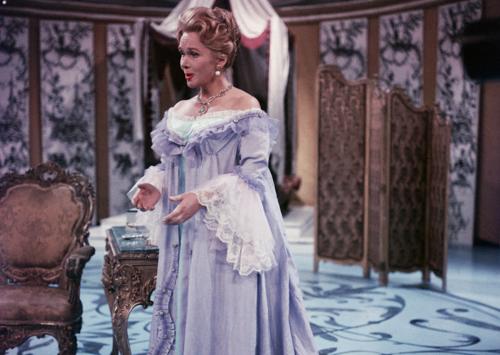
Elisabeth Schwarzkopf discusses her career a week after a performance at Ravinia ; part 2
Jul. 16, 1965 Interviewing soprano Elisabeth Schwarzkopf.
-
Eliot Asinof discusses his book, "Eight Men Out: The Black Sox and the 1919 World Series
May. 5, 1963 Eliot Asinof, author, discusses his book, "Eight Men Out: The Black Sox and the 1919 World Series." Asinof talks about some of the Black Sox team members and their stories through the games, the sensation, and the trial. Early American baseball players such as Babe Ruth and Connie Mack and reporters such as Ring Larder are also mentioned.
-
-
Eli-Yah Nina De-Nur discusses her work and the work of her husband, Yehiel De-Nur, ; part 2
Jul. 13, 1961 Yehiel De-Nur spent two years as a prisoner in the Auschwitz concentration camp. He wrote several books about his experiences there, using his identity number Ka-Tsetnik 135633. His wife Nina served in the British army as a young woman and later helped in the translation and publication of De-Nur's works.*Please note: some sections have been edited out from the original recording due to copyright considerations
-
Eli-Yah Nina De-Nur discusses her work and the work of her husband, Yehiel De-Nur, ; part 1
Jul. 13, 1961 Yehiel De-Nur spent two years as a prisoner in the Auschwitz concentration camp. He wrote several books about his experiences there, using his identity number Ka-Tsetnik 135633. His wife Nina served in the British army as a young woman and later helped in the translation and publication of De-Nur's works.*Please note: some sections have been edited out from the original recording due to copyright considerations