Listen to New Voices on Studs Terkel our partnership with 826CHI-here! Read the Story


-

Garrett O'Connor discusses "Reflections in the rubble."
Feb. 1, 1970 Psychiatrist Dr. Garrett O'Connor discusses his article "Reflections in the rubble: some thoughts in the aftermath of civil disorder." Topics of conversation include his experiences working in community clinics with blue collar workers and African Americans; the ways that poverty, racism, and classism are maintained by the American economy; the Martin Luther King, Jr.
-

Gar Alperovitz discusses his book “Atomic Diplomacy: Hiroshima and Potsdam”
Gar Alperovitz, historian, writer, and political economist, discusses the bombing of Hiroshima, the Potsdam Conference, and the American confrontation with Soviet power.
-
Gana M'Bow discusses Senegalese folk music
Oct. 1, 1965 In addition to talking about Senegalese music, Gana M'Bow goes over the history of the "talking drum." M'Bow also plays various songs from Senegal and West Africa. Through the State Department, M'Bow was touring various cities across the US.
-

Gale Cincotta discusses community organizing for fair housing and loan practices
Jul. 7, 1977 Interviewing Gale Cincotta, a co-author of the book "Urban Disinvestment: New Implications for Community Organization, Research, and Public Policy." Cincotta is an expert on discrimination in mortgage loans and its effects in Chicago and other cities.
-
Gale Cincotta discusses community organizing
Jul. 6, 1982 The song "America the Beautiful" always reminded Gale Cincotta about how great it was to live in America, the land with great schools and great jobs. It wasn't until Cincotta became a community organizer that she realized all schools and all jobs are not great for everyone. Cincotta's hope was to give people the power to make their lives better, not solely by pointing out problems but by doing something about them.*Please note: some sections have been edited out from the original recording due to copyright considerations
-
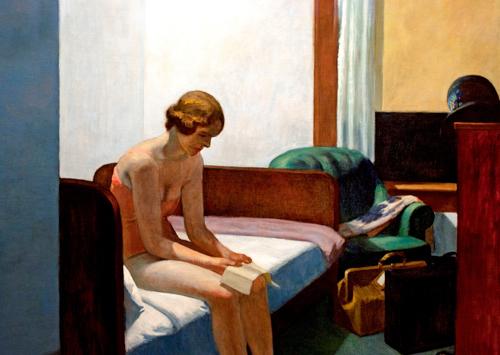
Gail Levin discusses the work of Edward Hopper and the Art Institute of Chicago's Hopper's exhibition
Oct. 2, 1981 Discussing the book "Edward Hopper: The Art and the Artist." Includes recordings of Robert Frost reading "The Road Not Taken," Carl Sandburg reading "Gone," and Tom Waits' song "Nighthawks."
-
Gage Park residents discuss race relations and racial integration at Gage Park High School ; part 2
Aug. 4, 1970 A diverse panel of Gage Park residents discuss racial integration at Gage Park High School, neighborhood change, and race relations in general.
-
Gage Park residents discuss race relations and racial integration at Gage Park High School ; part 1
Aug. 4, 1970 A diverse panel of Gage Park residents discuss racial integration at Gage Park High School, neighborhood change, and race relations in general.
-
G. William Domhoff in conversation with Studs Terkel
Feb. 24, 1984 Discussing the book "Who Rules America Now?: A View for the '80s" with author and educator William Domhoff.
-
From the Wax Museum - 009 - South African writer Alan Paton discusses life in South Africa
1963 South African writer Alan Paton likened the white South African people to the ostrich. Paton said the ostrich keeps its head in the sand, and some people do the same in South Africa, too. With their heads in the sand, they don’t see any problems existing. Paton said he can not understand his country’s government. He can’t understand why the Black people are not allowed to own homes. Because of the government, Paton also talks about having to be careful about what he writes and he says the Americans are very lucky to have their U.S. Constitution.
-
Friedelind Wagner talks to Studs Terkel
Nov. 13, 1964 Opera director Friedelind Wagner describes her interest in Indian music, Hinduism, and Buddhism and how these Eastern traditions influenced the musical compositions of her grandfather Richard Wagner.*Please note: some sections have been edited out from the original recording due to copyright considerations
-
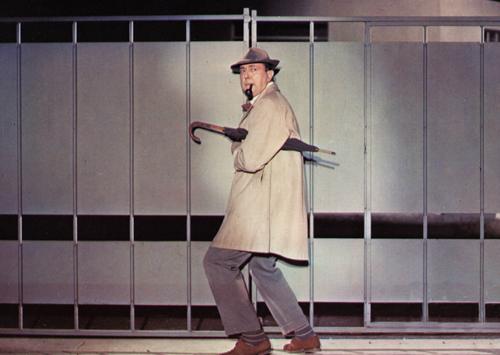
French humorist Jacques Tati talks with Studs Terkel
Nov. 1, 1962 Filmmaker Jacques Tati and Studs discuss finding the humor in everyday life and people becoming their gadgets. The two also go in-depth about Tati's film "Mon Oncle" and the development of the character Monsieur Hulot.
-
-
Frederick Wiseman discusses public welfare
Feb. 20, 1976 Discussing public welfare and interviewing Frederick Wiseman, director of the documentary film, "Welfare."
-
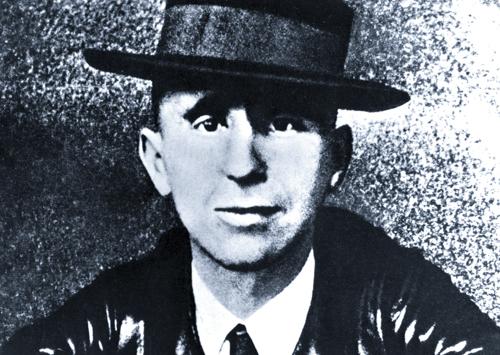
Frederick Ritter discusses Bertolt Brecht; part 1
Jun. 24, 1959 Frederick Ritter, professor at Illinois Institute of Technology, discusses the life and work of playwright Bertolt Brecht, the genre of epic theater, and more.