

-

Empire Brass discuss who they are and their backgrounds
1986 The quintet of Empire Brass was founded by Rolf Smedvig after he was asked to take part in Leonard Bernstein's "Mass". All the men came from families with musical backgrounds. Currently on tour, Empire Brass plays at Orchestra Hall this evening, the day of the recording. They have been to Europe seven times, Japan twice and they have been to all the United States except for Hawaii.
-
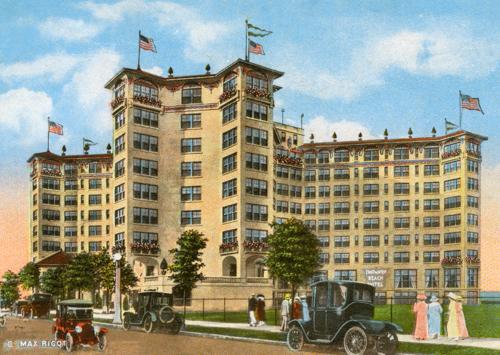
Emlyn Williams talks with Studs Terkel
Nov. 10, 1957 Terkel interviews Welsh actor/writer/dramatist Emlyn Williams.
-
Emily Kimbrough discusses her book "Forever Old, Forever New"
Jan. 1, 1965 Discussing her travels to Greece and her book "Forever Old, Forever New" with the author Emily Kimbrough.
-
Elsa Knight Thompson discusses interviewing guests
1970 Content Warning: This conversation includes racially and/or culturally derogatory language and/or negative depictions of Black and Indigenous people of color, women, and LGBTQI+ individuals. Rather than remove this content, we present it in the context of twentieth-century social history to acknowledge and learn from its impact and to inspire awareness and discussion. While visiting KPFA, a noncommercial radio station in Berkeley, CA, Studs Terkel was being interviewed by Elsa Knight Thompson about how he goes about interviewing his guests.
-
Elsa Gress discusses her work, current events, cultural movements
Oct. 1, 1968 Danish essayist and novelist Elsa Gress discusses her work, current events, and cultural movements. Her book "My Many Homes" ("Mine mange hjem") is also mentioned. She talks about American and Demark, theater, and the sexual revolution.
-
Elsa Charleston and Abraham Stokman discuss classical music
Nov. 24, 1975 Presenting music soprano Elsa Charleston and pianist Abraham Stokman.
-
Elma Stuckey reads from and discusses her poetry
Mar. 10, 1961 Stuckey talks about her childhood in Memphis, writing "in the dialect", and reads "Rigamarole", "Daylight Savings Time", "Defense", "Old Man" and "Old King Cotton."*Please note: some sections have been edited out from the original recording due to copyright considerations
-
Elma Greisel discusses aging and nursing homes
1970 Elma Greisel is the executive director for the National Citizens' Coalition for Nursing Home Reform. Greisel talks about the continuing struggles of older people's civil rights when placed in a nursing home. She also talks about the abuse and neglect older people suffer when in a nursing home. We as a society, expect the best quality of care for those in the nursing homes, says Greisel, and yet the nursing home employees are not paid very well.
-
-
Ellen Goodman and Betty Friedan discuss the women's movement and feminism
Oct. 15, 1981 Discussing the women's movement, feminism, and the books, "At Large," with its author, journalist Ellen Goodman, and "The Second Stage" with its author, feminist Betty Friedan.
-
Ellen Afterman, Clinton Sanders, and Spellman Young discuss the drug epidemic
1980 Ellen Afterman and Clinton Sanders (authors of "Drugs and Your Life") and Spellman Young discuss drug use through the lenses of race, sex, and socioeconomic status.
-
Ellen Afterman, Clinton Sanders and Spellman Young discuss the exclusionary power of language
1970 Ellen Afterman, Clinton Sanders and Spellman Young discuss the exclusionary power of language; i.e. white, middle-class language as the standard by which people are intellectually and socially judged, and how groups are using language to define identity.
-
Ella Jenkins discusses her music and her influences
Dec. 7, 1963 Using a Trobriand drum and harmonica, Ella Jenkins plays examples of call and response music with Studs. A few of her popular songs play between their discussion. Ella explains how her music came to be from the Chicago neighborhood streets with influences from her Uncle and other blues and folk musicians. Songs played include "Tahboo," "Miss Mary Mack," "You'll Sing a Song and I'll Sing a Song," "Come Dance By the Ocean," and "Dulce." Songs have been removed due to copyright restrictions.
-
Ella Jenkins discusses call and response music
Jul. 17, 1993 Using past recordings, Ella discusses how she works with children to help them find their rhythms using call and response music and percussion. She explains the West African and Latin music influences within her own music. Music played includes Jenkins' own music such as "Miss Mary Mack," "Tahboo," and "Where Has My Little Dog Gone?" She also plays song written by Carl Orff and performed by the Chorus of the Children's Opera Group, such s "Pat-a-Cake," and "Name-Calling." Untitled West African music is also played. Music has been removed due to copyright restrictions.
-
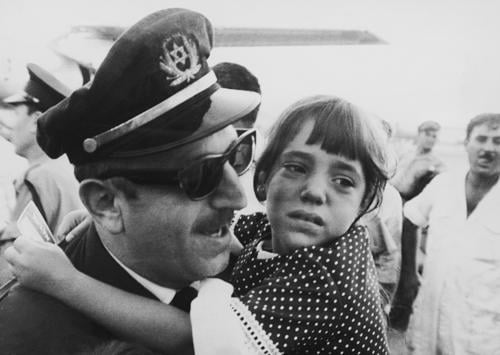
Elizabeth Rich discusses her book "Flying Scared: WhyWe Are Being Skyjacked and How to Put a Stop to It"
1970 After writing the book “Flying High” about her experiences as an airline stewardess, Elizabeth Rich moved on to research the trend of skyjacking in her second book “Flying Scared: Why We Are Being Skyjacked and How to Put a Stop to It.” Rich is one of the first people to conduct a study on these crimes, and criticizes both the US government and Federal Aviation Administration for essentially ignoring repeated skyjacking.