Listen to New Voices on Studs Terkel our partnership with 826CHI-here! Read the Story


Showing 316 - 330 of 429 results
-

Elizabeth Garry discusses her show, "Victoria"
Nov. 12, 1979 Elizabeth Garry, talks about her one woman show "Victoria." The show tells the story of Victoria C. Woodhull the first women to run for President in 1872. Garry discusses Woodhull's life including her supposed clairvoyant talents, suffragist works, and her work as a broker and publisher. Woodhull's arrest for obscene literature with her newspaper, "Woodhull & Claflin's Weekly," is also discusses and Garry performs the part of her show that describes that event. Garry also breifly explains her research and writing process for the show.
-
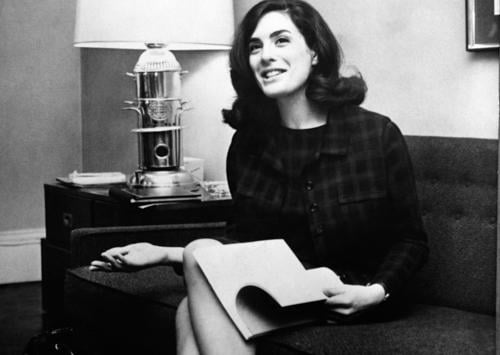
Elisabeth Schwarzkopf discusses her roles and interpretation ; part 1
Apr. 11, 1962 Studs Terkel talks with Elisabeth about her career in opera. She discusses her thoughts of her overall career.
-
-
-
-
Edward Atienza discusses his early career as stage actor
Oct. 7, 1959 Edward Atienza discusses his early career as a stage actor in England. Mr Atienza talks of his work with the Stratford upon Avon(Royal Shakespeare Theater) and working with Peter Ustinov and Laurence Olivier. He sings three songs throughout the interview: "When that I was a little tiny boy", "Willow song" and "Go away from my window"
-
Edward Albee discusses the arts and the meaning of plays
Dec. 31, 1967 Every play is political and art isn’t easy, according to Edward Albee. People need to realize that going to the theatre is an arena of engagement rather than one of escapism, says Albee. Due to people’s lack of knowledge and self-awareness, we in society, we deserve everything bad that we get, are also part of Albee’s views.
-
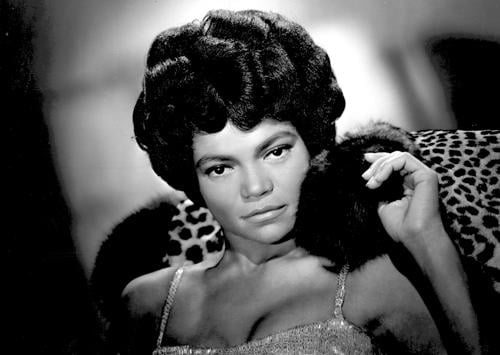
Eartha Kitt discusses her music career ; part 2
Jul. 10, 1962 Studs Terkel continues to interview actress and singer Eartha Kitt. Part 2 of the interview begins with the song "Üsküdara", and ends with "Mountain High, Valley Low", both sung by Kitt. Kitt discusses the following; her career; her desire to entertain; her autobiography, "Thursday's Child"; her mothers death; the art of interacting with the audience; the femme fatale; her time with the Katherine Dunham Dancers; and her portrayl of Helen of Troy.
-
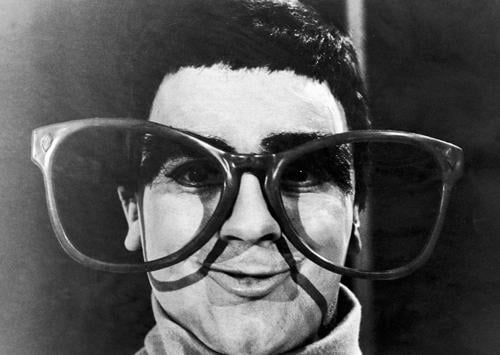
Dudley Moore discusses his background and influences
Jan. 6, 1963 When he was a child, Dudley Moore first wanted to study the violin. He's grateful to his mother for insisting that he first study the piano. Moore said his influences include Bach and Garner. Unlike other musicians, Moore's main focus has always been on the beat, both the cultivation and the presence of the beat of a song and of music.
-
Dr. M. Merchant discusses Shakespeare and the arts
Aug. 18, 1965 Welsh scholar Dr. M. Merchant speaks about Shakespeare and his impact on other arts and artists. Toward the end, there is an excerpt of Sir John Gielgud in Shakespeare's "Measure for Measure."*Please note: some sections have been edited out from the original recording due to copyright considerations
-
Dr. Emmett L. Avery and Dr. Arthur H. Scouten discuss the Restoration Comedy period of theater in England
1964 Drama historians and professors Dr. Emmett L. Avery of University of Washington and Dr. Arthur H. Scouten of University of Pennsylvania discuss the Restoration Comedy period of theater in England. The two served as editors of a twelve-volume collection that documents this period of theater in England. In this interview, the two discuss the cultural standards of the time, including how this period was when women were first allowed to be actors in productions. Studs plays "Concerto grosso in C Major, HWV 318 "Alexander's Feast": I. Allegro" - Philomusica of London (1960).
-
Douglas Turner Ward discusses the play “The River Niger”
Dec. 4, 1973 Theater director Douglas Turner Ward talks with Studs Terkel about the play "The River Niger." Further discussion is had about the play's writer, Joseph Walker, as well as the story and characters, and the play's connection to the African-American community.
-
Dorothy Parker discusses her plays and the state of literature
Feb. 6, 1959 Dorothy Parker’s thoughts as a critic and writer on the state of American literature.
-
Discussing theatre in Honduras with Father Jack Warner
Aug. 20, 1980 Interview with Father Jack Warner
-