Listen to New Voices on Studs Terkel our partnership with 826CHI-here! Read the Story


Showing 286 - 300 of 429 results
-

Hiram Sherman discusses the play “A Flea in Her Ear”
Apr. 23, 1968 Studs Terkel speaks with actor Hiram Sherman about Sherman’s play “A Flea in Her Ear,” winning awards, and the differences between American theater and European theater.
-
Hildegard Knef discusses her book, "The Gift Horse: Report on a Life" and the experiences of her life in Nazi Germany and as an actress in America post World War II
1971 Studs interview with Hildegard Knef, actress and writer. They discuss her life in Nazi Germany during the war and her experience as an actress when she came to America. Studs and Hildegard read together from her book, "The Gift Horse." Knef describes her family, Nazi Germany, survival, and her experience as a German in American post WWII. Her husband, David Anthony Palastanga, also reads an excerpt from her book.
-
Herbert Mitgang discusses his book "Mister Lincoln"
Feb. 11, 1982 Having been a Lincoln biographer for a quarter of a century, Herbert Mitgang felt the importance of writing the play "Mister Lincoln: A Drama in Two Acts". Lincoln's rich language can be heard through Mr. Mitgang''s dramatic interpretation of Lincoln's life.
-
Herbert Blau discusses the play "The Donner Party, Its Crossing"
Aug. 2, 1974 Herbert Blau’s KRAKEN experimental group performed, “The Donner Party, Its Crossing,” at the at the Body Politic Theatre. Blau shares his thoughts on the theatre and his approach to theatre. Blau believed there was always a story to be told, and that an audience would only understand the true story of people’s hardships by telling and re-telling a story over and over again. The program also includes an excerpt of a George Keithly interview at 5:40 to 7:40.
-
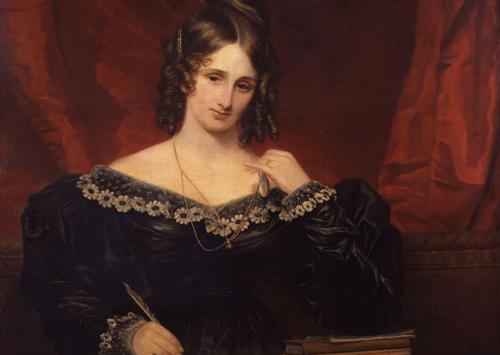
Henry Knepler discusses the role of women in American society
1969 According to Henry Kneplers book, " The Gilded Stage," back in the 1600's, highly regarded women were either actresses on the stage or they were aristocrats or nobility. Knepler said the role of primary grade school teachers were women. Currently, there's some discrimination going on, as Knepler pointed out that one never sees a male airline stewardess.
-
Henry Fonda and John Houseman discuss the play "Clarence Darrow"
Henry Fonda and John Houseman talk about working with one another on "Clarence Darrow: A One-Man Play". Houseman is in awe of Fonda's portrayal of Clarence Darrow, explaining that in the play, the audience can really see the growth of Clarence Darrow, from a young lawyer to an experienced, wise one. Fonda talks about the opening scene when Darrow recalls his father talking to him when he was a young boy. Fonda reflects on times when his father talked to him. Fonda recalls being taught not to hate individuals.
-
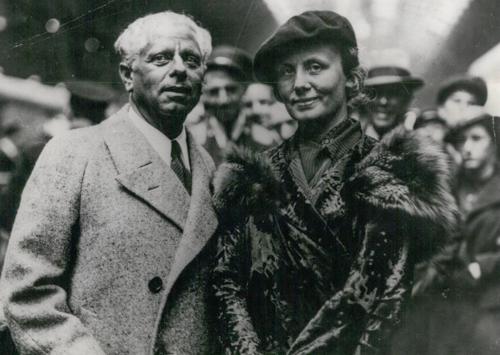
Helene Thimig-Reinhardt discusses her career as an actress and the work of her husband, Max Reinhardt
Mar. 22, 1968 Austrian actress Helene Thimig-Reinhardt discusses her origins and reflects on a long acting career. As the widow of Max Reinhardt, much of the discussion touches on his work as a theater director, film director, and impresario. 00:50:30- 00:52:29 "Ich Muss Wieder Einmal in Grinzing Sein" by Lotte Lehmann
-
Harold Prince discusses his direction of Madame Butterfly for the Lyric Opera, Chicago
Sep. 24, 1985 Harold Prince discusses his direction of Madame Butterfly while also discussing operas, musicals, and theater in general.
-
Harold Clurman discusses the theatre and his book "The Fervent Years"
Mar. 20, 1978 Being both a theatre critic and a theatre director prompted Harold Clurman to write his book, "The Fervent Years: The Group Theatre and the 30's". Clurman hopes that with every play a viewer sees, he or she then takes that material and ponders the message. Clurman explained that plays were a way to communicate truth about life.
-
Hal Holbrook discusses his Mark Twain impersonation
Oct. 23, 1959 *Please note: some sections have been edited out from the original recording due to copyright considerations
-
Gisela May discusses her role in "Mother Courage and her Children"
Oct. 1972 While in a dressing room, Gisela May talks about the songs that she sings in the play, "Mother Courage and Her Children". May also talks about lessons learned from Bertolt Brecht's plays.
-
Gilbert Moses discusses The Free Southern Theater and his play "Blues for Mister Charlie" with Studs Terkel ; part 2
Aug. 10, 1966 Studs interviews Gilbert Moses about his play, "Blues for Mister Charlie" and The Free Southern Theater. They discuss a variety of plays that include, "White America," "Roots," and "Blues of Mister Charlie."
-
Germaine Montero discusses her career
May. 6, 1960 Through an interpreter, the French actress and singer talks about her approach to acting and how she finds her own meaning in the works of songwriters.*Please note: some sections have been edited out from the original recording due to copyright considerations
-
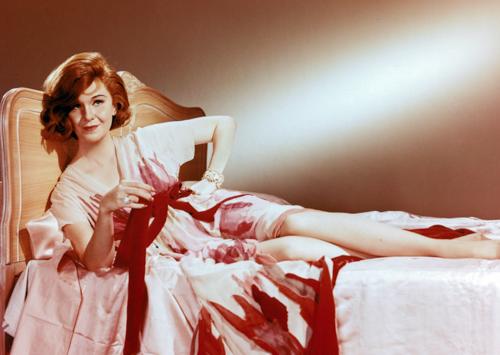
Geraldine Page discusses her role as Zelda Fitzgerald
1970 Geraldine Page is Zelda Fitzgerald in the play, "Clothes for a Summer Hotel". When first reading the play, Page didn't like Zelda because she believed Zelda was a privileged, rich, spoiled brat. Although she said Zelda had her flaws, Page learned that Zelda had the gift of writing.
-
Geraldine Page discusses her career
Apr. 12, 1960 A conversation with film and stage actress Geraldine Page, particularly about her work with Tennessee Williams.*Please note: some sections have been edited out from the original recording due to copyright considerations