Listen to New Voices on Studs Terkel our partnership with 826CHI-here! Read the Story


Showing 136 - 150 of 157 results
-

Christine Fox, Annie Merrill, Jennie Wilkes of the BBC
1975 This interview is a follow up, four years later, to the first interview with these women (1965115-3-1)
-
Christine Fox, Annie Merrill and Jennie Wilkes discuss their work and upbringing in England
1970 Christine Fox, Annie Merrill and Jennie Wilkes discuss sexism in the television industry, their upbringings, and what life is like in England for young women. This is the first of two interviews, four years apart, with these women. 1965631-3-1 is the follow up.
-
Brian Dennehy and Steven Robman discuss their play "Rat in the Skull"
Sep. 11, 1985 Director Steven Robman and actor Brian Dennehy discuss their play "Rat in the Skull". Brian Dennehy performs a passage from Rat in the Skull.
-
Bertrand Russell discusses science and world peace. Phyllis Evans discusses the National Health Plan ; part 1
1962 Sir Bertrand Russell says scientists have a fundamental obligation to let the authorities know if and when what they're working on could lead to or cause a war. Russell claims, no matter the side, there are no winners as a result of war. The world could be a far better place, Russell explained, if it weren't for the fact of man's hatred toward other men. If one lives in the United States and has a grave illness or needs a major surgery, Phyllis Evans says one should not have to go into bankruptcy because of all the costs.
-
-
Barbara Jefford discusses theater career ; part 2
Apr. 4, 1962 British actress Barbara Jefford of the Royal Shakespeare Company discusses her current roles of Lady Macbeth and St. Joan and her reflection of the female roles she portrayed over the years. Jefford was the youngest recipient of the Order of the British Empire for her services in theater and was best known for her role as Molly Bloom in the 1967 film Ulysses.
-
Barbara Jefford discusses her acting career ; part 1
Apr. 4, 1962 British actress Barbara Jefford of the Royal Shakespeare Company discusses her current roles of Lady Macbeth and St. Joan and her reflection of the female roles she portrayed over the years. Jefford was the youngest recipient of the Order of the British Empire for her services in theater and was best known for her role as Molly Bloom in the 1967 film Ulysses.
-
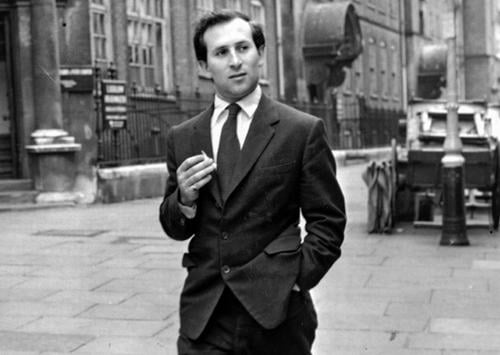
Arnold Wesker, english writer and playwright discusses his life and work.
1962 Arnold Wesker, English playwright and writer in several genres discusses scenes from the play "Roots". Mr Wesker further discusses his plays and the current cast traveling around England performing several of his plays. The interview tape ends and Studs recalls the remainder of the interview alone as a postscript.
-
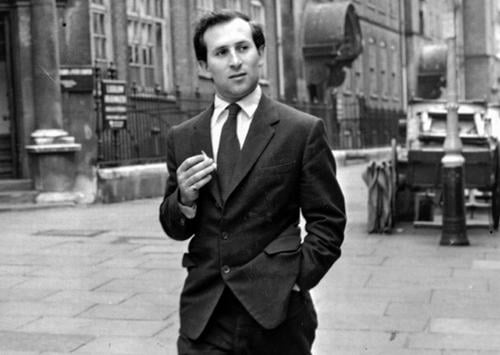
Arnold Wesker talks with Studs Terkel ; part 2
1962 Terkel Talks with known English Dramatist Sir Arnold Wesker (part 2) about the economy of England. The talk begins with the subject of apprentices and when students began their apprenticeship (usually at the age of 15). This is a two part interview
-
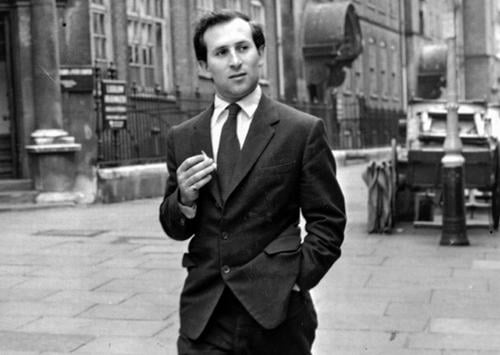
Arnold Wesker talks with Studs Terkel ; part 1
1962 Terkel Talks with known English Dramatist Sir Arnold Wesker (part 1) about the economy of England. The talk begins with the subject of apprenticeship. This is a two part interview.
-
An interview with the insightful stage and film veteran Victor Spinetti
Sep. 18, 1975 This lighthearted interview with actor, director and author Victor Spinetti is juxtaposed by the September 5, 1975 bombing of the London Hilton, which took place mere hours beforehand and "two blocks away," according to Studs. The two discuss Spinetti's Welsh background, acting and comedy with nervous energy against a backdrop of gunshots and bomb threats.
-
Albert Alvarez discusses his book "Beyond All This Fiddle: Essays, 1955-1967;" part 2
1972 Albert Alvarez, poet, writer and critic, discusses how technology advancement is changing society. Specifically he discusses war in general, the Holocaust and advancements in destructive weapons. "Beyond All This Fiddle: Essays, 1955-1967."
-
Albert Alvarez discusses his book "Beyond All This Fiddle: Essays, 1955-1967," [part 1] and Jack LaPorte [part 2]
1972 Part 2 of a discussion with Jack LaPorte while Studs was in England. Conversation cuts out at 05:06 and begins the coversation with Al Alvarez. Albert Alvarez, poet, writer and critic, discusses how technology advancement is changing society. He specifically discusses war in general, the Holocaust and advancements in destructive weapons. He speaks fondly of Sylvia Plath, and discusses his current book, "Beyond All This Fiddle: Essays, 1955-1967."
-
Alan Watts discusses and reads from his book "In My Own Way"
1970 In Alan Watts' autobiography, "In My Own Way," he explains that the song "Onward Christian Soldier" is militant, and of a militant religion, whereas Zen Buddhism is not militant at all. Watts also says that most of the troubles that go in the world are created by people that take life too seriously.
-
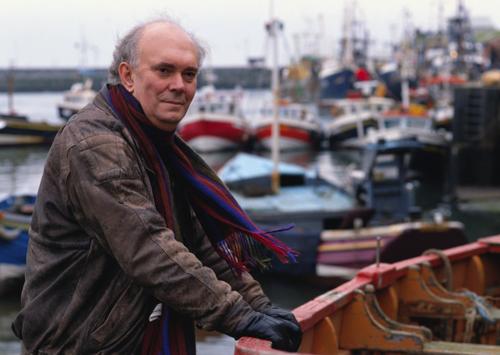
Alan Ayckbourn discusses his background and career
May. 27, 1994 His total love for the theatre began when Alan Ayckbourn worked backstage, and then worked the lights. He eventually began writing plays. To date, he has written 47 of them. Ayckbourn admits that his plays may be dark but he explained that he tries to add some humor into them, too. When writing a play, and without any notes, Ayckbourn said, he'll take four or five days to write out an entire play on a word processor.