Listen to New Voices on Studs Terkel our partnership with 826CHI-here! Read the Story


Showing 61 - 75 of 185 results
-
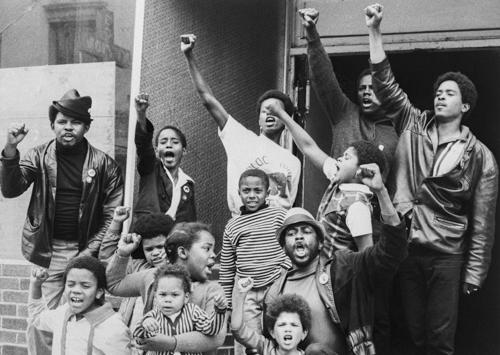
Nathan Wright discusses Black power ; part 2
1967 Discussing the book "Black Power and Urban Unrest" and interviewing the author Nathan Wright.
-
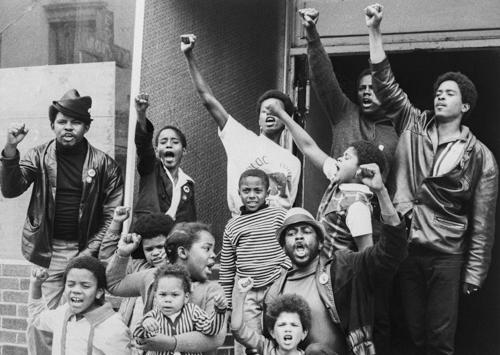
Nathan Wright discusses Black power ; part 1
1967 Author and scholar Nathan Wright discusses black power and identity and his book, “Black Power and Urban Unrest.” Wright talks about the importance of identity in the Black community; leadership; violence and poverty in urban Black communities; the importance of higher education for Blacks; and the nature of power and how its creative use can bring about social change.
-
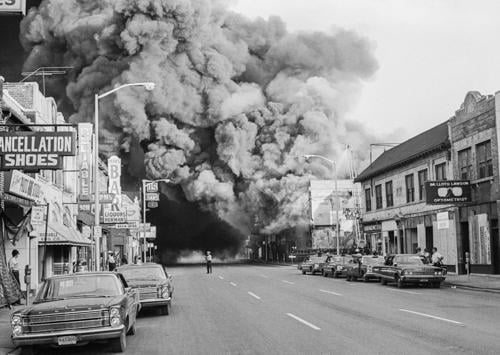
Nancy Milio reads from and discusses her book "9226 Kercheval"
Jun. 13, 1970 Nancy Milio's book, "9226 Kercheval: The Storefront That Did Not Burn," is about community health services offered in a ghetto on the south side of Detroit, Michigan. As a nurse, Milio knew how important it was to offer quality health services to poor and uneducated individuals. With their real names changed, Milio talks about her experiences with Mrs. Watkins, Johhnie West and others at the center.
-
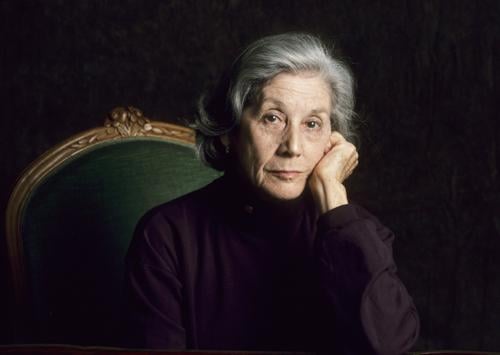
Nadine Gordimer discusses her book "A Guest of Honor"
Nov. 6, 1970 South African writer and political activist Nadine Gordimer joins Studs Terkel to talk about her book “A Guest of Honor,” a novel that explores African politics in a post-colonialism era. As an introduction to their conversation, Terkel plays a clip of an interview with Conor Cruise O’Brien, where an interaction with former Ghanaian president Kwame Nkrumah is discussed.
-

Myra Alexander discusses what's wrong with Chicago
1980 Content Warning: This conversation includes racially and/or culturally derogatory language and/or negative depictions of Black and Indigenous people of color, women, and LGBTQI+ individuals. Rather than remove this content, we present it in the context of twentieth-century social history to acknowledge and learn from its impact and to inspire awareness and discussion. A citizen of Chicago, Myra Alexander, believes Chicago is lost and hopeless. Chicago, she explains, will always have its problems with its one party system. Alexander said prejudice is wide-spread in Chicago.
-
Murray Kempton talks with Studs Terkel
Sep. 13, 1973 Murray Kempton discusses race relation in the United State of America and the Black Panther Trial in New York. Murray also discusses his book, originally published as, "The Briar Patch: The People of New York versus Lumumba Shakur, et al." This book was reprinted as "The Briar Patch: The Trial of the Panther 21" in 1997.
-
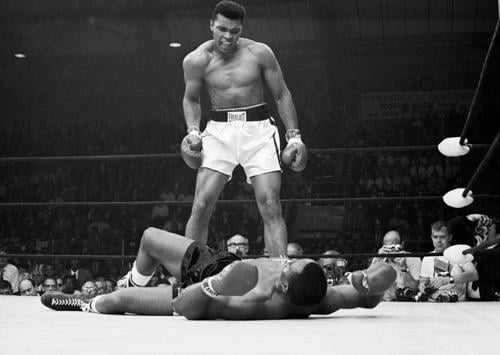
Muhammad Ali discusses his book "The Greatest: My Own Story"
Nov. 26, 1975 Content Warning: This conversation includes racially and/or culturally derogatory language and/or negative depictions of Black and Indigenous people of color, women, and LGBTQI+ individuals. Rather than remove this content, we present it in the context of twentieth-century social history to acknowledge and learn from its impact and to inspire awareness and discussion. Muhammad Ali discusses his book "The Greatest: My Own Story," touching on topics including his childhood and family, conversion to Islam, stance on the Vietnam War, and experiences in jail.
-
Mrs. Bailey Bishop and Edith Neisser talk about education of children, part 2
1965 Part 2 of a series sponsored by the national conference of Christians and Jews. Includes "Rearing the Child of Good Will" and "The Child and the Changing World." Mrs. Bailey Bishop and Ms. Neisser discuss the importance of an open mind and a accepting environment in education and at home, and how this helps the children to accept change as it happens.
-
Mrs. Bailey Bishop and Edith Neisser talk about education of children, part 1
1965 Part 1 of a series sponsored by the national conference of Christians and Jews Titles discussed include "Rearing the Child of Good Will" and "The Child and the Changing World." Includes interviews of Mrs. Bailey Bishop and Edith Neisser. They discuss the importance of an open mind and accepting environment in education and at home, and how this helps the children to accept change as it happens. Excerpt of "Jimmy" discussing his feelings about school (unsure of record number the quote comes from).
-

Mothers discuss the hardships of living on welfare
1968 Five mothers from Chicago discuss the hardships of living in poverty and how little welfare actually helps with Studs Terkel.
-
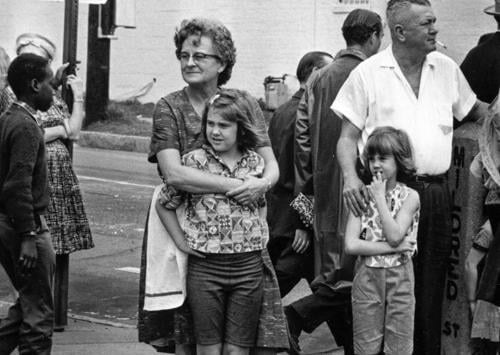
Molly a poor white woman talks with Studs Terkel
Apr. 9, 1965 Interviewing in Montgomery, Alabama, with Molly a poor white [part 7, tape 2 of 2]. She speaks of the culture and heritage of poor white families. She advocates for unity and leadership and sense of worth for poor whites. Some of the recording fades out and has some static that makes it hard to understand.
-
Mike Royko discusses his newspaper column
Jun. 17, 1966 Chicago humorist and newspaper columnist for the Chicago Daily News, the Chicago Sun-Times, and the Chicago Tribune, Mike Royko, goes over his past writings. Reflections include Royko's daily column, which covered race relations, politics, the Chicago Cubs, and life in Chicago. Together, Lois Baum and Studs Terkel read one of Royko's articles aloud.
-
Maya Angelou and Tom Wicker discuss life and culture in the U.S. South
Jul. 1, 1979 Poet Maya Angelou and journalist Tom Wicker discuss life in the U.S. South and how the region’s history has shaped its culture. Topics of discussion include social dynamics and race in the South, the concept of “home” and what it means to return to one’s roots, and religion in the South. Angelou reads excerpts of her poetry, including “Still I Rise” and “Phenomenal Woman,” and shares spiritual songs from her childhood.
-
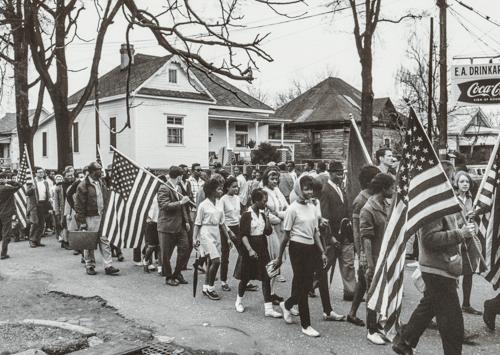
Margaret Long talks with Studs Terkel
1965 Margaret Long discusses the relationship between African Americans and white southerners that live in Montgomery, Alabama. She discusses the reactions to the changes in civil rights laws.
-
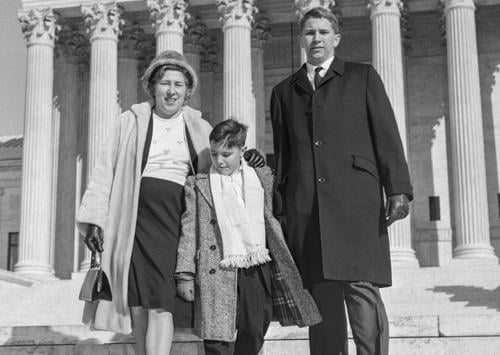
Madalyn Murray discusses her family history, feminism, and theology
Dec. 13, 1966 Madalyn Murray discusses her family history, feminism, and theology and how her experiences with those subjects have shaped her worldview.