Listen to New Voices on Studs Terkel our partnership with 826CHI-here! Read the Story


Showing 211 - 225 of 558 results
-

Madame Lotte Lehmann discusses teaching
Nov. 6, 1964 Now retired from singing opera, when Madame Lotte Lehmann is not traveling around Europe, she teaches, what she says, are the best students she has encountered, at Northwestern University. Lehmann explains her hope is to not only teach but to inspire singers to be larger than life and to bring out their own personalities in a song.
-
Lukas Foss discusses his career as a composer of classical music and conductor of the Milwaukee Symphony Orchestra
Mar. 14, 1983 Studs interviews Lukas Foss about his career as a classical composer and conductor. Foss talks about his work with the Milwaukee Symphony Orchestra. He reflects on how teachers influenced his career and how he learns from each orchestra that he works with. He shares his love for poetry and explains how he makes music from poems and uses "Thirteen Ways of Looking at a Blackbird," a poem by Wallace Stevens, to illustrate. They discuss how Foss composes and how it is very similar to the way Jazz is composed with improvisation.
-
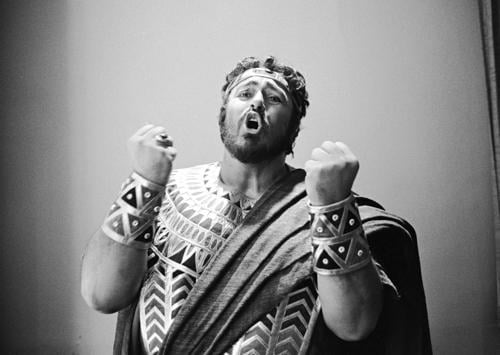
Luciano Pavarotti discusses some of his traits
Dec. 9, 1976 Being a Pisces, Pavarotti says he's always looking for perfection. He admits the biggest critic of his work is himself. Pavarotti said that he loves the charm of the French language and he likes to learn new languages. He talks of recording some music in Russian. Being able to reach those high C notes, Pavarotti says, is the most athletic part of his voice.
-
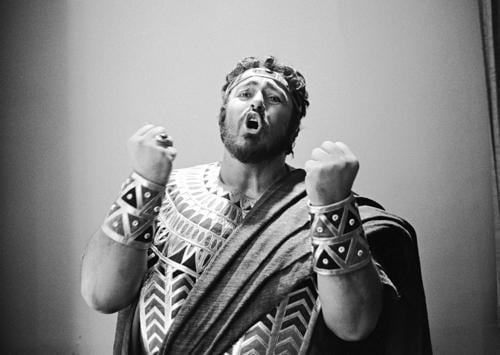
Luciano Pavarotti discusses singing for the Pope and other audiences
Oct. 8, 1979 Pavarotti recalls his meeting with the Pope was very special. Singing "Ave Maria" for him was like God lit up, explained Pavarotti. There are more younger people in the audience, said Pavarotti. They're very surprised that opera's so beautiful, as they believed it was an old fashioned thing.
-
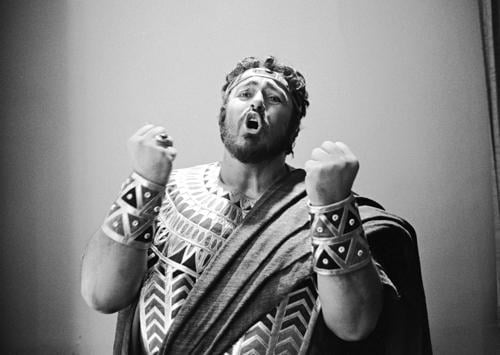
Luciano Pavarotti discusses performing
Nov. 20, 1975 Instead of being called "The King of the High C's," Pavarotti would rather be known as "The King of the Bel Canto". Pavarotti said he didn't have the greatest of enthusiasm prior to performing his first concert. However, it ended up being a phenomenal experience, he said. A great singer, Pavarotti added, is very human and romantic. One needs to feel what one's singing and lastly, one must be a beautiful person inside.
-
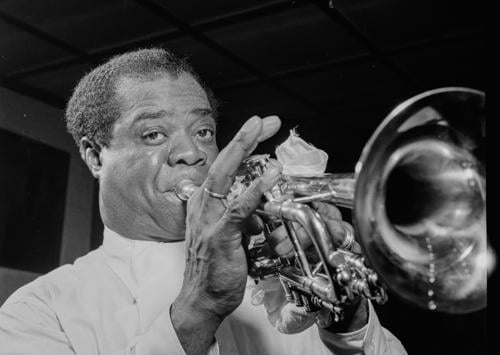
Louis Armstrong discusses music
Jun. 24, 1962 In a nightclub in Chicago, at two in the morning and after a performance, Louis Armstrong talks about his music stylings. Notes are good to learn the tune, says Armstrong, but it's all about the phrasing. Armstrong explained, it's up to you to express yourself. Armstrong shared the one piece of advice that had always stuck with him. King Oliver told Armstrong not to worry about the notes but rather to put some lead into the song.
-
Lotte Lehmann talks with Studs Terkel
Apr. 14, 1960 Lotte Lehmann discusses her retirement from opera and how she knew when to stop singing concerts.
-
Lotte Lehmann discusses her opera roles and how opera has changed
Apr. 18, 1960 Interviewing Madame Lotte Lehmann about her opera roles and how the genre of opera has changed.
-
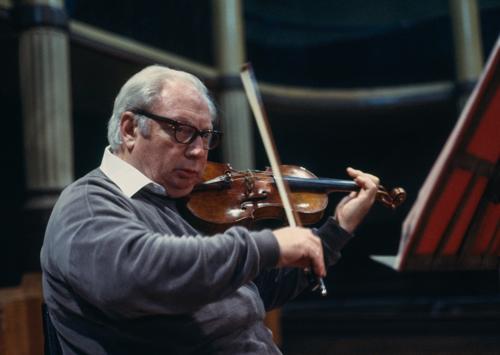
Live musical performance by Isaac Stern
Jan. 20, 1989 Studs Terkel sits down to interview American Violinist Isaac Stern. Stern performs for Terkel on the radio.
-
Lino Chavez and his Mexican Folk Ensemble discuss music, culture and performing
Aug. 12, 1959 Lino Chavez and his Mexican Folk Ensemble discuss, through a translator, Mexican culture and music and perform their song "El Jarabe" at 2:50, "El Tilingo" at 13:50, "Maria Chuchena" at 23:05, "El Cascabel" at 29:31, "La Bamba" at 38:39, and "El Ahualulco" at 47:55. These songs have been removed from this recording.
-
Lincoln Mayorga discusses American popular piano music
May. 30, 1984 Studs Terkel and Lincoln Mayorga discuss the evolution of American popular piano music with Mayorga playing examples.
-
Licia Albanese discusses her opera performances
Feb. 27, 1960 Licia Albanese discusses her performance preparations, advice to young new opera singers, the conductor techniques from Fausto Cleva, and the late Arturo Toscanini.
-
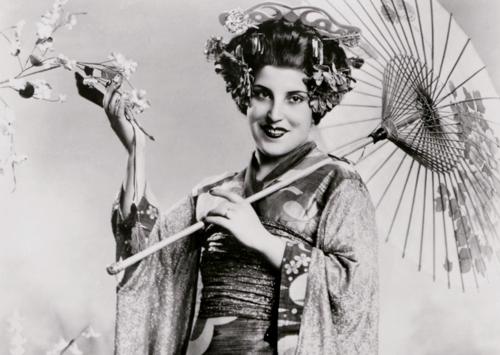
Licia Albanese discusses her opera performances
Feb. 27, 1960 Licia Albanese discusses her performance preparations, advice to young new opera singers, the conductor techniques from Fausto Cleva, and the late Arturo Toscanini.
-
Leonard Sorkin discusses his career as a violinist with the Chicago Symphony Orchestra, the Fine Arts Quartet and as Director of Chamber Music Studies at the University of Wisconsin
Apr. 9, 1982 Studs interviews Leonard Sorkin about his career as a violinist. They discuss his training, which began in early childhood and who he studied under. Sorkin plays a few short tunes to demonstrate his art, and one was his childhood favorite of "Allegro" by Joseph Fiocco. Sorkin names Jascha Heifetz as one who he admired all his life and shares the sounds and names of others who have influenced him. He explains to Studs how the Fine Arts Quartet members change to adapt to new players but the quartet sound remains the same.
-
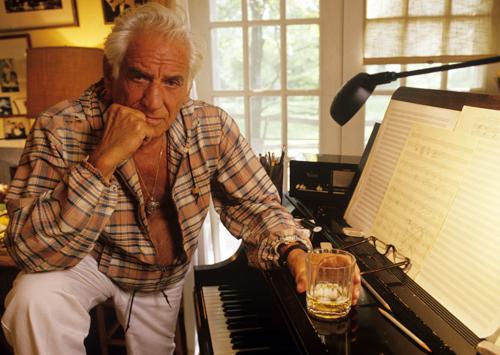
Leonard Bernstein discusses his career, music, and education
Feb. 1, 1985 Leonard Bernstein discusses his career as a composer along with his thoughts on American culture, musical theater, Black music, classical music, and education; music is played throughout the program including songs from Marc Blitzstein's play "The Cradle Will Rock."