Listen to New Voices on Studs Terkel our partnership with 826CHI-here! Read the Story


Showing 91 - 105 of 158 results
-

Gordon Zahn talks with Studs Terkel
1970 Terkel interviews Gordon Zahn about war and peace.
-
Gordon Zahn discusses his book "In Solitary Witness" ; part 1
Jan. 15, 1965 One's conscience, morals and religion are all apart of Gordon Zahn's book, "In Solitary Witness: The Life and Death of Franz Jagerstatter". Zahn talks about who Jagerstatter was and what made him decide to say "No" to Hitler's army. Jagerstatter chose to lay with the community of saints rather than kill Jewish people.
-
Gordon Zahn discusses his book "In Solitary Witness" ; part 2
Jan. 15, 1965 Gordon Zahn continues to talk about his book, "In Solitary Witness: The Life and Death of Franz Jagerstatter". When doing his research for the book, it puzzled Zahn to find out that very few young people in Jaggerstatt's home village knew who Franz Jaggerstatt was. Zahn explained Jaggerstatt knew he was doing the right thing by objecting to Hitler's army because a Catholic priest had done the same thing.
-
Georgia Turner discusses living in a tent city
Apr. 28, 1962 Georgia Turner has been working in the fields since she was 8 years old. Today, she's 58 years old, and she lives in Tent City, in Fayette County, Tennessee. No matter how many hardships Turner encountered, she said she lives her life so that she can go to heaven. There are also excerpts from previous interviews of James Baldwin and Lillian Smith.
-
George Drossos, The Thacker Family, Mrs. Webb and Benny Bearskin discuss living in Chicago
1968 The third program of "Division Street: America" features four profiles: George Drossos, an elderly, Greek man, the Thacker family who recently moved to Chicago, Mrs. Webb, a corner store owner and Native American Benny Bearskin. George Drossos talks about first moving to Chicago and getting acclimated to the city. He recalls visiting other states for a month and then having that feeling of "nostos," or wanting to return home to Chicago. A mother of 15 children and 21 grandchildren, Mrs. Thacker said she doesn't like all the hoodlum business that goes on in Chicago.
-
Frederick Wiseman discusses public welfare
Feb. 20, 1976 Discussing public welfare and interviewing Frederick Wiseman, director of the documentary film, "Welfare."
-
Fred Morris discusses his time working in the rural churches in Brazil
Nov. 14, 1974 Content Warning: This conversation includes graphic descriptions of physical abuse. A Methodist minister, Fred Morris, talks about the 11 years he lived in Brazil. Morris found it difficult to preach to the poor people whose children were dying of starvation. Morris also talks about the time he was abducted and tortured.*Please note: some sections have been edited out from the original recording due to copyright considerations
-
Former halfway house residents discuss halfway houses
Oct. 16, 1973 Discussion about halfway houses with a panel of former halfway house residents.
-
Father John McKenzie and Dr. Howard Schomer discuss personal responsibility, morality and hate, as it pertains to the Vietnam War ; part 2
1965 The interview continues with Father John McKenzie and Dr. Howard Schomer talking about fear and dissent. Schomer says Christians have the duty to dissent when they believe their beliefs are being contradicted by policy. He also talks about not understanding a dampening down of the human mind when it comes to human issues. Father McKenzie adds that society is made up of the best educated ignoramuses that ever existed.
-
Father John McKenzie and Dr. Howard Schomer discuss personal responsibility, morality and hate, as it pertains to the Vietnam War ; part 1
1965 Whether in the United States or Vietnam, Dr. Schomer asks what are our personal responsibilities for the atrocities? Father John McKenzie talks about a lowering of people's moral tone. People have put their morality in their pockets, so as to get cleared of something and not get involved, added Father McKenzie.
-
Erik Hesselberg discusses his navigation on the Kon-Tiki expedition
Oct. 9, 1962 In a their man-made raft, Hesselberg and his crew travelled 4300 sea miles out in the open water. Erik Hesselberg talks about navigating the three-month long expedition on the Kon-Tiki from South America to French Polynesia. Hesselberg said everyone should have such an experience as he did, to be unencumbered while out at sea.
-
Elizabeth Janeway discusses her book "Man's World, Woman's Place"
1970 Elizabeth Janeway discusses her book "Man's World, Woman's Place" and the gender role women are taught since birth; reads passage from book; includes interview at 16:01 with a woman speaking against the Women's Movement during an outdoor protest.
-
Edward T. Hall discusses his book "Beyond Culture"
Apr. 28, 1976 Edward T. Hall talks about his beliefs on culture. The discussion includes how cultures differ between countries with a focus on Vietnam. They also discuss the cultural differences in America. Hall also explores how technologies, such as computers and vehicles change culture and cause people to become more like the machine itself. The end of the interview includes a short reading of "Beyond Culture".
-
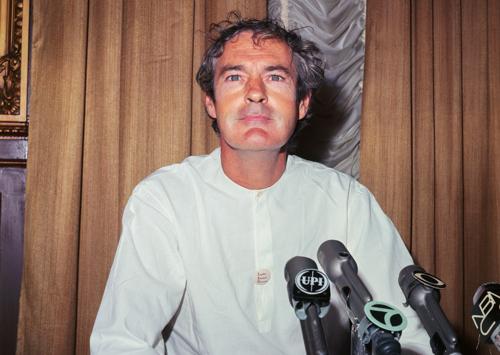
Dr. Timothy Leary discusses the stages of the psychadelic experience of turning on and his role as a Shaman ; part 2
Dec. 1, 1966 Studs interviews Dr. Timothy Leary about the three stages of the psychadelic experience: turning on, tuning in, and dropout. Leary discusses how his life changed from being a successful psychologist and professor at Harvard to renewing his life as a religious teacher. He shares how the drug LSD is used in the tribal communities who turn on and also explains the values of those who practice turning on. Leary also describes other methods used to turn on, which he considers a religious experience. Studs reads what Richard Goldstein said about Dr. Leary.
-
Dr. Theodore Binder discusses his time in Peru and Mexico
Nov. 3, 1975 Interviewing Dr. Theodore Binder and discussing Peru and Mexico.