Listen to New Voices on Studs Terkel our partnership with 826CHI-here! Read the Story


Showing 76 - 90 of 204 results
-

John Bergman, Mike Bail, Jill Reiner, Tom Swift, Geese Theatre Company in conversation with Studs Terkel
May. 23, 1988 Interviewing members of the Geese Theatre Company; Mike Bail, Jill Reiner, Tom Swift, and Artistic Director John Bergman. The Geese Theatre Company specializes in drama therapy in prisons, for correctional staff, and for sexual and violent offenders.
-
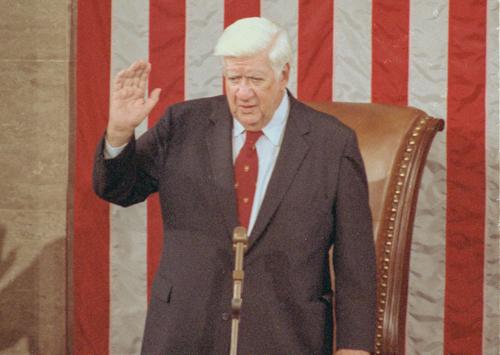
Jimmy Breslin, journalist and author discusses his book about the Watergate Affair
May. 22, 1975 Discussing "How the Good Guys Finally Won : Notes from an Impeachment Summer" and interviewing Jimmy Breslin.
-
Jimmy Breslin discusses his book “The Gang That Couldn't Shoot Straight” ; part 2
Jimmy Breslin discusses and reads excerpts from “The Gang That Couldn't Shoot Straight,” his novel about a Brooklyn Mafia boss.
-
Jimmy Breslin discusses his book “The Gang That Couldn't Shoot Straight” ; part 1
Jimmy Breslin discusses and reads excerpts from “The Gang That Couldn't Shoot Straight,” his novel about a Brooklyn Mafia boss. Content Warning: This conversation has the presence of outdated, biased, offensive language. Rather than remove this content, we present it in the context of twentieth-century social history to acknowledge and learn from its impact and to inspire awareness and discussion.
-
Jessica Mitford discusses her book "Kind and Usual Punishment: The Prison Business"
Sep. 14, 1973 Jessica Mitford an English born author, investigative journalist, and civil rights activist discusses her book "Kind and Usual Punishment: The Prison Business,". Ms Mitford and Studs discuss her finding that prisoners were used as test subjects for drug trials and other medical research, and slave labor. Ms Mitford's book makes the argument that prisons are a governments means to making money from the prisoners they have punished. They speak about reform needed in the laws and decriminalization of many things and the abolishing of prison altogether. Ms.
-

Jean Cau discusses his book "La pitié de Dieu" ; part 1
Nov. 1, 1962 Through an interpreter, Jean Cau discusses his book "La pitié de Dieu", or translated, "The Mercy of God". Cau's book is about four prisoners and their interactions with one another. Cau explained, in one way or another, with a reference to Kafka, we are all condemned and it will be a great surprise to all to learn what we are guilty of.
-
Jane Kennedy talks with Studs Terkel
Oct. 14, 1971 Jane Kennedy talks about her political views and her view of society as a whole. She also discusses her experience in an all women's prison and how the prison system dehumanizes the inmates.
-
Jan Bauer, Mary Garrity, Ann Griffin, and Harry Wells discuss Chicago law system and community groups
Mar. 13, 1978 Jan Bauer, Mary Garrity, Ann Griffin and Harry Wells discuss crime, poverty, law, and community relations. They each come from different community programs which are trying to make Chicago safer for everyone.
-
James Mills discusses his book "Report to the Commissioner," his newest publication
Oct. 3, 1972 James Mills, a novelist and journalist, talks to Studs about his book "Report to the Commissioner". Mr. Mills and Studs discuss the story and Mr. Mills goes in depth into the process of police detectives working a case. Studs plays an excerpt of a Chicago policeman talking about working on the tactical squad on the police force. The policeman tells of how they go into a neighborhood as civilians to stop crime.
-
James Graham-Lujan discusses the works of Federico Garcia Lorca; part 2
1964 James Graham-Lujan concludes by talking about Garcia Lorca's most celebrated plays, Blood Wedding, Yerma, and The House of Bernarda Alba. Tragedy is brought about due to the passion of a woman in each of the plays.
-
James Blake pianist, author, and petty thief talks about his book "The Joint"
Jun. 19, 1971 Mr. Blake talks to Studs about his book "The Joint." The book is a collection of letters written by Mr. Blake while in prison off and on for 13 of 20 years. He reads out loud some of the letters from the book.
-
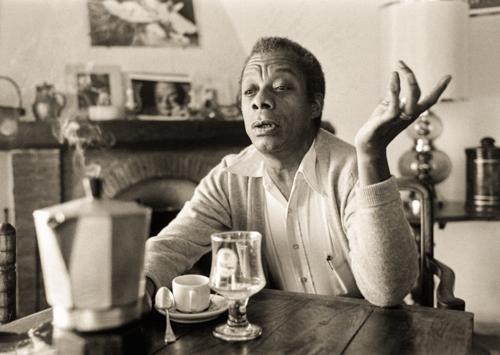
James Baldwin discusses his book "The Evidence of Things Not Seen"
Nov. 22, 1985 John Baldwin talks about his book "The Evidence of Things Not Seen" in which discusses the Wayne Williams Atlanta child murders of 1979-1981. This record is part of the Studs Terkel Almanac.
-
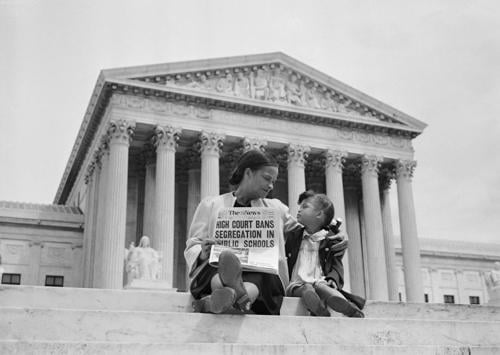
Ira B. Harkey discusses the south, civil rights, race relations, racism, his newspaper, and his career ; part 1
1966 Ira B. Harkey discusses the south, civil rights, race relations, racism, his newspaper, and his career. Includes Ira Harkey reading his writing from his newspaper the Mississippi "Chronicle-Star."
-
-