Listen to New Voices on Studs Terkel our partnership with 826CHI-here! Read the Story


Showing 241 - 255 of 336 results
-

Gisela May discusses her role in "Mother Courage and her Children"
Oct. 1972 While in a dressing room, Gisela May talks about the songs that she sings in the play, "Mother Courage and Her Children". May also talks about lessons learned from Bertolt Brecht's plays.
-
Gilbert Moses discusses The Free Southern Theater and his play "Blues for Mister Charlie" with Studs Terkel ; part 2
Aug. 10, 1966 Studs interviews Gilbert Moses about his play, "Blues for Mister Charlie" and The Free Southern Theater. They discuss a variety of plays that include, "White America," "Roots," and "Blues of Mister Charlie."
-
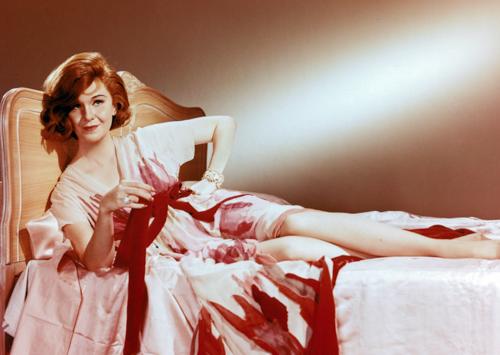
Geraldine Page discusses her role as Zelda Fitzgerald
1970 Geraldine Page is Zelda Fitzgerald in the play, "Clothes for a Summer Hotel". When first reading the play, Page didn't like Zelda because she believed Zelda was a privileged, rich, spoiled brat. Although she said Zelda had her flaws, Page learned that Zelda had the gift of writing.
-
George Rose discusses his career and upcoming role at the Globe Theatre ; part 2
1963 Tony award-winning actor and singer George Rose discusses his role in the play "Common man: a man for all seasons" by Robert Bolt.
-
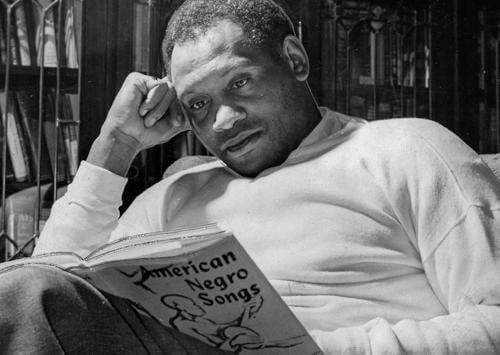
Gathering of friends discussing Paul Robeson
May. 8, 1970 Recorded live on Chicago's South Side. Robeson is ill at the time of recording. Speakers: Earl Dickerson, Etta Moten Barnett, Judge Sidney Jones, J. Mayo "Ink" Williams, Joan Brown (possibly Abena Joan Brown), Charles Hamilton, Margaret Burroughs, [John Gray's sister], [Stevens?]
-
Garry Wills discusses his book "John Wayne's America: The Politics of Celebrity"
Mar. 10, 1997 Garry Wills, writer and historian, discusses his book "John Wayne's America: The Politics of Celebrity." He explores the popularity of John Wayne that took him from an actor and made him into an American symbol. He explores how the symbol of John Wayne is used by white male politicians to influence their decisions and how that affected the Vietnam War. Wills gives a biography of John Wayne, including the many influential people in his life such as his working partner, John Ford.
-
Frederick Ritter discusses and preforms classic Austrian Vienna Volks Theatre music
May. 23, 1963 Frederick Ritter, professor, preforms musical numbers from Austria. He also discusses the history of baroque theater and Volk's Theatre, along with Viennese culture. He is joined by Sabine Roupp, Joseph Gardner and David Miller on piano during the performances. Ritter also compares Bertolt Brecht with earlier writers, Johann Nestroy and Ferdinand Raimund. Selected pieces includes works by Mozart and Ferdinand Raymond and Johann Nestroy.
-
Frank Galati discusses the play "She Always Said, Pablo"
Mar. 5, 1987 Director Frank Galati explains that the play "She Always Said, Pablo," was about Gertrude Stein's relationship with Pablo Picasso. Referring to the play itself, Galati also said that he tried to marry their narrative writings with some operatic song.
-
Frank Galati discusses the play "Cry, the Beloved Country"
Jul. 20, 1993 Frank Galati and some cast members of "Cry, the Beloved Country," talk about the play. Fathers, sons, relationships, faith and redemption are all areas covered in the play. Galati explains how the story of the play itself draws the audience inward and gets them mesmerized.
-
Frank Galati and cast members of "Mother of Us All" discuss the play
May. 10, 1984 When asked what the play meant to her, cast member Carmen Pelton, said the play was a presentation of Susan B. Anthony and her struggles. Alan Stone explained why he felt chills when Anthony spoke of her troubles. "Mother of Us All," explained director Frank Galati was a look at the good fight Susan B. Anthony pursued toward women's suffrage.
-
Frances Cuka discusses the play "A Taste of Honey" and her career ; part 1
Mar. 8, 1962 British actress Frances Cuka discusses the play "A Taste of Honey" and her career. Audio cuts off abruptly at the end of the interview.
-
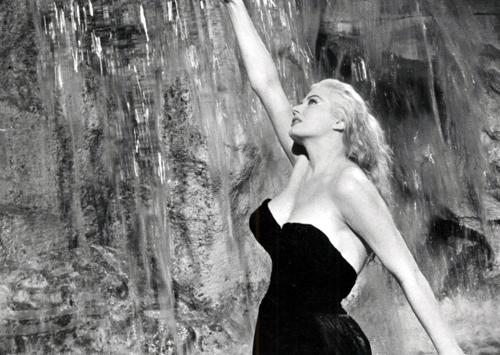
Federico Fellini and actors discuss their film "La Dolce Vita" and the character Steiner
Dec. 1, 1962 Studs Terkel plays interview clips of actors [Marcello Mastroianni and Alain Cuny] and the director Federico Fellini discussing their film "La Dolce Vita" and the character Steiner. At the beginning of the program Studs Terkel interviews Nelson Algren, a writer, and Mario Devecki (a person who made the film "La Dolce Vita" happen) about La Dolce Vita and Steiner.
-
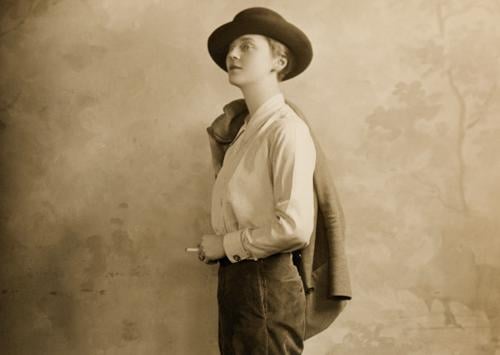
Eva Le Gallienne discusses theater
Feb. 1, 1965 Eva Le Gallienne discusses and compares American theater and European theater. She also discusses different playwrights such as Henrik Johan Ipsen and Anton Chekhov.
-
Eugenie Leontovich discusses her acting career
Jul. 7, 1959 The Russian-born actress Eugenie Leontovich talks about how she researched books in order to prepare for the role of Anastasia. Madame Leontovich also talks about using the Stanislavski Method when teaching her students about acting and performing. Today's theatre arts in America are very strong, Leontovich commented.
-
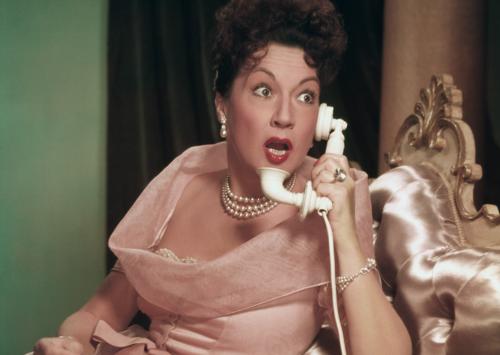
Ethel Merman discusses her experiences as a performer
Jun. 8, 1961 Ethel Merman, American musical theater performer, discusses her experiences as an actor and singer.