Listen to New Voices on Studs Terkel our partnership with 826CHI-here! Read the Story


Showing 106 - 120 of 460 results
-
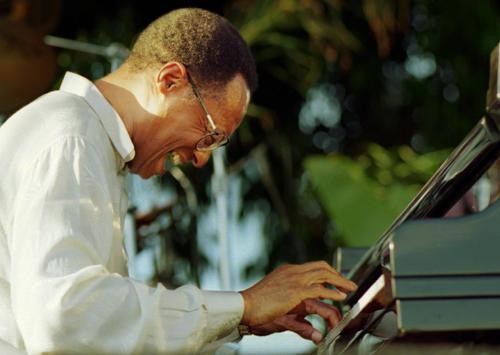
Ramsey Lewis discusses his career
Dec. 22, 1980 Starting at a young age, Ramsey Lewis really loved music and as he got older, he'd practice five or six hours a day. Lewis says he knew nothing about jazz until he met Wallace Burton at the age of 15. Burton hired Lewis on the spot to play in his band. Church music, Spanish music, Duke Ellington and the Beatles, says Lewis, were all great influences to him.
-
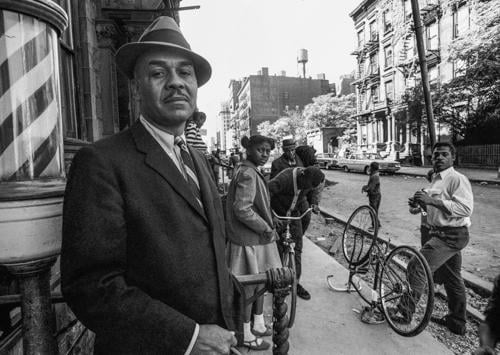
Ralph Ellison American novelist and literary critic discusses his life and writing
1970 Ralph Ellison, winner of the National Book Award for Fiction for his book "Invisible Man," discusses his early life and education and his life as a writer and lifetime scholar. He speaks on being a musician (trumpet), the joy of music and the Church and how they fit into the lives of African Americans.
-

-
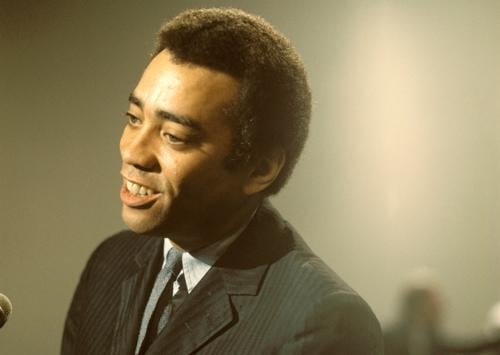
Presenting music with Oscar Brown, Jr
Jun. 6, 1977 Music performance by Oscar Brown, Jr.
-
Presenting music and discussing Tito's interpretation of Verdi and his own music with Opera singer Tito Gobbi
Nov. 10, 1971 Studs Terkel interviews Tito Gobbi on his interpretation of Verdi. He also gets an interpretation of Gobbi's own music.
-
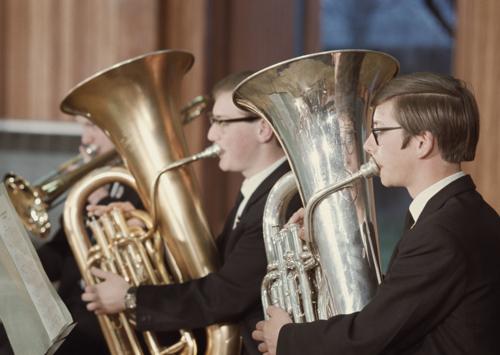
Presenting music and discussing the tuba with tubists Arnold Jacobs, Harvey Phillips, Fritz Kaenzig, and Richard Frazier
Feb. 20, 1987 Presenting music and discussing the tuba with tubists Arnold Jacobs, Harvey Phillips, Fritz Kaenzig, and Richard Frazier. This mixdown includes recorded and live music in the last three minutes.
-
Polly Podewell and Johnnie McDonough discuss jazz music and vocalists
Oct. 15, 1979 Polly Podewell and Johnnie McDonough evaluate jazz vocalists, musical influences, and compare music genres. Jazz music performances of Polly Podewell (from private tape) are interspersed throughout the interview as well as recordings from Mildred Bailey, Helen Ward, and Billie Holiday. Songs are removed on this file due to copyright reasons.
-
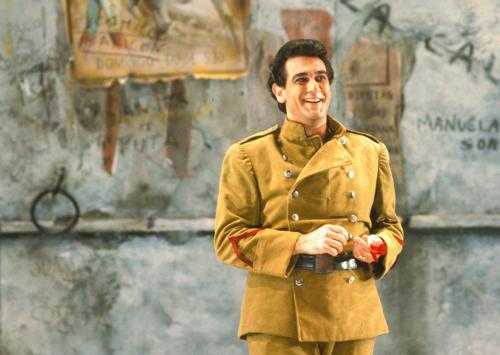
Placido Domingo discusses his career as a tenor singer
Dec. 14, 1979 Placido Domingo discusses his career as a tenor singer and conductor, including his role in the film "Otello" directed by Franco Zeffirelli and based on the opera by Giuseppe Verdi.
-
Pianist Andre Watts talk about his profession
Jan. 22, 1986 Andre Watts's mother believed learning to play music was as important as learning the alphabet and mathematics in school. Watts first studied the fiddle for six months before he went onto the piano. Watts believed playing the piano was a transitory art and that his interpretation of a composer's music was very important to convey to his audiences.
-
Phyl Garland discusses her book "Sound of Soul" and the history of black music in America ; part 2
Nov. 25, 1968 Studs interviews Phyl Garland about her book "Sound of Soul." They discuss various musicians that she mentions in her book and their influence on black music. Garland explains the music of young black artists and how commercialization of music gave blacks an opportunity that they would not have had otherwise. Garland talks about how Fannie Lou Hamer used music to express her message in the Civil Rights Movement and as a women's rights activist. Studs and Garland discuss various black female artists and their music.
-
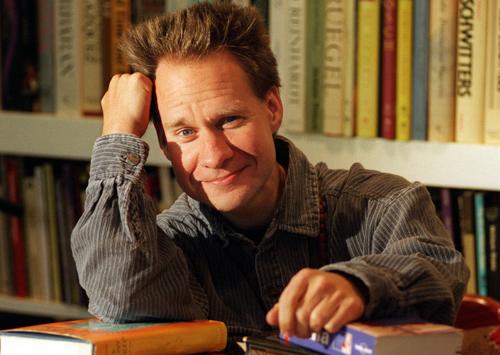
Peter Sellars discusses his job at the Los Angeles Festival
Feb. 16, 1990 Actor Peter Sellars takes on a different role as director of the Los Angeles Festival. The sixteen day event will happen in parks, streets, churches and community centers all over Los Angeles, says Sellers. With all the diverse groups living in Los Angeles, there's so much culture to share with one another & Sellers wanted people to get out and see things that they never experienced before.
-
Peter Schickele performs and lectures on the music of composer P.D.Q. Bach
Dec. 1, 1988 Peter Schickele, the man behind the pseudonymous musical persona P.D.Q. Bach, gives a lecture on the oft-forgotten composer and sibling of Johann Sebastian Bach, playing and discussing a number of works by the fictitious composer.
-
Pete Seeger discusses music, the Hudson River, and American culture ; part 2
Feb. 10, 1969 The conversation spans trends in American culture plans for public access television.
-
Pete Seeger discusses music and the Hudson River ; part 1
Feb. 10, 1969 Pete Seeger discuss music and his plan to build a sloop to sail on the Hudson River.
-