Listen to New Voices on Studs Terkel our partnership with 826CHI-here! Read the Story


Showing 391 - 405 of 460 results
-

Dennis Russell Davies discusses his career in classical music
Apr. 15, 1997 Music director and contemporary conductor of the Brno Orchestra, Grammy winner, and pianist Dennis Russell Davies discusses his innovative techniques when conducting pieces by musicians such as Philip Glass and his work with music fusion.
-
Dempsey Travis discusses jazz artists and recalls his early memories of Chicago jazz
Feb. 1, 1989 Dempsey Travis presents a jazz program and discusses the life, the music, and the community of Chicago jazz from before The Great Depression until World War II. Travis discusses 1920s-1930s Chicago for Black families including rent parties, breakfast dances, employment opportunities, union strikes, and jazz.
-
Dempsey Travis discusses his book "An Autobiography of Black Jazz"
Nov. 7, 1983 Dempsey Travis talks about his book, "An Autobiography of Black Jazz," as he recalls his childhood memories of Jazz, Blues, and Boogie-Woogie artists that he met.
-
Dempsey Travis discusses big band jazz players
Nov. 21, 1994 Dempsey Travis, real estate entrepreneur and civil rights activist turned historian and author, recalls his earlier days meeting and listening to many of the African American jazz artists. Some of the musicans mentioned are Louis Armstrong, Jimmie Lunceford, Fletcher Henderson, Duke Ellington, Earl Hines, Art Tatum, Cab Calloway, Nat King Cole, and Benny Goodman.
-
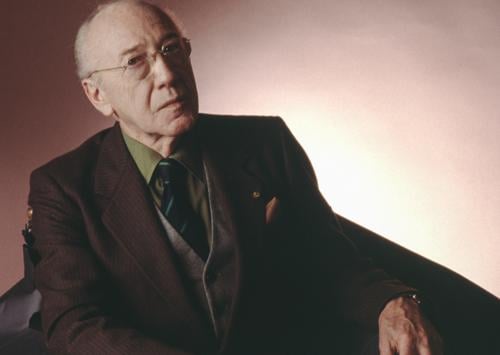
David Diamond discusses his training, influences and work as a classical composer
May. 28, 1975 Studs interviews David Diamond who is in Chicago for a concert at Thorn Hall. Diamond reflects on his family background and his exposure to diverse theater and movies of a variety of cultures that influenced his music. He explains his training and how he uses emotion and then structure to create his work. Studs and David discuss McCarthyism and its affect on performers and the personal affect it had in Diamond's life. The musical pieces are removed from this edited version of the original recording.
-
David Amram and Steve Goodman discuss folk music
Jan. 3, 1976 David Amram and Steve Goodman, composers and performers of popular music and folk music, discuss writing and creating music together.
-
Dan Tucker discusses his opera writings and Sasha Gerritson, David Richards, and David Laub discuss their works
Jun. 18, 1997 Studs interviews Chicago Tribune reporter turned opera composer, Dan Tucker. He discusses how his music was inspired by poets Federico García Lorca and William Shakespeare and authors Peter S. Beagle and Christopher Fry. Sasha Gerritson, soprano and founder of the L'Opera Piccola opera troupe, David Laub, bass baritone, and David Richards, L'Opera Piccola music director and pianist are in studio and talk about their work and thoughts on the opera songs.
-
Dale Clevenger discusses his career as a Jazz musician and member of the Chicago Symphony Orchestra
Nov. 29, 1977 Studs interviews Dale Clevenger about his music with the Chicago Symphony and his jazz group, Ears, playing at Orphans in Chicago. They discuss the improvisation of Jazz and Bach. Clevenger mentions various Jazz musicians and their style. The music is removed from this edited version of the original recording.
-
Dale Clevenger discusses his career as a Jazz musician and member of the Chicago Symphony Orchestra
May. 13, 1980 Studs interviews Dale Clevenger about his music with the Chicago Symphony and his jazz group, Ears, playing at Orphans in Chicago. Clevenger discusses his work with the symphony. He explains why he credits David Amram for his interest in Jazz music. He names artists like Billie Holiday, Jack Teagarden, and Clark Terry as musical influences in his life. The music is removed from this edited version of the original recording.
-
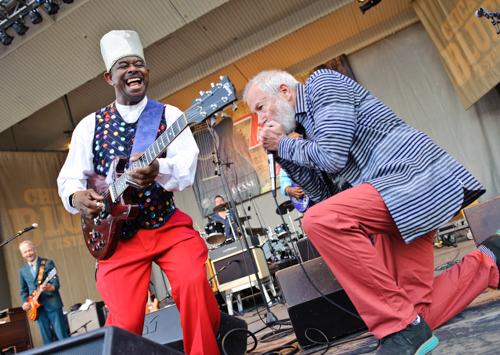
Corky Siegel and members of his ensemble the West End String Quartet discuss chamber blues
Oct. 15, 1996 Terkel interviews Corky Siegel and the West End String Quartet. Corky Siegel and the West End String Quartet also performs during the broadcast. They also discuss the musical genre of chamber blues.
-
Composer, singer and guitarist, Ferron, discusses her music
Mar. 12, 1990 A self-proclaimed underground artist, Ferron, says she may not sell tons of records but she does have a good following of fans. Ferron says people like her music because they're seeking balance in their lives. She further explains that a lot of her lyrics have to do with understanding our purpose in life.
-
Christopher Keene and Gian Carlo Menotti discuss the opera
Sep. 6, 1973 Conductor Christopher Keene and composer Gian-Carlo Menotti dscuss the major themes of the opera"Tamu-Tamu", other opera performances, and the kind of work that goes into creating these works. Recordings are played during the interview: "Aria", sung by Eileen Farrell from the opera "The Consul", "Gloria" sung by an ensemble from the opera "The Saint of Bleecker Street", and "Have You Seen a Child" sung by an ensemble from the opera "Ahmal and the Night Visitors". Music has been removed for copyright reasons. This also includes part of an earlier recorded interview with both subjects.
-
Chris Ethridge and Gram Parsons discuss their album 'The Gilded Palace of Sin'
Mar. 1, 1969 Studs Terkel interviews two of the band members, Chris Ethridge and Gram Parsons. The following topics discussed are: the artists' backgrounds; their musical perspective; their songwriting; Los Angeles; earthquakes; their early life; their lyrics; life in the south (America); and instrumentation. The following musical excerpts have been removed due to copyright restrictions: "Wheels"; "Sin City"; "My Uncle"; "Do You Know How It Feels"; and "Hippie Boy".
-
Chinese pianist Fei-Ping Hsu discusses his musical career
Apr. 5, 1982 Fei-Ping Hsu speaks about growing up in China and how he came to be a pianist.
-
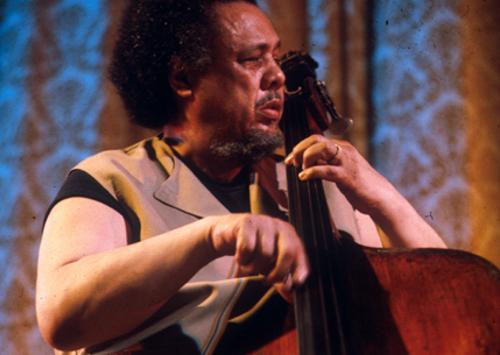
Charles Mingus discusses his book "Beneath The Underdog"
May. 20, 1971 Studs Terkel speaks with Charles Mingus about his life and work in the context of his autobiography "Beneath The Underdog".