Listen to New Voices on Studs Terkel our partnership with 826CHI-here! Read the Story


-

Alexander Eliot discusses his book "Sight and Insight"
Mar. 14, 1959 In his book, "Sight and Insight," Alexander Eliot talks about having spent time in Spain and reflecting upon the masterpieces of art that he has studied and researched throughout his life. Eliot spoke of people being able to use their imagination and their mind's eye to fill in a piece of artwork if something were missing from it. Eliot explained, with one's insight, comes sight.
-
Albert Finney, Ronald Harwood in conversation with Studs Terkel
Mar. 7, 1991 Discussing the play "Another Time," with playwright Ronald Harwood and actor Albert Finney.
-
Alan Watts discusses Zen Buddhism
Dec. 1, 1960 Zen Buddhism, explains Watts, offers a change in one's basic consciousness and of one's basic existence. Zen is a way of liberation from the illusion of oneself. It's not just about the inside of one's self but it's about the outside, too. Zen is not something exotic. It needn't be imported from Japan, said Watts.
-
Alan Watts discusses and reads from his book "In My Own Way"
1970 In Alan Watts' autobiography, "In My Own Way," he explains that the song "Onward Christian Soldier" is militant, and of a militant religion, whereas Zen Buddhism is not militant at all. Watts also says that most of the troubles that go in the world are created by people that take life too seriously.
-
Alan Schneider discusses Samuel Beckett and Edward Albee
Stage director Alan Schneider talks about his work with playwrights, Samuel Beckett and Edward Albee. Plays include "Waiting for Godot," "A Delicate Balance," and "Whose Afraid of Virginia Woolf?"
-
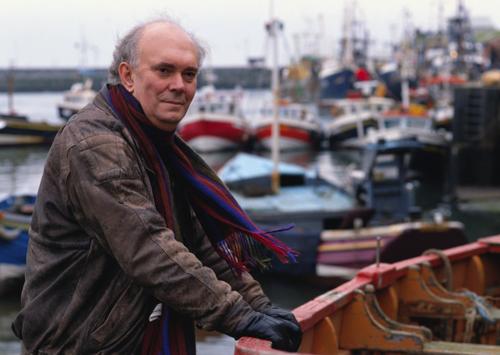
Alan Ayckbourn discusses his background and career
May. 27, 1994 His total love for the theatre began when Alan Ayckbourn worked backstage, and then worked the lights. He eventually began writing plays. To date, he has written 47 of them. Ayckbourn admits that his plays may be dark but he explained that he tries to add some humor into them, too. When writing a play, and without any notes, Ayckbourn said, he'll take four or five days to write out an entire play on a word processor.
-
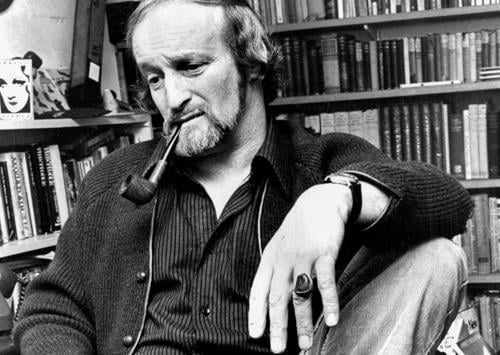
Al Alvarez discusses about literature and poetry
1980 Poet, critic and writer Al Alvarez talks about his personal experiences and how it interlaces with literature and poetry.
-
Aileen Ward discusses the biography "John Keats: The Making of a Poet"
1963 Author, professor, and John Keats biographer, Aileen Ward, discusses and reads from the biography “John Keats: The Making of a Poet.” Ward discusses Keats’ schooling, his relationship with Fanny Brawne, and Keats’ work in comparison to his contemporaries such as Percy Bysshe Shelley. Ward reads Keats’ 1818 poem entitled “Isabella, or the Pot of Basil.” Studs plays a recording of Ralph Richardson reading Keats’ 1819 poem “Ode on a Grecian Urn.”*Please note: some sections have been edited out from the original recording due to copyright considerations
-
Aeronwy Thomas and Brian Walters discuss poetry
Dec. 2, 1976 The two Welsh poets, on a tour of America, join Studs to talk about their own work and their appreciation for the work of Aeronwy's father, Dylan Thomas.*Please note: some sections have been edited out from the original recording due to copyright considerations
-
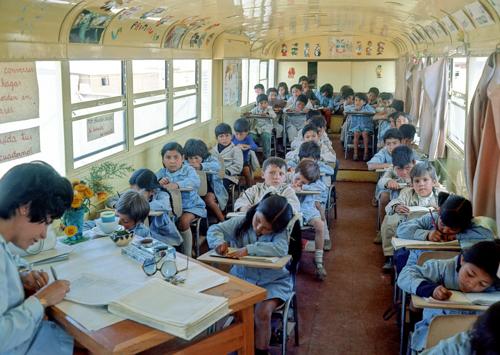
A panel of academics discuss education
Jun. 18, 1982 Studs Terkel leads a panel discussion on global education and the issues immigrants face in the American educational system. Panel members include Marilyn Turkovich, Dennis Brutus, Joe Elder, Daphne Maijorca, and Liu Zongren.
-
A discussion with John Fowles
Sep. 29, 1977 Studs joins the British novelist at his Chicago hotel room to discuss his latest book, Daniel Martin.*Please note: some sections have been edited out from the original recording due to copyright considerations
-
A discussion with Jeffrey Goodman
Feb. 12, 1981 The archaeologist and author discusses the controversial theory that modern humans may have originated in North America, further explored in his book, American Genesis.*Please note: some sections have been edited out from the original recording due to copyright considerations
-
A discussion with J.P. Donleavy
Nov. 13, 1975 The celebrated author of The Ginger Man joins Studs to share some of the inspirations for his latest book, The Unexpurgated Code: A Complete Manual of Survival & Manners.*Please note: some sections have been edited out from the original recording due to copyright considerations
-
A discussion with Dr. S. Frederick Starr, Perrin Yang, and Glen Nikitin
Aug. 1, 1988 Studs sits down with a musicologist and jazz musician, an American violinist, and a Russian violinist to discuss their cross-cultural and musical genre-bending collaboration - the American Soviet Youth Orchestra (AKA the American Russian Young Artists Orchestra).*Please note: some sections have been edited out from the original recording due to copyright considerations
-
A discussion with D.M. Thomas
Mar. 11, 1982 The British poet, translator, and novelist discusses his best-selling novel, The White Hotel, which was loosely based on the case studies of Sigmund Freud.*Please note: some sections have been edited out from the original recording due to copyright considerations