Listen to New Voices on Studs Terkel our partnership with 826CHI-here! Read the Story


-

Asa Baber reads from and discusses his book "Land of a Million Elephants"
Jun. 8, 1970 Having spent time as a Marine in southeast Asia and his military experience became material for Asa Baber's first book, "Land of a Million Elephants". Baber also talks about how he formulated his book. "Writing is music. Writing is jazz," said Baber. He didn't believe writing was about concepts and structure.
-
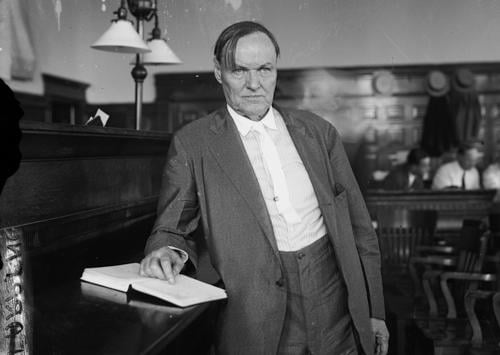
Arthur Weinberg discuess his biography of Clarence Darrow
Dec. 8, 1980 Terkel interviews author Arthur Weinberg. His latest book is called: "Clarence Darrow: A Sentimental Rebel".
-
Arthur Miller discusses working in China
Jan. 22, 1984 In 1978, Arthur Miller saw a play in China and was asked to offer his expertise critique. A few years later, Arthur Miller was asked to direct "Death of a Salesman" in Beijing. Complimentary tickets were given away to the audience for a preview performance. Arthur was appalled at the audiences' behavior as they talked throughout the entire presentation. Miller's main concern was that his play would be seen as a political statement instead of a work of art. However, opening night arrived and his play was very well received.
-
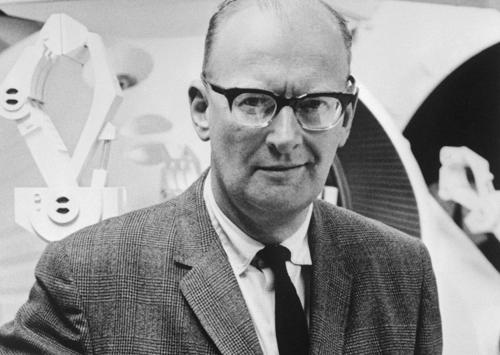
Arthur Charles Clarke discusses science fiction
Jan. 27, 1959 Arthur Charles Clarke discusses science fiction and his books "Childhood's End", "Prelude to Space", and "the Deep Range".
-
Art Shay discusses his book, "Nelson Algren's Chicago," and his friendship with Algren
Dec. 20, 1988 Studs interview with Art Shay opens and closes with a slow blues piece. Shay discusses his picture book, "Nelson Algren's Chicago." He and Studs discuss the people and events in a number of pictures from the book. Studs plays a recording of Algren reading from one of his novels. Studs quotes critic, Rick Kogan of the Tribune.
-
-

Arnold Wesker, english writer and playwright discusses his life and work.
1962 Arnold Wesker, English playwright and writer in several genres discusses scenes from the play "Roots". Mr Wesker further discusses his plays and the current cast traveling around England performing several of his plays. The interview tape ends and Studs recalls the remainder of the interview alone as a postscript.
-

Arnold Wesker talks with Studs Terkel ; part 2
1962 Terkel Talks with known English Dramatist Sir Arnold Wesker (part 2) about the economy of England. The talk begins with the subject of apprentices and when students began their apprenticeship (usually at the age of 15). This is a two part interview
-

Arnold Wesker talks with Studs Terkel ; part 1
1962 Terkel Talks with known English Dramatist Sir Arnold Wesker (part 1) about the economy of England. The talk begins with the subject of apprenticeship. This is a two part interview.
-
Arnold Wesker and Doris Lessing discuss the poor, literature, and theater among other topics in England ; part 1
Sep. 1, 1970 Arnold Wesker and Doris Lessing discuss the poor, theater, and literature in England. They also discuss art, life, values, race relations, and what people from other countries have in common . The interview takes place in England.
-
Arnold Rampersad reads from and discusses his book "Jackie Robinson"
Oct. 22, 1997 According to Arnold Rampersad’s book, “Jackie Robinson: A Biography”, Jackie Robinson’s claim to fame was not soley being the first African American baseball player to play in the MLB, but Robinson was also a symbol of race relations and civil justice. Rampersad’s book also includes various stories of Robinson’s background & family life. Robinson was court martialed for not sitting in the back of a bus. Sadly, Robinson’s son, Jackie, Jr. could never handle being the son of Jackie Robinson and he turned to drugs.
-
Arnold A. Hutschnecker discusses his book "The Drive For Power"
Jan. 8, 1975 Arnold A. Hutschnecker, a doctor with specialization in psychiatry, talks about his book, "The Drive For Power." He explores mental illness and its negative connotation. He explores how people who look for power tend to need mental help, but that the negative stigma around it tends to make them shy away, which leads to national aggravation and war. He also recalls his meetings with Richard Nixon from before he was president and how continued help may have changed the Vietnam War.
-
Arna Bontemps and Jack Conroy discuss their book "Any Place But Here"
1960 Discussing the book "Any Place But Here" and interviewing the authors Arna Bontemps and Jack Conroy.Content Warning: This conversation has the presence of outdated, biased, or offensive language. Rather than remove this content, we present it in the context of twentieth-century social history to acknowledge and learn from its impact and to inspire awareness and discussion.
-
Ariel Dorfman in conversation with Studs Terkel
May. 10, 1989 Interviewing author and poet Ariel Dorfman.
-