Listen to New Voices on Studs Terkel our partnership with 826CHI-here! Read the Story


Showing 76 - 86 of 86 results
-

Discussing and reading from the book "The mismeasure of man"
1980 Discussing and reading from the book "The mismeasure of man" with the author Stephen Jay Gould.
-
Derek Freeman discusses the book "Margaret Mead and Samoa"
Mar. 15, 1983 Discussing the book "Margaret Mead and Samoa the making and unmaking of an anthropological myth" with the author Derek Freeman.
-
David Schramm talks to Studs Terkel
Dec. 28, 1981 Interviewing astronomer David Schramm.
-
David Attenborough discusses the book and television documentary "Life On Earth"
Oct. 29, 1981 Biologist, natural historian, and author David Attenborough discusses his book and upcoming television series “Life on Earth.” The book, show, and this interview focus on discussing the evolution of life.
-

Bob and Joan Ericksen discuss the literary work of Peter Weiss and environmental ecology
1967 Bob and Joan Ericksen, both educators, artists, and environmental ecologists, discuss the literary work of Peter Weiss' "I Come Out of My Hiding Place" and environmental ecology. Excerpt of Peter Weiss reading from "I Come Out of My Hiding Place." The book speaks of why he writes and why he pursues his art (unknown source). The interview ends with a reading by Studs of an excerpt fro, Gustav Meyrink's "The Green Face."
-
Bill McKibben discusses his book "The End of Nature"
Oct. 13, 1989 Bill McKibben, author and environmentalist discusses his book "The End of Nature." McKibben talks about climate and weather, greenhouse gasses, fossil fuels, chlorofluorocarbons, and carbon dioxide. He also explains how climate change could damage the ecosystems including birds. He ends the interview discussing what can be changed such as solar power.
-
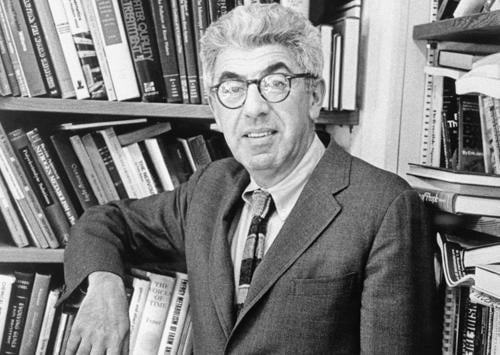
Barry Commoner discusses his book "The Poverty of Power: Energy and the Economic Crisis"
May. 20, 1976 Biologist and author Barry Commoner discusses his book "The Poverty of Power: Energy and the Economic Crisis."
-
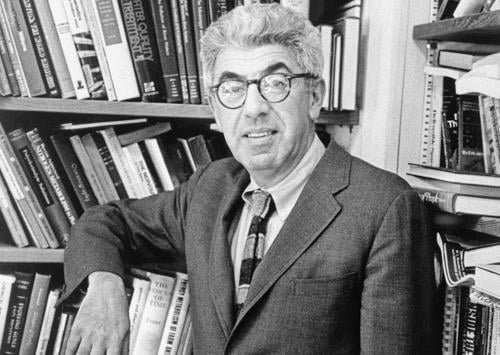
Barry Commoner discusses his book "The Politics of Energy"
Jun. 18, 1979 Scientist and educator Dr. Barry Commoner discusses his book "The Politics of Energy." Main topics include nuclear energy, solar energy, renewable energy and the future of energy.
-
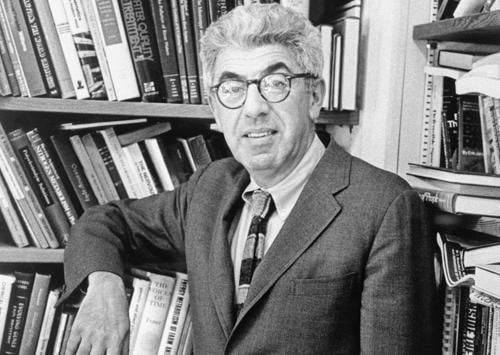
Barry Commoner discusses his book "Making Peace with the Planet"
Apr. 12, 1990 According to Barry Commoner's book, "Making Peace with the Planet," we, as the human species, are in and are witnessing a war between the ecosphere and the technosphere. Commoner explains that today's cars emit a lot of smog into the big cities. Trucks move consumer goods from place to place, using four times more fuel than trains. Everyone should ask themselves what is their interest in the quality of the environment and that of nature.
-
Anthropologist and linguist Lorenzo Turner discusses the Gullah dialect
Sep. 27, 1953 In 1953, one of the very first broadcasts on WFMT was with Lorenzo Turner. Topics that Turner cover include the Gullah language, his travels to Nigeria, and music. Turner also explains how using different inflections on a word can change its meaning.
-
Allan Chase discusses "The Legacy of Malthus"
Apr. 25, 1977 Discussing the book "The legacy of Malthus" with the author Allen Chase.