Listen to New Voices on Studs Terkel our partnership with 826CHI-here! Read the Story


Showing 106 - 120 of 302 results
-

LaDonna Harris discusses Native American history and her work with Americans for Indian Opportunity
Oct. 2, 1992 LaDonna Harris, Comanche social activist and politician, talks about Native American history and her work towards reforming the view of Native Americans. She talks about expanding the education about Native American cultures and her work with Americans for Indian Opportunity. Topics such as Columbus, Trail of Tears, religion, and civil rights are discussed.
-
Katherine Dunham discusses her studies in dance anthropology
Sep. 28, 1978 Interviewing Katherine Dunham, anthropologist, choreographer, and dancer. Dunham discusses various subjects including Haitian Vodou, an African diasporic religion, and the importance of cultural dance. Content Warning: This conversation has the presence of outdated, biased, offensive language. Rather than remove this content, we present it in the context of twentieth-century social history to acknowledge and learn from its impact and to inspire awareness and discussion.
-
Karen DeCrow reads from and discusses her book "The Young Woman's Guide to Liberation"
Karen DeCrow said both young ladies and young men should read her book, "The Young Woman's Guide to Liberation: Alternatives to a Half-Life While the Choice is Still Yours". DeCrow explained that young girls need to realize they should prepare themselves for being more than just a mother and a homemaker. She also stresses the importance of women not being totally dependent on men.
-
June Terpstra and two women, Ann and Donna, discuss battered women
Oct. 28, 1983 Discussing battered women with the director of the Evanston Shelter for Battered Women, June Terpstra. Two women, Ann and Donna, talk about their experiences of abuse with their husbands.
-
Juliet Mitchell discusses women, family, and oppression
Apr. 25, 1971 An interview with teacher and lecturer, Juliet Mitchell, who is a Marxist. She shares her support for the women's movement and talks about issues that affect women especially gender inequality. Juliet also refers to some comparisons between British and American women's movement.
-
Joseph Collins discusses the book "Food First"
Oct. 28, 1977 Dr. Joseph Collins co-authored the book, "Food First: Beyond the Myth of Scarcity". Among the topics in the book include world hunger, famine, food policies and politics. Collins asks the readers to think about being ok with eating food grown in another country when the workers of that country are so poor, they themselves are starving for food.
-
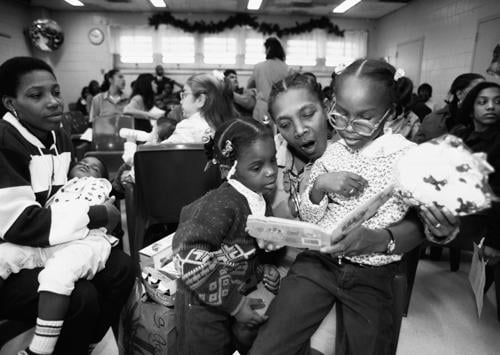
Jonathan Kozol discusses his book "Illiterate America"
Dec. 1, 1985 Jonathan Kozol discusses his book "Illiterate America." Includes an interview of a black teenager student named Jimmy.
-
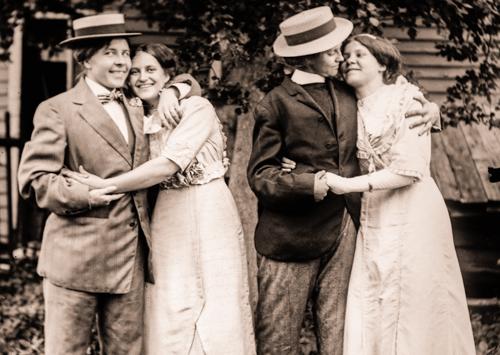
Jonathan Katz discusses his book "Gay American History"
Feb. 4, 1977 Discussing the book, "Gay American History: Lesbians and Gay Men in the U.S.A.: A Documentary," and interviewing its author, Jonathan Katz.
-
John Tateishi talks about his book "And Justice for All"
Jun. 22, 1984 Tateishi discusses his collection of oral histories by Japanese-Americans who were interned in 1942. Includes excerpts from Minoru Yasui, Yoriko Hohri (featured in "The Good War"), Peter Ota and a friend of Studs' who was ordered to terrorize Japanese-Americans as part of his military duty.
-
John Peter Jones talks with Studs Terkel about his book "The Feather Pluckers"
Apr. 1, 1965 John Peter Jones discusses English youth, the working class, and his book, "The Feather Pluckers."
-
John Donahue, Calvin Hill in conversation with Studs Terkel
May. 17, 1995 Interviewing members of the Chicago Coalition for the Homeless, John Donahue and Calvin Hill.
-
John Bernard discusses his life, politics and his work with the Farmer Labor Party
Aug. 1, 1977 Interviewing labor organizer, civil rights activist, and former Congressman John Bernard. Bernard was elected as a Farmer-Labor candidate to the U.S. House of Representatives and served from 1937-1939.
-
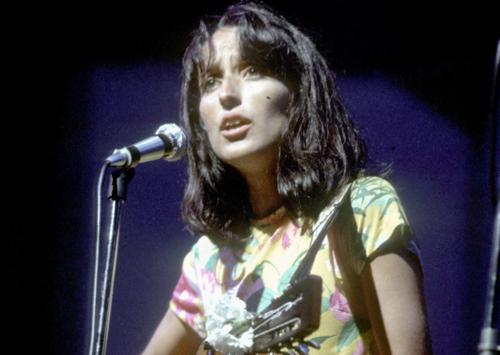
Joan Baez performs and speaks with Studs Terkel
Jul. 11, 1967 Joan Baez speaks with Studs Terkel about role of music and the responsibility of musicians in the specific historical moment of the late '60's.
-
Jo Freeman, Mary Jean Collins-Robson, and Naomi Weisstein discuss women's rights and liberation ; part 2
Mar. 25, 1970 Jo Freeman, Mary Jean Collins-Robson, and Naomi Weisstein discuss women's rights and the struggle for equal rights and liberation, resistance through art, and the fight for free childcare. Discussion continues with criticism on the male gaze and females as sexual objects.
-
Jo Freeman, Mary Jean Collins-Robson, and Naomi Weisstein discuss women's rights and liberation ; part 1
Mar. 25, 1970 Jo Freeman, Mary Jean Collins-Robson, and Naomi Weisstein discuss women's rights and the struggle for equal rights and liberation, Title VII, their support for NOW, the National Organization of Women, as well as the upcoming Women's Strike for Equality.