Listen to New Voices on Studs Terkel our partnership with 826CHI-here! Read the Story


Showing 286 - 300 of 302 results
-

Barbara Blaine, Ruth Graff, and Nina Polcyn-Moore discuss the Catholic Worker Movement
1986 Interviewing Catholic workers Barbara Blaine, Ruth Graff, and Nina Polcyn-Moore. They discuss their lives, Catholic worker houses, and poverty. Includes an interview with Dorothy Day. Content Warning: This conversation has the presence of outdated, biased, offensive language. Rather than remove this content, we present it in the context of twentieth-century social history to acknowledge and learn from its impact and to inspire awareness and discussion.
-
Auburn University student discusses the Civil Rights march on campus and his involvement
1965 Studs interviews a white student on the Auburn University campus after a Civil Rights march. The student explains that he is there to be sure a white face is present and to stand up for democracy. He describes the event and speaks to his family background. The student expresses the experience of black students on the integrated campus and how it has changed. (Tape 6, part 2)
-
Anne Guerrero discusses religion ; part 3
1968 Anne Guerrero discusses religion in the Roman Catholic Church and her children. Her children participate in this interview and sing "Henry the Eighth." Part 3 of 3.
-
Anne Braden discusses her experiences during the Civil Rights Movement
Apr. 30, 1979 Journalist and author of “The Wall Between,” Anne Braden, shares moments from her life as a civil rights worker in Louisville, KY.
-

Andrea Rozran, Alex Polikoff, and Dick Simpson discuss "Chicago: An Agenda for Change" ; part 5
Oct. 14, 1974 Chicago: An Agenda for Change with Andrea Rozran, Alex Polikoff, and Dick Simpson; part 5 of 5. The participants discuss the topic "Freedom of Information" and the city government in Chicago.
-
Andrea Medea and Kathleen Thompson discuss "Against Rape"
Oct. 9, 1974 Andrea Medea and Kathleen Thompson discuss their book "Against Rape", rape culture in media, and attitudes towards rape in society.
-
An interview with Philip Stern
Jun. 28, 1988 The investigative journalist joins Studs to discuss his latest book, The Best Congress Money Can Buy.*Please note: some sections have been edited out from the original recording due to copyright considerations
-
Amy Conger, Arthur Warner, and Natalie Warner discuss Chile and the coup d'etat of 1973
Oct. 20, 1975 Art historian Amy Conger and Arthur Warner and Natalie Warner discuss Chile and the coup d'etat of 1973.
-
Allan Evans and Henry Jordan discuss The Foundation Years ; part 2
1970 Allan Evans and Henry Jordan, two young man who grew up in Chicago and attended Dartmouth, discuss The Foundation Years project. They talk about trying to recruit friends to Dartmouth, their campus experiences, and their coursework. They also talk about their experiences going through the public school system in Chicago, where they point out many of the inequalities for black students.
-
Allan Evans and Henry Jordan discuss "The Foundation Years" ; part 1
1970 Allan Evans and Henry Jordan, two young man who grew up in Chicago and attended Dartmouth, discuss their childhoods and adolescent dealing with crime. The two also talk about their gang, The Vice Lords, and the police brutality they experienced. Next, the group talks about the The Foundation Years, a project from Dartmouth.
-
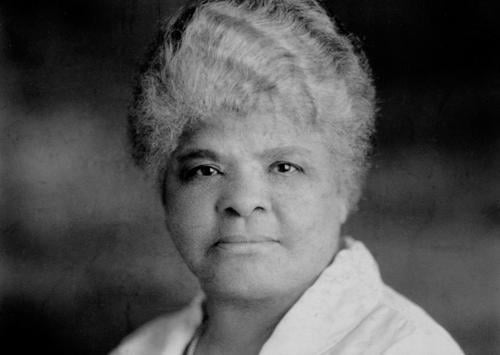
Alfreda Wells discusses her mother, Ida B. Wells-Barnett and her book "Crusade for Justice"
Sep. 3, 1971 Alfreda Wells, the youngest child of Ida B. Wells-Barnett, talks about her mother's life and work as an investigative journalist and strong champion of civil and women's rights. This version does not have music.
-
Albert John Luthuli discusses the struggle for democratic rule in South Africa
Mar. 1963 Albert John Luthuli, President of the African National Congress, Nobel Peace Prize winner, and Zulu Chief, discusses politics of South Africa. The interview includes discussions about his early life and education, and his teaching career, becoming chief of the Zulus, and working as the President of the African National Congress. He also explains his thoughts on peaceful methods of fighting against discrimination and apartheid in South Africa.
-
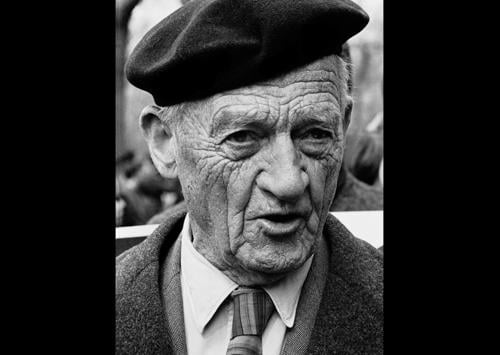
A. J. Muste talks with Studs Terkel
Feb. 15, 1965 Peace advocate and labor activist, A. J. Muste, discusses war and how human conflict can be overcome; recorded at the home of Sidney Lens shortly after Muste's 80th birthday.
-
A conversation with Sharon Tennison
Apr. 9, 1984 The peace activist, nurse, and housewife Sharon Tennison joins Studs to discuss her experiences in trying to ease nuclear tensions between the Soviet Union and the United States. This program also includes a clip from an interview with teen activist Debbie Cooney.*Please note: some sections have been edited out from the original recording due to copyright considerations
-
A conversation with Rose Styron
Feb. 26, 1985 The poet and human rights activist joins Studs to discuss Amnesty International, her book of poetry (Thieves' Afternoon), and the works of South African writers Dennis Brutus and Breyten Breytenbach. The program opens with a reading of poetry by the Filipina activist Charito Planas.*Please note: some sections have been edited out from the original recording due to copyright considerations