Listen to New Voices on Studs Terkel our partnership with 826CHI-here! Read the Story


Showing 151 - 165 of 177 results
-

Dick Simpson discusses neighborhood government system
Mar. 1, 1979 Dick Simpson, alderman of Chicago, discusses neighborhood governments. He describes the history, explains the uses of wards, and shows how the system can work in light of a recent election in Chicago. Studs reads an article about the recent election by Mike Royko.
-
Dick Simpson discusses his book, Strategies for Change: How to Make the American Political Dream Work"
Sep. 27, 1976 Alderman Dick Simpson discusses his book, "Strategies for Change: How to Make the American Political Dream Work," and his work as the 44th Ward Alderman. He explains the assembly system that now runs the 44th Ward, where members are able to bind him to a vote if the majority decides. He also discusses how the assembly has already changed redlining, the school system, truck load limits, and high rise development within their neighborhood.
-

David McCullough discusses his book "Mornings on Horseback"
Aug. 5, 1981 Discussing the book "Mornings on Horseback" with author David McCullough.
-
David Lewis discusses Canadian culture and politics
Nov. 12, 1976 David Lewis, Canadian politician, discusses Canada's domestic and foreign affairs, including their relationship with America. He also spends some time talking about Canadian socialism including universal health insurance.
-
David Halberstam discusses his book, "The Fifties"
Jun. 11, 1993 David Halberstam, writer and historian, talks about his book, "The Fifties." The conversation includes Brown v. Board of Education, atomic weapons, the Cold War, the Korean and Vietnam Wars, consumerism, birth control, suburbs, television and the start of the counterculture. Halberstam reads several passages from his book.
-
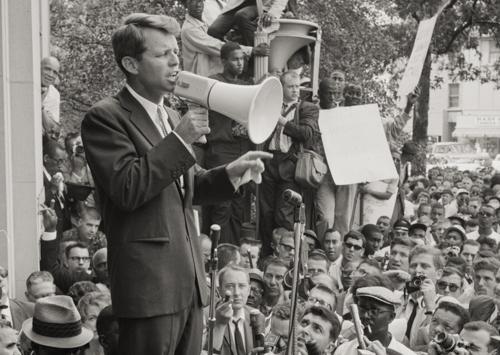
David Halberstam discusses Bobby Kennedy
1969 Discussing Bobby Kennedy and interviewing David Halberstam.
-
Daniel Yergin discusses his book, "Shattered Peace: The Origins of the Cold War and the National Security State"
1970 Daniel Yergin, author and economic historian, discusses his book, "Shattered Peace: The Origins of the Cold War and the National Security State." He explains the key players in the Cold War and his thoughts on the Yalta and Riga Axioms. Yergin also explores the end of World War II and other events that led to the tensions between US and the Soviet Union.
-
Daniel Ellsberg Discusses the publication of "The Pentagon Papers" ; part 1
1980 Daniel Ellsberg, political activist and former military analyst, discuses his release of the Pentagon Papers and his thoughts on how the Vietnam War played out. He also discusses what he believes the next war could look like and how America, and the world, would be affected by nuclear war.
-
Daniel Ellsberg discusses nuclear warfare and its worldwide impact
Feb. 14, 1994 Interviewing former government official, Vietnam War opponent, and political activist Daniel Ellsberg. Program includes an excerpt of a 1980 interview with Ellsberg. Includes a test tone lasting about 20 seconds. Content Warning: This conversation has the presence of outdated, biased, offensive language. Rather than remove this content, we present it in the context of twentieth-century social history to acknowledge and learn from its impact and to inspire awareness and discussion.
-
Daniel Ellsberg discusses his family and his beliefs about the hydrogen bomb ; part 2
Dec. 31, 1979 Daniel Ellsberg, political activist, discusses the creation and use of the atomic and hydrogen bombs. He discusses his family including how his son helped him leak the Pentagon Papers and has since protested with him, including being jailed. He also talks about his father who quit his job over the creation of the hydrogen bomb and how his father's choice helped him to decide to release the Pentagon Papers.
-
Conor Cruise O'Brien discusses politics and the book "Writers and politics: essays and criticisms"
1980 Connor Cruise O'Brien, Irish politician, writer, historian and academic scholar, discusses politics and the book "Writers and Politics: Essays and Criticisms".
-
Charles Hardin discusses his book, "Presidential Power and Accountability: Toward a New Constitution"
Jun. 26, 1974 Charles M. Hardin, political science professor, discusses his book, "Presidential Power and Accountability: Toward a New Constitution." Hardin discusses presidents from Roosevelt to Nixon and explores political parties and the Constitution and the role both play in the American Government. He explains his studies in political science and how he has come to believe that the Constitution should be re-written and creating more political parties could limit presidential powers, which he believes could cause problems in the future.
-
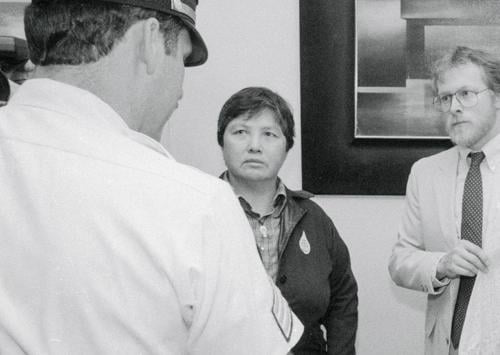
Charito Planas discusses his testimony before the U.S. Congress
Aug. 21, 1981 Discussing with Charito Planas his testimony before the U.S. Congress: "On the Withdrawal of U.S. Bases from the Philippines."
-
Carlos Fuentes discusses his books "Burnt Water" and "Distant Relations"
Jun. 6, 1982 Discussing the books "Burnt water" and "Distant relations" with the author Carlos Fuentes.
-
Blanche Wiesen Cook discusses her book, "The Declassified Eisenhower: A Divided Legacy of Peace and Political Warfare"
Aug. 6, 1981 Blanche Wiesen Cook, historian, professor, and author discusses her book, "The Declassified Eisenhower," and explains Eisenhower's peace and war beliefs. She describes his beliefs at the end of World War II and his relationships with fellow generals and leaders.