Listen to New Voices on Studs Terkel our partnership with 826CHI-here! Read the Story


Showing 196 - 210 of 212 results
-

Bill Ayers discusses his book "To Teach"
Jun. 23, 1993 According to Bill Ayers, in order to be a good teacher, one must 1st become a student of his/her students' lives. New ideas on how to become a better teacher are offered in Ayers' book, "To Teach: The Journey of a Teacher.'
-
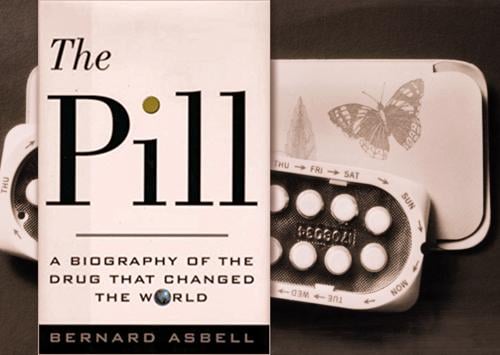
Bernard Asbell discusses his book "The Plll"
Jun. 14, 1995 Scientists, women, birth control, religion and ethics are among the topics covered in Bernard Asbell's book, "The Pill: A Biography of the Drug that Changed the World"
-
Beatrice Trum Hunter discusses her book "The Mirage of Safety"
Feb. 5, 1976 In her book, "The Mirage of Safety: Food Additives and Federal Policy, " Beatrice Trum Hunter warns the readers about the dangers of highly processed foods and chemical additives. By preparing a TV dinner, or a convenience food, Hunter says a person really doesn't save that much more time than they would by making a meal from scratch.*Please note: some sections have been edited out from the original recording due to copyright considerations
-
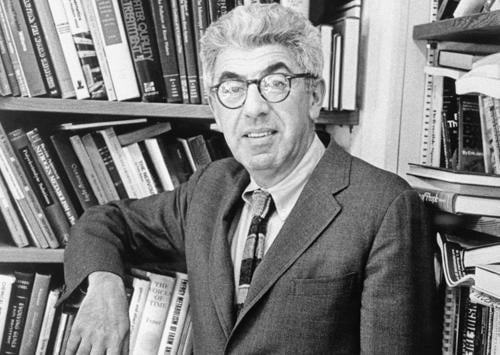
Barry Commoner discusses his book "The Poverty of Power: Energy and the Economic Crisis"
May. 20, 1976 Biologist and author Barry Commoner discusses his book "The Poverty of Power: Energy and the Economic Crisis."
-
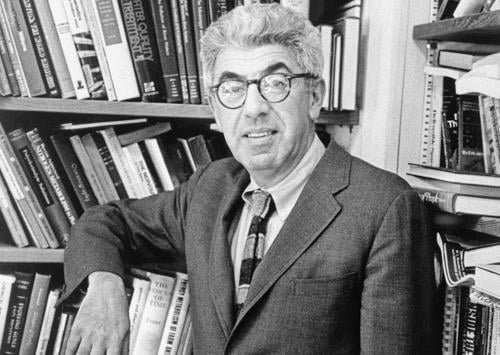
Barry Commoner discusses his book "The Politics of Energy"
Jun. 18, 1979 Scientist and educator Dr. Barry Commoner discusses his book "The Politics of Energy." Main topics include nuclear energy, solar energy, renewable energy and the future of energy.
-
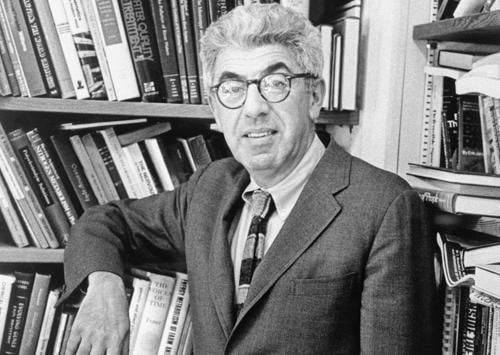
Barry Commoner discusses his book "Making Peace with the Planet"
Apr. 12, 1990 According to Barry Commoner's book, "Making Peace with the Planet," we, as the human species, are in and are witnessing a war between the ecosphere and the technosphere. Commoner explains that today's cars emit a lot of smog into the big cities. Trucks move consumer goods from place to place, using four times more fuel than trains. Everyone should ask themselves what is their interest in the quality of the environment and that of nature.
-
-
An interview with Tom Kochman
Dec. 16, 1982 The author and communications professor offers some insight into his book Black and White Styles in Conflict. This program includes clips from recordings of a Black preacher's sermon and a white attendee of the 1963 March on Washington.*Please note: some sections have been edited out from the original recording due to copyright considerations
-
Amy Conger, Arthur Warner, and Natalie Warner discuss Chile and the coup d'etat of 1973
Oct. 20, 1975 Art historian Amy Conger and Arthur Warner and Natalie Warner discuss Chile and the coup d'etat of 1973.
-
Allan Evans and Henry Jordan discuss The Foundation Years ; part 2
1970 Allan Evans and Henry Jordan, two young man who grew up in Chicago and attended Dartmouth, discuss The Foundation Years project. They talk about trying to recruit friends to Dartmouth, their campus experiences, and their coursework. They also talk about their experiences going through the public school system in Chicago, where they point out many of the inequalities for black students.
-
Allan Evans and Henry Jordan discuss "The Foundation Years" ; part 1
1970 Allan Evans and Henry Jordan, two young man who grew up in Chicago and attended Dartmouth, discuss their childhoods and adolescent dealing with crime. The two also talk about their gang, The Vice Lords, and the police brutality they experienced. Next, the group talks about the The Foundation Years, a project from Dartmouth.
-
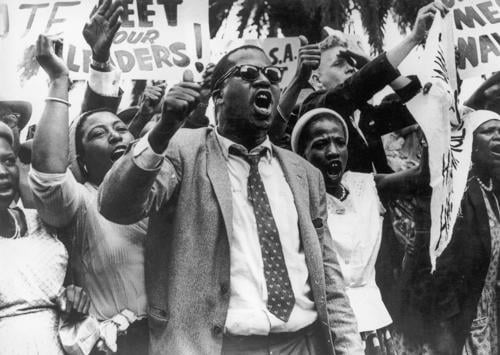
Alexander Sutherland Neill discusses lying to children
1963 Alexander Sutherland Neill says no one should ever lie to a child because children are brutally honest. Neill says people tend to live their lives as a lie. Neill also points out that when someone comes knocking at the door, and one tells the child to tell that person that so and so is not home, adults are teaching their children about white lies. This is a very short interview that ends abruptly.
-
A parent and teachers talk about the S.T.E.P. School for Autism
Nov. 11, 1970 Discussing the STEP School for autistic children with Alice Jerome, Mrs. Alberta Patterson, and Sally Heynemann. Topics include the behavior of the students, parental involvement, and the methods used at the STEP School and other schools. Includes a recording of children singing "Michael Finnegan." asdf
-
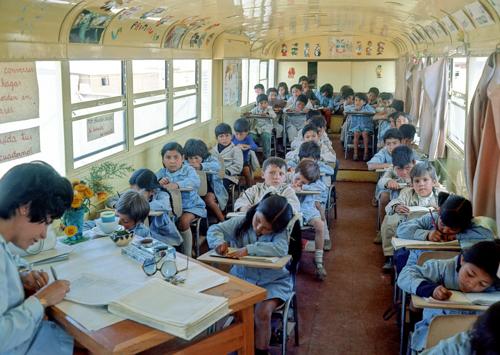
A panel of academics discuss education
Jun. 18, 1982 Studs Terkel leads a panel discussion on global education and the issues immigrants face in the American educational system. Panel members include Marilyn Turkovich, Dennis Brutus, Joe Elder, Daphne Maijorca, and Liu Zongren.
-
A conversation with Joy Humes
Aug. 1, 1978 Joy Humes, a teacher of poetry at Virginia State Penitentiary's continuing education program, describes her experiences working with death row inmates.*Please note: some sections have been edited out from the original recording due to copyright considerations