Listen to New Voices on Studs Terkel our partnership with 826CHI-here! Read the Story


Showing 31 - 45 of 158 results
-

Richard Florsheim talks with Studs Terkel
May. 4, 1965 Richard Florsheim discusses the relationship between artists and museums, the role of art institutions, and the commodification of contemporary art.
-
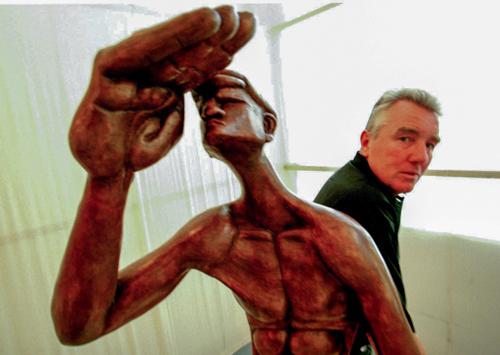
Richard Demarco discusses art and work of Jimmy Boyle
Feb. 5, 1976 Richard Demarco discusses the importance of riding the art experience of snobbery and the importance of art as relevant to everyone. In addition, Richard speaks on the work of Jimmy Boyle, convicted criminal turned successful artist. Demarco prompts the question: "Is art the language that transcends philosophy?"
-
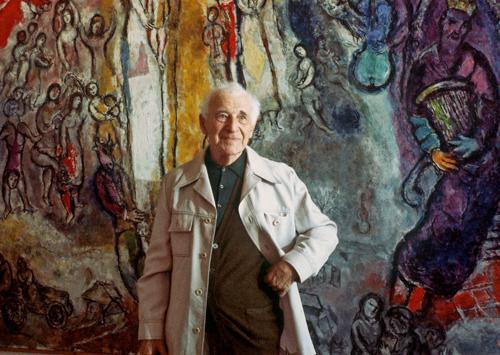
Representatives discuss the Center for Human Understanding ; part 2
May. 5, 1963 Representatives discuss the Center for Human Understanding (part 2 of 2). Center for Human Understanding conference in Washington D.C. Includes interview with [Raghav Heer]. Interviews [Chaumont Hosie]. Note: lengthy interviews in French (translated).
-
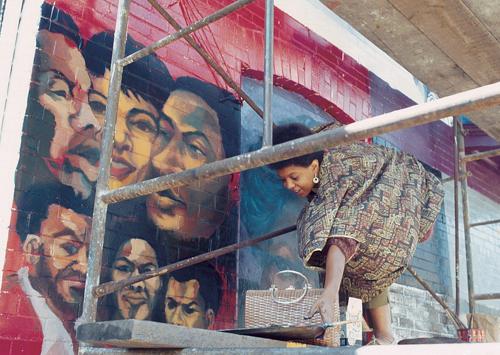
Ray Patlan and Mark Rogovin discuss mural art
Apr. 14, 1975 Ray Patlan and Mark Rogovin discuss mural art and the community engagement surrounding this artform. This program includes an audio clip of passers by commenting on the 1967 unveiling of Pablo Picasso’s Chicago sculpture and what they think it represents and the conversations it is meant to evoke. Studs reads Pete Seeger's introduction from Mark Rogovin, Marie Burton, and Holly Highfill’s book “Mural manual: How to paint murals for the classroom, community center, and street corner.”
-
Ralph Caplan discusses his book "By Design"
Nov. 16, 1982 Content Warning: This conversation includes racially and/or culturally derogatory language and/or negative depictions of Black and Indigenous people of color, women, and LGBTQI+ individuals. Rather than remove this content, we present it in the context of twentieth-century social history to acknowledge and learn from its impact and to inspire awareness and discussion. Discussing the book "By Design: Why there are no locks on the bathroom doors in the Hotel Louis XIV, and other object lessons" with designer and author Ralph Caplan. Includes an interview with George Nelson.
-
Printers John Kailen, Gerri Scott, Russ Wadleigh and Hank Orttinger discuss their shrinking trade
Jan. 13, 1975 Computers and technology may be good for some people, however, printers John Kailen, Gerri Scott, Russ Wadleigh and Hank Orttinger don't see it that way. As members of typographical unions, they have a skilled trade, and their trade and jobs are being threatened by computers. Some felt their livelihoods were stabbed in the back by the computer.*Please note: some sections have been edited out from the original recording due to copyright considerations
-
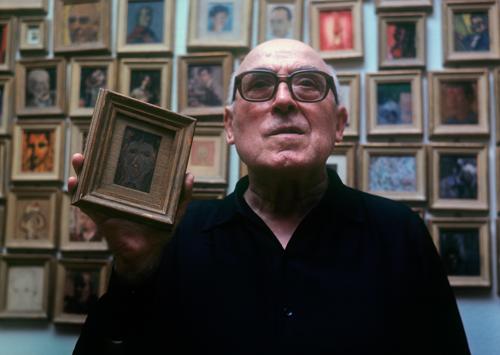
Pier Luigi Nervi and Joseph Nicoletti discuss architecture; part 2. Second interview: Caesar Zavattini discusses screenwriting and cinema
1962 End of interview with Pier Luigi Nervi and Joseph Nicoletti where they discuss innovation in architecture and learning from a master; second part is a separate interview with Cesare Zavattini about film inspirations and creating some of his most well known works.
-
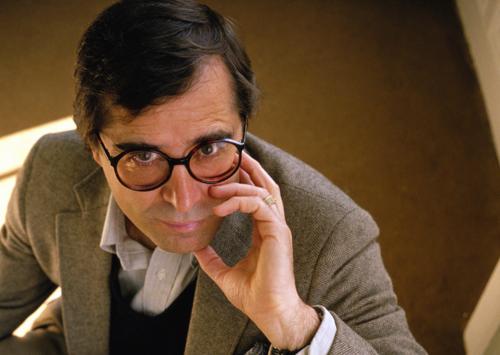
Paul Theroux discusses his book “Picture Palace”
Jun. 23, 1978 Writer Paul Theroux discusses his book “Picture Palace” and the meaning of a photograph with Studs Terkel. Both Theroux and Terkel read excerpts from Theroux’s book, and an audio clip of a photographer discussing what photography means to them is played.
-
Oswald Grube, Harry Weese and Don Klimovich discuss architecture
May. 10, 1976 Discussing architecture with Chicago architects Oswald Grube, Harry Weese and Don Klimovich.
-
Misch Kohn talks about his artistic career as a printmaker and painter
Jan. 3, 1961 Misch Kohn (from the state of Indiana, son of Russian immigrants) talks about his upcoming exhibition that traveled all around the country in which artwork such as "Season in hell", "My Grandfather's Mustache", "General", "Three Generals" among others. Talks about his creative process and what is the outlook of the state of visual arts.
-
Micheál Mac Liammóir discusses his show "The Importance of Being Oscar"; part 2
Nov. 17, 1961 Micheál Mac Liammóir, actor and playwright, discusses his upcoming performance based on the writings of Irish playwright and poet Oscar Wilde.
-
Maurice Sendak discusses his ideas for books
1970 After having received the Caldecott Medal for "Where the Wild Things Are," Maurice Sendak knew he had to do a different kind of book. Sendak recalled his trips to Brooklyn as a child and how going out to eat was a huge treat. From there, Sendak's book, "Night Kitchen," was born.
-
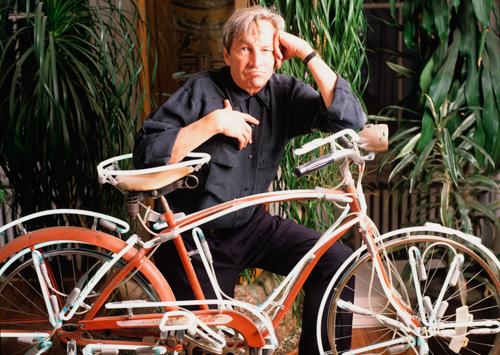
Mary Lynn Kotz discusses her book "Rauschenberg, Art and Life"
Oct. 29, 1991 In Mary Lynn Kotz's book, "Rauschenberg, Art and Life," Kotz recounts the works and story of 20th century art pioneer Robert Rauschenberg. They survey his career beginning in Port Arthur, TX, discussing his Depression-era upbringing which caused him to reuse and salvage virtually any object and transform it into art, his studies in Paris, made possible by the G.I.
-
-
Marcel Marceau discusses the art of mime ; part 2
Feb. 1, 1982 Marcel Marceau, a French mime, discusses the art behind mime including silence, humanity, and astonishment. Parts of an earlier interview with Marceau are also played.