Listen to New Voices on Studs Terkel our partnership with 826CHI-here! Read the Story


Showing 166 - 177 of 177 results
-

American Conservatory Theater actors talk with Studs Terkel ; part 1
1967 Terkel interviews actors from the American Conservatory Theater: Richard A. Dysart, Robin Gammell, Rene Auberjonois, Janis Young, and William Ball. This is an interview done in two parts.
-
Alan Schneider discusses Samuel Beckett and Edward Albee
Stage director Alan Schneider talks about his work with playwrights, Samuel Beckett and Edward Albee. Plays include "Waiting for Godot," "A Delicate Balance," and "Whose Afraid of Virginia Woolf?"
-
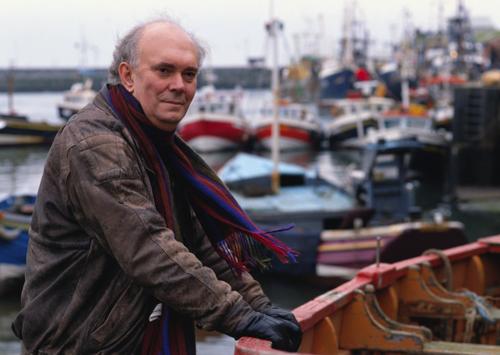
Alan Ayckbourn discusses his background and career
May. 27, 1994 His total love for the theatre began when Alan Ayckbourn worked backstage, and then worked the lights. He eventually began writing plays. To date, he has written 47 of them. Ayckbourn admits that his plays may be dark but he explained that he tries to add some humor into them, too. When writing a play, and without any notes, Ayckbourn said, he'll take four or five days to write out an entire play on a word processor.
-
Actor Victor Spinetti talks with Studs Terkel about "Oh, What A Lovely War!" ; part 2
1962 Part Two of this engrossing interview sees Spinetti elaborate on characters from Joan Littlewood's production of "Oh, What A Lovely War!" in England. Includes a reading of "The English Seaside in High Summer" and an a capella performance of the musical's Act I closer, "Good-bye-ee!", both by Spinetti.
-
Actor Victor Spinetti talks with Studs Terkel about "Oh, What A Lovely War!" ; part 1
1962 English actor, director and writer Victor Spinelli discusses several aspects of Joan Littlewood's production of "Oh, What A Lovely War!", including the origin of the songs, slides and quotations used in the musical. The two also discuss the World War War I, blind patriotism and what an Italian drill sergeant might sound like. Includes as a reading of "Watchers Along the Mall" by Spinetti.
-
A tribute to Sam Wanamaker
Dec. 1993 Actor and director Sam Wanamaker died in December of 1993. In an interview in 1980, he discussed his love of Shakespeare's plays. Wanamaker's mission in life was to recreate, reconstruct and revive The Globe Theatre as it was in Shakespeare's days.
-
A panel of producers and directors discuss film education ; part 1
A panel of producers and directors, Father Paul Carrico, Mike Whitney, Ron Sutton, Dick Lukenson, and Leo Dratfield discuss film theory and education on film in the classroom.
-
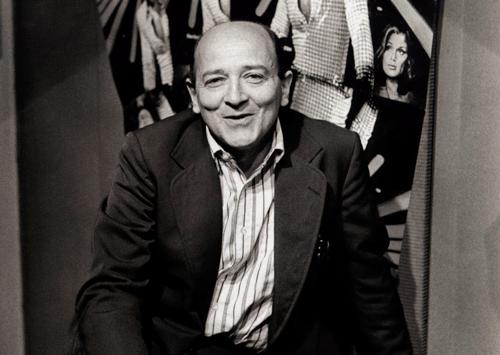
A London cab driver discusses traffic and Karel Reisz talks about making movies
1962 While riding in a cab, the driver talks about the narrow streets of London. He also talks about the traffic and why he believes traffic will only get worse in the future. Producer and director Karel Reisz explains how making films in England and America differ from how films are made Italy. Reisz also talks about the freedom of a director when making a film. With regards to viewership, according to Reisz, films are in 2nd place behind TV.
-
A conversation with Jenny Bowen
Nov. 10, 1981 The filmmaker talks with Studs about the process for making her debut feature, Street Music, with a cast largely made up of non-actors. Audio clips from the film are played within the interview.*Please note: some sections have been edited out from the original recording due to copyright considerations
-
A conversation with Jackie Taylor
May. 3, 1995 The playwright, director, and the founder of the Black Ensemble Theater returns to the studio to discuss her updated production of the Tennessee Williams play, A Streetcar Named Desire.*Please note: some sections have been edited out from the original recording due to copyright considerations
-
A conversation with Annick Smith
Nov. 2, 1981 The American writer and movie producer discusses the inspiration and story behind the film Heartland, and how pioneering and homesteading changed the American family.*Please note: some sections have been edited out from the original recording due to copyright considerations
-
A conversation about Union Maids, with Julia Reichert, Sylvia Woods, and Stella Nowicki
Jan. 18, 1977 Studs talks to the filmmakers and subjects of the documentary film Union Maids, about the tradition of unions in the United States, and the involvement of women workers. Audio clips from the documentary are played.*Please note: some sections have been edited out from the original recording due to copyright considerations