

-

Writer Carlos Fuentes discusses life, politics, and Mexican culture
Jun. 1, 1979 Writer Carlos Fuentes discusses life, politics, and Mexican culture; Mexican folk songs are played throughout the program.
-
Walter Rosenblum and Daniel Nagrin discuss art, life, photography, and dance
Jun. 2, 1982 Photographer and author Walter Rosenblum, and dancer and choreographer Daniel Nagrin discuss art, life, photography, and dance. The two answer the question “What calls one to a life of art?” and other driving factors for artists such as political, social, and economic interests. Studs opens and closes this program by playing an untitled Armenian dance song.
-
Tribute to Richard Nickel
Jul. 14, 1977 Tribute to architectural photographer Richard Nickel, who passed away in 1972, with architectural historian and restoration expert John Vinci and Bill Newman.
-
Tribute to Eddie Balchowsky
Dec. 4, 1989 Tribute to Chicago painter and piano player Eddie Balchowsky.
-
Tom Hines, Bill Hasbrouck and Harry Weese discuss Daniel Burnham
Nov. 11, 1974 Discussing Chicago architect Daniel Burnham with Tom Hines, Bill Hasbrouck and Harry Weese.
-
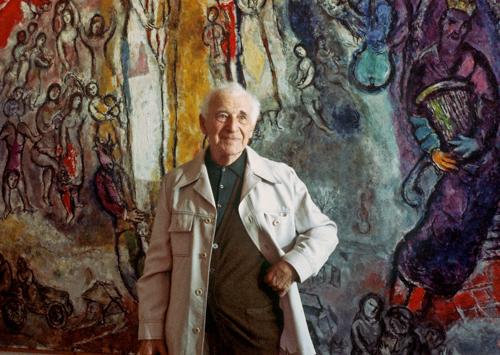
Through an interpreter, Marc Chagall discusses his approach to art and his views on people
1970 Professor John Nef explained that Marc Chagall came from an environment of nothing. From his dreams, Chagall created joy in his pieces of art. Nef lets the audience know that Chagall said he still has a lot of unfinished artwork to complete. The 3rd and last part of this program is a colloquy. Again, through another translator, Chagall’s words are translated. Chagall said his life’s purpose is art. Chagall said any man could be a bad artist but that no man can be an artist unless he is in fact, a good man.
-
Through an interpreter, Marc Chagall discusses his approach to art and his views on people
1970 Professor John Nef explained that Marc Chagall came from an environment of nothing. From his dreams, Chagall created joy in his pieces of art. Nef lets the audience know that Chagall said he still has a lot of unfinished artwork to complete. The 3rd and last part of this program is a colloquy. Again, through another translator, Chagall’s words are translated. Marc and Valentina Chagall speak French.
-
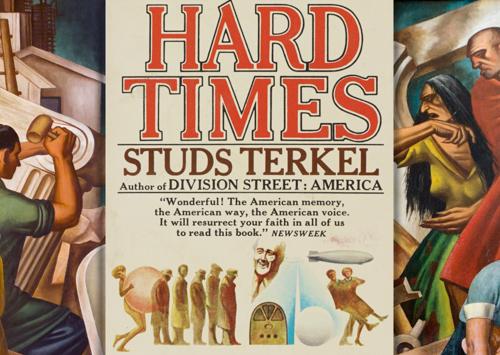
Terkel comments and presents "Hard Times: an oral history of the great depression" ; Program 5 ; part 1
1971 Presenting "Hard Times: An oral history of the great depression": "Bonnie laboring boy" with Joe Morrison, Evelyn Finn and Jose Yglesias (program V).
-
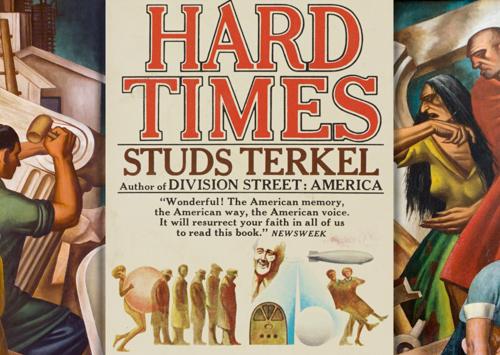
Terkel comments and presents "Hard Times: an oral history of the great depression" ; Program 15; part 1
1971 Presenting "Hard Times: an oral history of the great depression": "A gathering of survivors" with Joe Morrison, Evelyn Finn, Jose Iglesias, Bob Stinson, Oscar Heline, Eml & Ruth Loriks, Buddy Blankenship, Mary Owsley, Sally Rand, Jerome Zerbe, John Beeche (promgram XIII)
-
Ted Coe, James Speyer, and Wayne Thibaud discuss art exhibitions at the Art Institute of Chicago
Apr. 26, 1965 Interviewing Ted Coe, James Speyer, and Wayne Thibaud : Jurors of the 1965 Art Institute Show. They discuss art exhibitions at the Art Institute of Chicago, visual arts, and art critics.
-
Talking with Gordon Parks
Jun. 9, 1977 The African American writer, composer, film director, and photographer - described by Studs as a quadruple threat - joins the program to discuss his wide-ranging career and most recent film - Leadbelly - about the blues singer Huddie Ledbetter (AKA Lead Belly).*Please note: some sections have been edited out from the original recording due to copyright considerations
-
Talking about skyscrapers, with Stanley Tigerman and Stuart Cohen
Jun. 23, 1980 The architects sit down with Studs to discuss their two-volume book project - Chicago Tribune Tower Competition (about the 1922 Tribune administrative building design submissions) and Late Entries (about a 1980 interpretation of the earlier competition).*Please note: some sections have been edited out from the original recording due to copyright considerations
-
Talking about Diane Arbus, with Patricia Bosworth
Aug. 28, 1984 The journalist, memoirist, and actor discusses her biography of the photographer Diane Arbus (the first American to have photographs displayed at the Venice Biennale).*Please note: some sections have been edited out from the original recording due to copyright considerations
-
Studs Terkel talks with artist Gene Hall and Dr. Paul Mundy about the painting "The Black Christ Not Worthy of Its Cross" ; part 1
Sep. 21, 1965 Studs Terkel interviews the artist Gene Hall who created "The Black Christ Not Worthy Of Its Cross" and the head of the Loyola University Sociology Department, Dr. Paul Mundy, who used the title and painting reproduction to spark classroom discussions. Hall describes the creation of his 6 ft tall by 2 1/2 feet wide painting and how seeing the color of Christ diminishes Christ. You don't see Christ when you see color. Hall uses barbed wire instead of thorns in the painting to signify there is no time in painting, it is up to date.
-
Studs Terkel talks with artist Gene Hall and Dr. Paul Mundy about the painting "The Black Christ Not Worthy of Its Cross" ; part 2
Sep. 21, 1965 Studs Terkel interviews the artist Gene Hall who created "The Black Christ Not Worthy Of Its Cross" and the head of the Loyola University Sociology Department, Dr. Paul Mundy, who used the title and painting reproduction to spark classroom discussions. Hall describes the creation of his 6 ft tall by 2 1/2 feet wide painting and how seeing the color of Christ diminishes Christ. You don't see Christ when you see color. Hall uses barbed wire instead of thorns in the painting to signify there is no time in painting, it is up to date.