Listen to New Voices on Studs Terkel our partnership with 826CHI-here! Read the Story


Showing 661 - 675 of 5186 results
-

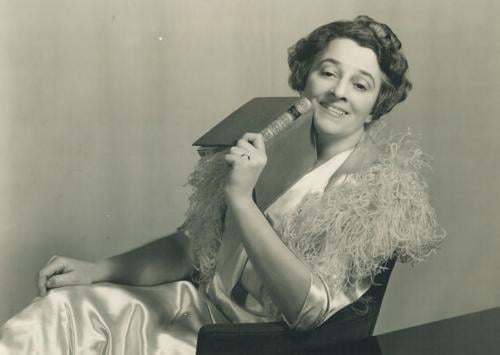
Ruth Page and Lou Conte reflect on dance and their Chicago dance companies
May. 12, 1980 Studs Terkel interviews Ruth Page and Lou Conte on their experience in Dance and their Chicago dance companies.
-
-
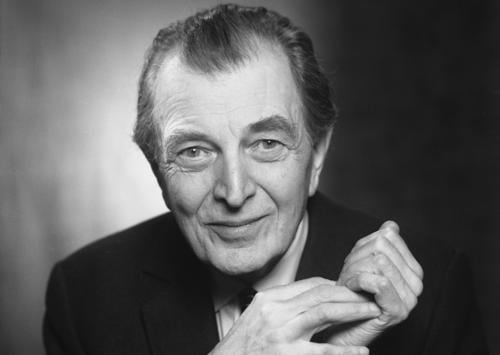
Russian-born composer Alexander Tcherepnin talks with Studs Terkel
Apr. 13, 1965 Studs Terkel and Tcherepnin discuss Tcherepnin's early years in Leningrad, his creative drive and its relation to real-life experiences and the influence of Chicago on his 1953 Op. 87 Suite for Orchestra.
-
Russell Sherman discusses and reads from his book “Piano Pieces”
May. 17, 1996 Author and pianist Russell Sherman discusses his book “Piano Pieces” and the philosophical concepts associated with listening to and playing music. Sherman plays a selection of compositions in the studio.
-
Russell Barrett discusses his book, "Integration at Ole Miss"
Mar. 9, 1965 Political science professor and author Russell Barrett discusses and reads excerpts from his book, “Integration at Ole Miss.” He examines the legal challenges, apathy, and aggression that contributed to the build up of racial tensions leading to the enrollment of the University of Mississippi’s first black student — James Meredith — and the resulting riots and violence. Includes a recording of the Chad Mitchell Trio singing "Alma Mater (About Ole Miss)."*Please note: some sections have been edited out from the original recording due to copyright considerations
-
Russell Banks reads from and discusses his book "Affliction"
Sep. 22, 1989 Lies, violence and history repeating itself are all topics covered in Russell Banks' book, "Affliction." Banks points out that his novel is about the men's complicated attempt to transcend their burdens.
-
Russell Baker reads from and discusses his book "The Good Times"
Sep. 21, 1990 Back in his day, there was no journalism school, explained Russell Baker. He spent time with the police and that's how he often got his stories about the underclass or the superfluous. Baker pointed out when a paper didn't want to print one of his stories, Baker was told the subject matter was in poor taste.
-
Rudolph Ganz discusses his career
Feb. 23, 1964 When Rudolf Ganz was younger, he first played the cello. After his cello broke into 800 pieces, Rudolph Ganz's father told Ganz he had to play the piano. Ganz became a world-renowned pianist and composer. Ganz's attitude toward music: in order to be progressive, one has to respect the past.
-
Rudolf Dreikurs discusses his book "Social Equality and the Challenge of Today" ; part 2
1968 Child psychiatrist and educator Rudolf Dreikurs discusses his book "Social Equality and the Challenge of Today," Part 2 of 2.
-
Rudolf Dreikurs discusses his book "Social Equality and the Challenge of Today" ; part 1
1968 Child psychiatrist and educator Rudolf Dreikurs discusses his book "Social Equality and the Challenge of Today," Part 1 of 2. The discussion focuses on child psychiatry and human misbehavior.
-
Roy Dotrice and Patrick Garland discuss the play "Brief Lives"
Sep. 25, 1970 Patrick Garland directs Roy Dotrice, who plays the old and lonely John Aubrey in "Brief Lives". While in studio, Dotrice reenacts part of the one-man show. Garland explains that the play is about John Aubrey, on the last day of his life, telling the audience about the past lives he's encountered.
-
Roy Blount Jr. shares stories from his latest collection.
Oct. 8, 1982 The writer, speaker, and humorist discusses his book, One Fell Soup: or I'm Just a Bug on the Windshield of Life.*Please note: some sections have been edited out from the original recording due to copyright considerations
-
Roxana Robinson discusses her book “Georgia O’Keeffe: A Life”
Sep. 8, 1989 Art historian Roxana Robinson discusses and reads from her book “Georgia O'Keeffe: A Life.” Robinson discusses the different eras of painting O’Keeffe went through during her lifetime and the outside forces that inspired these changes in subject matter, such as her attending the Art Students League of New York, her moving to Santa Fe, and her relationship with Alfred Stieglitz. Studs plays “Tosca, Act II: Vissi d’arte, vissi d’amore” - Renata Tebaldi, George London, Francesco Molinari-Pradelli (1959).
-
Ross Miller discusses his book "American Apocalypse: The Great Fire and the Myth of Chicago"
Jun. 7, 1990 Author Ross Miller discusses his latest work, which centers around Chicago and the aftermath of the Great Chicago Fire and its effects on rebuilding the metropolis and the advantages of gaining a new take on architecture and society.
-
Ross Firestone discusses his book "Swing, Swing, Swing: The Life & Times of Benny Goodman"
Mar. 26, 1993 Benny Goodman was one of 12 children and when he was little, his father took him to a synagogue where he learned to play the clarinet. Ross Firestone's book, "Swing, Swing, Swing: The Life and Times of Benny Goodman" is full of information about the musician. Goodman was a perfectionist, always wanting to better at his craft. According to Firestone, as a band leader, Goodman never thanked any musicians that played for him or with him.