Listen to New Voices on Studs Terkel our partnership with 826CHI-here! Read the Story


Showing 736 - 750 of 5186 results
-

Robert Caro discusses his book, "The Power Broker: Robert Moses and the Fall of New York"
Oct. 30, 1974 Robert Caro, journalist, discusses his book, "The Power Broker: Robert Moses and the Fall of New York." Caro talks about Robert Moses and the power he had over New York for 44 years. He talks about parks, bridges, highways, and housing that Moses built as he challenged mayors, governors, and the working class.
-
Robert Caro discusses his book "The Years of Lyndon Johnson: volume two: Means of ascent"
Apr. 23, 1990 Interviewing journalist and author Robert Caro about his book "The Years of Lyndon Johnson: volume two: Means of ascent," which details seven years of Lyndon Johnson’s life in the House of Representatives as he tries to climb the political ladder.
-
Robert Brustein discusses the fate of the theatre world
Feb. 20, 1981 Ten years ago, explained Robert Brustein, not for profit theatres were starting to pop up. Brustein was optimistic about these new theatres being available in communities as a way of offering culture. Theatres will not be funded though, because President Reagan cut federal funding to theatres in half. In addition, the National Endowment for the Arts was not growing fast enough to assist all theatres involved.
-
Robert Borisage and Richard Criley discuss secrecy vs. the Constitution
1975 Robert Borisage, founder of the Center for National Security Studies, and Richard Criley, part of the Alliance to End Repression, talk about government spying on citizens and the constitutionality of it. The pair talk about corruption in the CIA and FBI and how new laws can help curb the issues. They also explain the S.1 - Criminal Justice Reform Act 94th Congress (1975-1976).
-
Robert Bly in conversation with Studs Terkel
Nov. 1, 1978 With dulcimer in hand, the poet and essayist Robert Bly pays homage to a wide range of poets that have influenced him, from Anna Akhmatova to Kabir to Pablo Neruda.*Please note: some sections have been edited out from the original recording due to copyright considerations
-
Robert Bly and Gioia Timpanelli visit with Studs
Apr. 8, 1983 Bly speaks about how poetry is used as a form of communication in the Soviet Union. Timpanelli shares her appreciation for the art of storytelling. Both were in town for an appearance at The Jung Institute.*Please note: some sections have been edited out from the original recording due to copyright considerations
-
Robert Bendiner discusses his book "Just Around the Corner" ; part 2
Aug. 23, 1967 In Robert Bendiner's book, "Just Around the Corner: A Highly Selective History of the Thirties," Bendiner covered Herbert Hoover's ineptness and Franklin Roosevelt's heroism. Bendiner also remembers vividly the moment when Huey Long did a jig on the Senate floor. Long further explained that the New Deal had to happen because it was what all the people, of both parties needed.*Please note: some sections have been edited out from the original recording due to copyright considerations
-
Robert Bendiner discusses his book "Just Around the Corner" ; part 1
Aug. 23, 1967 Although he was not a historian, Robert Bendiner said he believed he could provide accounts of events through a journalist's eyes with his book "Just Around the Corner: A Highly Selective History of the Thirties". It was a depressing time, recalls Bendiner, a time he hopes no one has to experience again. Businesses needed people to buy goods but there wasn't enough money for people to buy food let alone goods and materials. Bendiner recalls Riverside Drive was once affluent and picturesque. The view then turned to one full of Hooverville shacks.
-
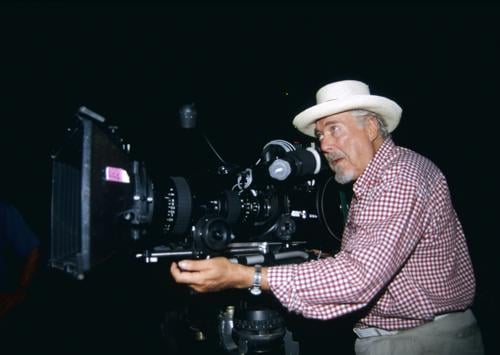
Robert Altman discusses the opera "McTeague"
Oct. 21, 1992 Studs Terkel and Robert Altman discuss the opera "McTeague" based on Frank Norri's novel of the same name.
-
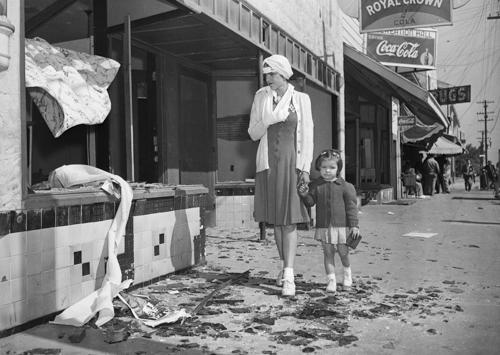
Robert Allen discusses his book "The Port Chicago Mutiny"
May. 12, 1989 On July 17, 1944, there was a huge explosion at Port Chicago in California. Of the 320 men on duty at the pier that died, 202 of them were Black. Robert Allen's book, "The Port Chicago Mutiny: The Story of the Largest Mass Mutiny Trial in U.S. Naval History," covers the story of poor working conditions, the explosion, work stoppage, the trial and the outcome. There is an excerpt of Joe Small, recalling what happened, when he was a sailor present there.
-
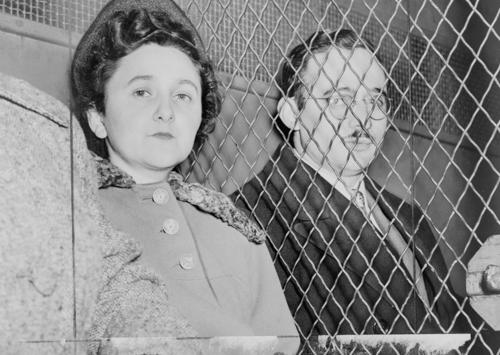
Rob Okun, Richard Fried, and Peter Novick discuss the exhibit “Unknown Secrets: Art and the Rosenberg Era”
Jun. 15, 1990 Historians and exhibit organizers Rob Okun, Richard Fried, and Peter Novick discuss the Spertus Museum’s exhibit “Unknown Secrets: Art and the Rosenberg Era.” Julius and Ethel Rosenberg were both convicted and executed in 1953 for participating in spy activity for the Soviet Union. Okun, Fried, and Novick discuss the Rosenberg case and the subsequent response from the public after the execution, many of whom felt the Rosenbergs were wrongfully convicted. The art in this exhibit captures the passion surrounding this case.
-
Rita Streich discusses her upcoming recital and Studs plays selections ; part 3
Feb. 17, 1962 Studs Terkel interviews Rita Streich about her recital coming up. He also plays selections from her work for viewers to listen to. She also talks about music during World War II.
-
Rita Streich discusses her upcoming recital and Studs plays selections ; part 2
Feb. 17, 1962 Studs Terkel interviews Rita Streich about her recital coming up. He also plays selections from her work for viewers to listen to. She also talks about music during World War II.
-
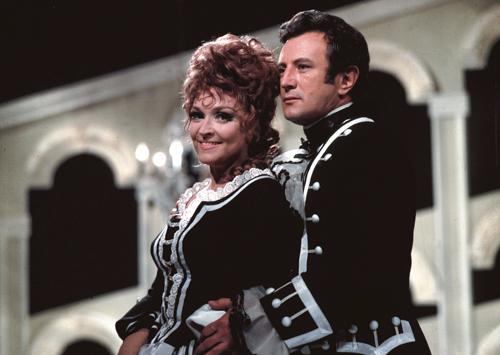
Rita Streich discusses her upcoming recital and Studs plays selections ; part 1
Feb. 17, 1962 Studs Terkel interviews Rita Streich about her recital coming up. He also plays selections from her work for viewers to listen to. She also talks about music during World War II. This interview is conducted in three parts.
-
Rita Streich discusses her musical performances and the composers
Jul. 19, 1967 Studs interviews Rita Streich, and they discuss the meaning of some of her operas and lieds. Streich names Erna Berger and Maria Ivogun as her best teachers, and she speaks a little about her family. Studs and Streich read part of the poem, "The Nut Tree" by Robert Schuman. Streich reads a part of "Brahms Lullaby" and "Shepherd On the Rock" by Franz Schubert. She also discusses the difference between opera in her day compared to opera at the time of the interview. The musical pieces are removed from this edited version of the original recording.