

-

Actress Verna Bloom discusses being arrested in Chicago ; part 1
1968 The day after being arrested in Chicago, Verna Bloom talks about the outrage and humiliation she felt. In great detail, she describes what led up to her arrest. Bloom contends she was doing nothing other than enjoying the nice weather when a police officer arrested her.
-
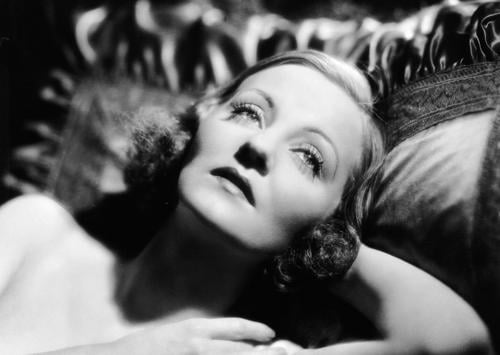
Actress Tallulah Bankhead discusses her career
Jul. 15, 1960 Tallulah Bankhead thought she would become an aerialist when she grew up. At 16, after she saw some plays, Bankhead decided to go into acting. Bankhead never received any formal training and yet some experts in the theatre world called her “a natural”. In a surprise revelation, Bankhead said she does not attend the theatre as an audience member. She went on to say she likes to read books, watch television, and she loves her San Francisco Giants.
-
Actor Victor Spinetti talks with Studs Terkel about "Oh, What A Lovely War!" ; part 2
1962 Part Two of this engrossing interview sees Spinetti elaborate on characters from Joan Littlewood's production of "Oh, What A Lovely War!" in England. Includes a reading of "The English Seaside in High Summer" and an a capella performance of the musical's Act I closer, "Good-bye-ee!", both by Spinetti.
-
Actor Victor Spinetti talks with Studs Terkel about "Oh, What A Lovely War!" ; part 1
1962 English actor, director and writer Victor Spinelli discusses several aspects of Joan Littlewood's production of "Oh, What A Lovely War!", including the origin of the songs, slides and quotations used in the musical. The two also discuss the World War War I, blind patriotism and what an Italian drill sergeant might sound like. Includes as a reading of "Watchers Along the Mall" by Spinetti.
-
Abram Loft discusses his career and his book "Violin and Keyboard"
Jul. 25, 1974 Abram Loft discusses his career, his book "Violin and Keyboard", art, and music education. Includes Abram Loft reading a passage from his book "Violin and Keyboard". Includes Abram Loft reading excerpts from newspapers.
-
Abram Chayes discusses the mining of the Nicaraguan Harbor by U.S. Naval forces
May. 16, 1985 Abram Chayes, Professor of International Law at Harvard University, discusses the United States’ foreign relations with Nicaragua and the International Court of Justice, also known as the World Court.
-
Abraham Rattner discusses his upbringing and his work
1970 American artist Abraham Rattner talks about his early influences, his inspiration, and what his work means to him.*Please note: some sections have been edited out from the original recording due to copyright considerations
-
Abraham Chasins discusses the vibrant and creative life of Leopold Stokowski and his book, “Leopold Stokowski: A Profile”
Nov. 8, 1979 Studs interviews Abraham Chasins about his book, “Leopold Stokowski: A Profile.” They discuss Stokowski’s life in great detail as they discuss different parts of the book. Chasins describes the amazing career and life of Stokowsky who revolutionized the symphony orchestra. Studs reads a few excerpts from the book. Chasins shares some background behind some of the stories from his book. Studs and Chasins discuss the various orchestras Stokowsky worked with. Chasins notes that Stokowski taught his audience how to behave and never used a baton when he conducted.
-
Abena Joan Brown discusses the ETA Creative Arts Foundation
Feb. 14, 1989 Abena Joan Brown, President of ETA Creative Arts Foundation, a Chicago-based African American cultural performing arts institution discusses some upcoming shows and past activities. Artists, Paul Robeson, Mahalia Jackson, Billie Holiday, Sam Cooke and poet Angela Jackson are discussed.
-
Abe Peck discusses his book “Uncovering the Sixties: The Life and Times of the Underground Press”
Jun. 10, 1985 Editor and writer Abe Peck discusses and reads from his book “Uncovering the Sixties: The Life and Times of the Underground Press.” Peck discusses the social and political forces, such as the lack of questioning authority forces seen during this time, that drove the alternative press to formation. This program includes audio clips of Studs interviewing attendees of a Vietnam War protest in Chicago. Studs also includes a clip of British journalist James Cameron discussing the 1968 Chicago Democratic Convention. Studs plays "The Times They Are A-Changin'" - Bob Dylan (1964).
-

Aaron Copland discusses his career
Mar. 10, 1961 Aaron Copland discusses his music, his colleagues, contemporaries, musicians, and composers.
-
A. V. Krebs discusses his book "The Corporate Reapers: The Book of Agribusiness"
Sep. 10, 1992 A.V. Krebs discusses his book "The Corporate Reapers: The Book of Agribusiness" (published by Essential), farming, and food manufacturing. A clip of an interview with a family farmer with the last name [Nermeyer] and her husband is included. Songs have been removed due to copyright.
-
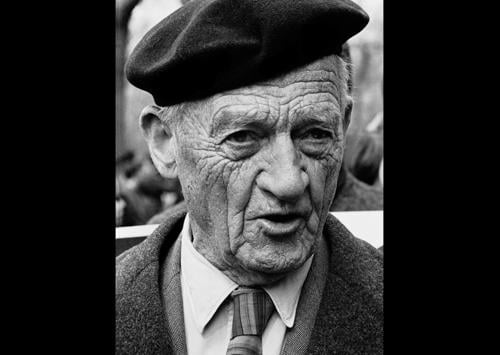
A. J. Muste talks with Studs Terkel
Feb. 15, 1965 Peace advocate and labor activist, A. J. Muste, discusses war and how human conflict can be overcome; recorded at the home of Sidney Lens shortly after Muste's 80th birthday.
-
A young white cabbie talks with Studs Terkel
Mar. 26, 1962 Interviewing a young white cabbie and farewell comments on the plane ride home when Studs traveled home from Montgomery, Alabama.
-
A tribute to Sam Wanamaker
Dec. 1993 Actor and director Sam Wanamaker died in December of 1993. In an interview in 1980, he discussed his love of Shakespeare's plays. Wanamaker's mission in life was to recreate, reconstruct and revive The Globe Theatre as it was in Shakespeare's days.