

-

Auburn University student discusses the Civil Rights march on campus and his involvement
1965 Studs interviews a white student on the Auburn University campus after a Civil Rights march. The student explains that he is there to be sure a white face is present and to stand up for democracy. He describes the event and speaks to his family background. The student expresses the experience of black students on the integrated campus and how it has changed. (Tape 6, part 2)
-
Athol Fugard discusses his play "Master Harold…and the Boys"
May. 6, 1983 Discussing the play "'Master Harold'--and the Boys," with playwright Athol Fugard.
-
Astrid Varnay and Felicia Weathers discuss the opera “Salome”
1967 Opera singers Astrid Varnay and Felicia Weathers discuss the opera “Salome” and the complexity of its lead role with Studs Terkel. Recordings of Varnay singing a piece from the Flying Dutchman and Weathers singing a piece by Strauss are played. Paul Vodicka delivers a few messages toward the conclusion.
-
Asa Baber reads from and discusses his book "Land of a Million Elephants"
Jun. 8, 1970 Having spent time as a Marine in southeast Asia and his military experience became material for Asa Baber's first book, "Land of a Million Elephants". Baber also talks about how he formulated his book. "Writing is music. Writing is jazz," said Baber. He didn't believe writing was about concepts and structure.
-
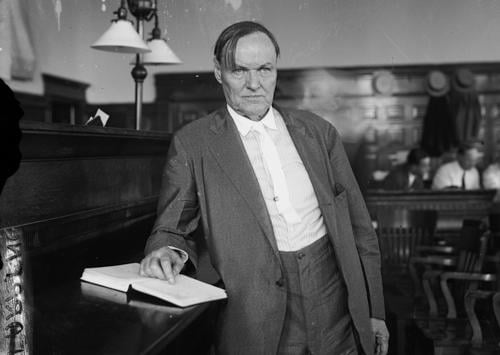
Arthur Weinberg discuess his biography of Clarence Darrow
Dec. 8, 1980 Terkel interviews author Arthur Weinberg. His latest book is called: "Clarence Darrow: A Sentimental Rebel".
-
Arthur Miller discusses working in China
Jan. 22, 1984 In 1978, Arthur Miller saw a play in China and was asked to offer his expertise critique. A few years later, Arthur Miller was asked to direct "Death of a Salesman" in Beijing. Complimentary tickets were given away to the audience for a preview performance. Arthur was appalled at the audiences' behavior as they talked throughout the entire presentation. Miller's main concern was that his play would be seen as a political statement instead of a work of art. However, opening night arrived and his play was very well received.
-
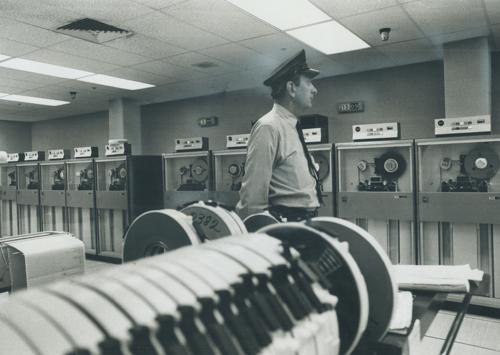
Arthur Miller and John O'Brien discuss privacy and surveillance
1970 Arthur Miller, author of "Assault on Privacy: Computers, Data Banks, and Dossiers," and John O'Brien discuss issues relating to technological privacy and surveillance.
-
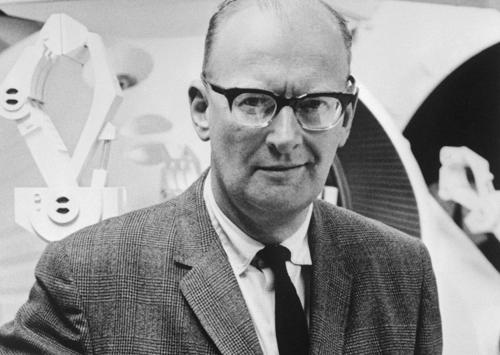
Arthur Charles Clarke discusses science fiction
Jan. 27, 1959 Arthur Charles Clarke discusses science fiction and his books "Childhood's End", "Prelude to Space", and "the Deep Range".
-
-
Art Shay discusses his book, "Nelson Algren's Chicago," and his friendship with Algren
Dec. 20, 1988 Studs interview with Art Shay opens and closes with a slow blues piece. Shay discusses his picture book, "Nelson Algren's Chicago." He and Studs discuss the people and events in a number of pictures from the book. Studs plays a recording of Algren reading from one of his novels. Studs quotes critic, Rick Kogan of the Tribune.
-
Art Shay discusses his book, "Nelson Algren's Chicago," and his friendship with Algren
Dec. 20, 1988 Studs interview with Art Shay opens and closes with a slow blues piece. Shay discusses his picture book, "Nelson Algren's Chicago." He and Studs discuss the people and events in a number of pictures from the book. Studs plays a recording of Algren reading from one of his novels. Studs quotes critic, Rick Kogan of the Tribune.
-
-
Art Hodes discusses his career as a jazz and blues pianist
Jun. 17, 1981 Art Hodes discusses his history and influences on his career as a jazz and blues pianist. He tells stories of musicians he has worked with and how he keeps his performances fresh after playing for so many years. Music by Art Hodes is played throughout: "Chimes Blues", "Tennessee Waltz", "Grandpa's Spells", "Just a Closer Walk with Thee","Cakewalkin' Babies from Home", "Blues 'N Booze", and "Riverside Blues".
-
Art Farmer, Ira Sullivan and Joe Segal discuss their upcoming Jazz Showcase concert
Apr. 16, 1992 With an upcoming show put together by Joe Segal, Art Farmer and Ira Sullivan talk about their jazz careers and early lives.
-
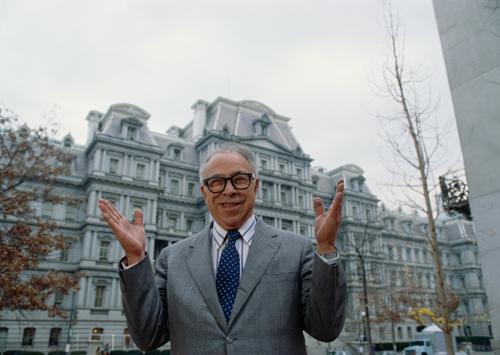
Art Buchwald reads from and discusses his book "Laid Back in Washington"
Feb. 1982 Discussing the book "Layed back in Washington" and interviewing Art Buchwald.