

-
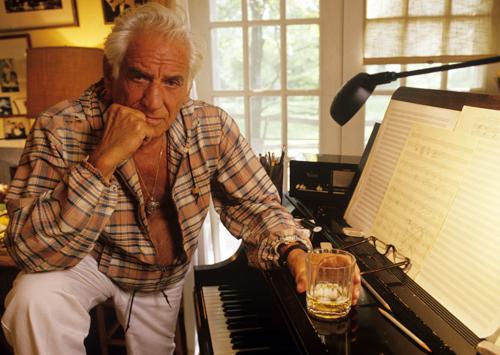
Leonard Bernstein discusses his career, music, and education
Feb. 1, 1985 Leonard Bernstein discusses his career as a composer along with his thoughts on American culture, musical theater, Black music, classical music, and education; music is played throughout the program including songs from Marc Blitzstein's play "The Cradle Will Rock."
-

Allan Berube discusses his book "Coming Out Under Fire"
Apr. 30, 1990 The military's attitude toward gay people is what's covered in Allan Berube's book, "Coming Out Under Fire: The History of Gay Men and Women in World War II." For some people, hiding their true identity was necessary because they would have been discharged by the military.
-
Carl Smith discusses his book "Urban Disorder and the Shape of Belief: the Great Chicago Fire, the Haymarket Bomb, and the Model Town of Pullman"
Feb. 27, 1995 Non-fiction author Carl Smith discusses his latest work which focuses on the history of Chicago. Topics covered include labor movements, specifically the Pullman strike and the 1970's case trial with the Chicago Seven.
-
Presenting a montage of women's liberation materials
Presenting a women's liberation program
-
Tribute and memorial to actress Geraldine Page
Jun. 17, 1987 Tribute to Geraldine Page
-
Studs Terkel discusses his life and career with Norman Pellegrini
Mar. 1, 1994 Norman Pellegrini interviews Studs Terkel to discuss his life and career as a radio personality. Studs recalls a specific moment walking through the streets of Chicago and hearing blues music coming through the window of someone’s home. As Studs recalls, this moment is one that jump-started his interest in music and radio and inspired him to leave his life of studying law and move into the unknown of music radio. Technical engineer and producer of the show, Jim Unrath, joins the conversation to recount previous interviews and programs of Studs'.
-
Morris Dees discusses his latest book "A Season for Justice: the Life and Times of Civil Rights Lawyer Morris Dees"
May. 31, 1991 Southern Poverty Law Center founder and attorney Morris Dees discusses his career and pursuit of ending racism. Some cases associated with Morris Dees include NAACP v. Dothard and Person v. Carolina Knights of the Ku Klux Klan.
-
James Dapogny discusses jazz and the many faces of the genre
Aug. 14, 1984 Bandleader, jazz musicologist and composer James Dapogny discusses his work in reviving the sound and art of jazz. Dapogny's work is mainly associated with his group James Dapogny's Chicago Jazz Band and his career in publishing lost works of Ferdinand "Jelly Roll" Morton.
-
Garry Davis discusses his book "Ready or Not: World Government"
Jun. 18, 1985 Garry Davis, an international peace activist and founder of the World Government Authority, discusses his philosophy on world peace and his stance on being a world citizen.
-
Wild Bill Davison discusses his upcoming show at the Jazz Showcase
Apr. 24, 1984 American jazz cornet player Wild Bill Davison known for his wild ways, discusses his career in jazz music and life in Chicago. Davison rubbed elbows with all the Chicago bigwigs from Al Capone to jazz legends such as Fats Waller.