

-

Angela Pieroni and Dr. Bertram Carnow discuss air pollution
1970 A homemaker, Angela Pieroni, has spent eight years fighting for the rights of everyone to breath clean air. Pieroni explains she's done with just complaining and being brushed aside. She wants to see national legislation against air pollution. Dr. Bertram Carnow said he's not sure how long we'll be around as a species. Carnow explained that perhaps two or three million people will have to die before authorities take air pollution seriously.
-
Frederick Wiseman discusses public welfare
Feb. 20, 1976 Discussing public welfare and interviewing Frederick Wiseman, director of the documentary film, "Welfare."
-
Professor Ali Irani [pseudonym name to protect his identity] talks about the regime of the Shah [Mohammad Reza Pahlavi]
Nov. 8, 1978 Professor Ali Irani (pseudonym name) is a Humanities professor at a recognized midwest university that discusses the regime of the Shah, Mohammad Reza Pahlavi. Includes a fiften minute interview with an American couple, Luis and Joan Smiley, that talks about their experience with students protesting the regime in Kentucky, Louisiana.
-
Dr. Beatrice Tucker, Sheri Daniels, and Barbara Brasa discuss issues of training and legality in the midwifery profession
Mar. 15, 1978 CONTENT WARNING: This conversation has the presence of outdated, biased, offensive language. Rather than remove this content, we present it in the context of twentieth-century social history to acknowledge and learn from its impact and to inspire awareness and discussion.
-
Vivian Adams discusses the beliefs of the Mormon Church regarding the Equal Rights Amendment (ERA)
Jun. 15, 1982 Vivian Adams discusses the reasons behind the Mormon Church's stance against the Equal Rights Amendment (ERA). The discussion includes the beliefs of the Church regarding the roles of men and women, as well as the history and music of the Mormon Church.
-
David Attenborough discusses the book and television documentary "Life On Earth"
Oct. 29, 1981 Biologist, natural historian, and author David Attenborough discusses his book and upcoming television series “Life on Earth.” The book, show, and this interview focus on discussing the evolution of life.
-
Garry Wills discusses his book "Inventing America: Jefferson's Declaration of Independence"
Jul. 2, 1981 Discussing the book, "Inventing America: Jefferson's Declaration of Independence," and interviewing the author Garry Wills.
-
Maya Angelou discusses her early life and African American culture and people
Apr. 1, 1960 Angelou discusses: her early life; her international travels; dancing; blues and jazz music; and the book "Youngblood" by John Oliver Killens. In this program "In the Evening (When the Sun Goes Down)" and "Joe Turner No. 2 (Blues of 1892)" by Big Bill Broonzy, "I Ain't Gonna Pick No More Cotton" by Sam Lightnin' Hopkins is played, as well as other musical selections.
-
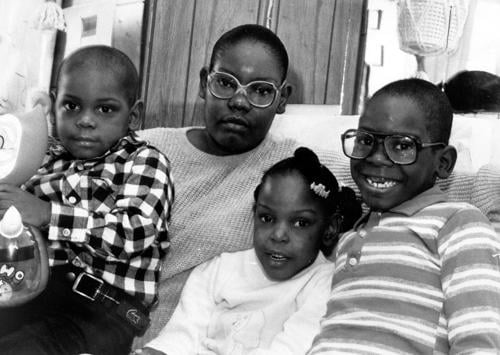
Jonathan Kozol reads from and discusses his book "Rachel and Her Children: Homeless Families in America"
Jan. 16, 1989 The people living at the Martinique feel as though they are a toxic waste substance being compressed in the density living quarters, explains Jonathan Kozol. Rachel of Kozol's book, "Rachel and Her Children: Homeless Families in America" said people don't want to see them. Refering to the song, "We are the World, " Rachel also asks how come people care so much for people they can't see? "We are the world, " says Rachel. "We live here, too".
-
A conversation with Nora Ephron
May. 6, 1983 The journalist and writer discusses Heartburn, her first novel, which, according to Terkel, is best read out loud. He and Ephron take turns readings their favorite passages and analyzing the characters. The novel was later made into a film of the same name starring Meryl Streep and Jack Nicholson.*Please note: some sections have been edited out from the original recording due to copyright considerations