

-

Jessica Mitford discusses her book "Kind and Usual Punishment: The Prison Business"
Sep. 14, 1973 Jessica Mitford an English born author, investigative journalist, and civil rights activist discusses her book "Kind and Usual Punishment: The Prison Business,". Ms Mitford and Studs discuss her finding that prisoners were used as test subjects for drug trials and other medical research, and slave labor. Ms Mitford's book makes the argument that prisons are a governments means to making money from the prisoners they have punished. They speak about reform needed in the laws and decriminalization of many things and the abolishing of prison altogether. Ms.
-
N. Scott Momaday discusses his book, "House Made of Dawn," with Studs Terkel
1970 A discussion about the book, "House Made of Dawn," awarded the Pulitzer Prize for Fiction in 1969. N. Scott Momaday reads from his book.
-
-
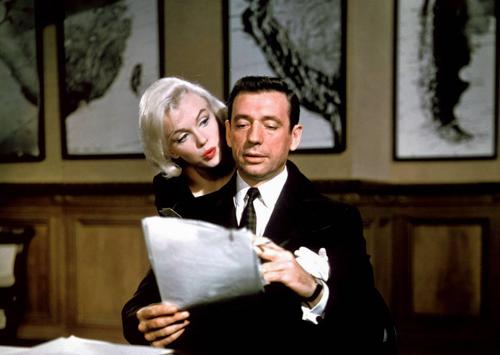
Yves Montand ; part 1
1962 Interviewing Yves Montand in Paris : Studs Terkel in France (part 1).
-
Henry Fonda and John Houseman discuss the play "Clarence Darrow"
Henry Fonda and John Houseman talk about working with one another on "Clarence Darrow: A One-Man Play". Houseman is in awe of Fonda's portrayal of Clarence Darrow, explaining that in the play, the audience can really see the growth of Clarence Darrow, from a young lawyer to an experienced, wise one. Fonda talks about the opening scene when Darrow recalls his father talking to him when he was a young boy. Fonda reflects on times when his father talked to him. Fonda recalls being taught not to hate individuals.
-
Jean Davies discusses life and culture in Australia ; part 1
Aug. 10, 1966 Australian journalist Jean Davies discusses life and culture in Australia.
-
Harry Belafonte discusses jazz and folk music ; part 2
Jan. 6, 1955 The conversation continues with Belafonte talking about his album, "Belafonte Sings of the Caribbean". The songs, explained Belafonte, were both reflections of his childhood and things he was exposed to as an adult. Belafonte believed both Louis Armstrong and Jack Teagarden played important roles in jazz music.
-
William Stringfellow discusses politics, race, and theology
Interviewing William Stringfellow, American lawyer and activist. He discusses various topics including religion, social issues, and activism. Includes an interview with Cora Weiss. Content Warning: This conversation has the presence of outdated, biased, offensive language. Rather than remove this content, we present it in the context of twentieth-century social history to acknowledge and learn from its impact and to inspire awareness and discussion.
-
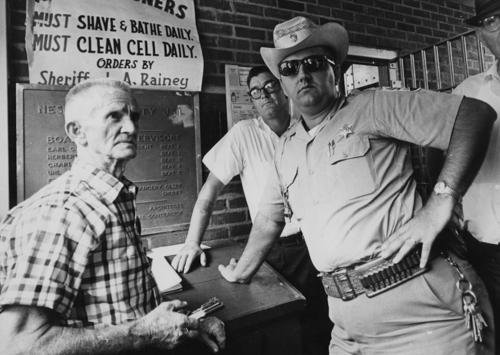
William Bradford Huie discusses his book "Three Lives for Mississippi"
May. 20, 1965 Author William Bradford Huie discusses his book "Three Lives for Mississippi;" reads passages from book.
-
Dennis Smith discusses his experiences as a firefighter in New York City
Firefighter and writer, Dennis Smith, shares some of the encounters he's had as a firefighter and discusses his book and magazine based on these experiences.