

-

Sir Georg Solti talks with Studs Terkel
Feb. 1, 1995 Studs engages the former Chicago Symphony Orchestra conductor, Sir Georg Solti, in a wide-ranging conversation about his life and career. From his early studies in Budapest with Béla Bartók, his string of good-luck opportunities before, during, and after World War II, meeting Toscanini in Lucerne, and starting on top conducting in Frankfurt, London, and finally Chicago. He discusses his many German and European musical influences and contemporaries, and stresses the importance of education, arts funding, and hard work.
-

-
-
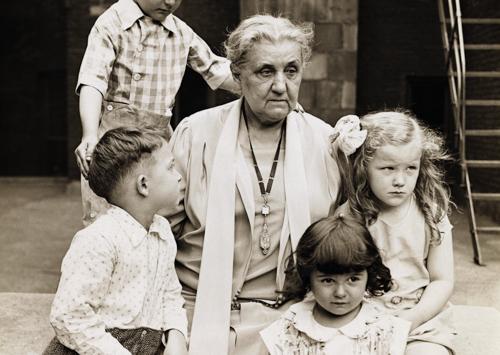
Jessie Binford discusses Hull House and Chicago ; part 1
1968 Jessie Binford discusses Chicago and Hull House
-
-
Berthold Spangenberg talks with Studs Terkel commenting and reflecting on Munich, Germany
1968 While in Munich, Studs speaks with Berthold Spangenberg about postwar cultural reconstruction of Germany through the lens of Spangenberg's mid-sized publishing house. Spangenberg notes international influences and regional variances among German cities and the significance of a divided Berlin. Terkel ends with musings on his travels in Germany.
-
James Spigelman discusses his book "The Nuclear Barons"
Sep. 23, 1981 Discussing the book, "The Nuclear Barons," with the author James Spigelman.
-
Actor Victor Spinetti talks with Studs Terkel about "Oh, What A Lovely War!" ; part 1
1962 English actor, director and writer Victor Spinelli discusses several aspects of Joan Littlewood's production of "Oh, What A Lovely War!", including the origin of the songs, slides and quotations used in the musical. The two also discuss the World War War I, blind patriotism and what an Italian drill sergeant might sound like. Includes as a reading of "Watchers Along the Mall" by Spinetti.
-
Actor Victor Spinetti talks with Studs Terkel about "Oh, What A Lovely War!" ; part 2
1962 Part Two of this engrossing interview sees Spinetti elaborate on characters from Joan Littlewood's production of "Oh, What A Lovely War!" in England. Includes a reading of "The English Seaside in High Summer" and an a capella performance of the musical's Act I closer, "Good-bye-ee!", both by Spinetti.
-
Reporter and author John L. Spivak talks with Studs Terkel ; part 1
1967 Studs and Spivak talk all things labor: unions, strikes, and spies. Spivak's work reporting on Fascism and Socialism is also discussed.