

-

Fela Sowande discusses his career and Nigerian music ; part 3
Jul. 3, 1962 Fela Sowande discusses his career, music, and compares African culture and music to Western culture and music. Includes two songs that are sung by tenor Max Worthley. Includes a clip of a Nigerian Youth song. Includes performance by a Nigerian skiffle band. Sowande was inspired by [Anthony Gregascoigne], an English poet he met in England.
-
Fela Sowande discusses his career and Nigerian music ; part 1
Jul. 3, 1962 Fela Sowande discusses his career, Nigerian music, and compares African culture and Western culture. Includes clips of musical performances by Highlife musicians and orchestra. Music: A clip of high-life music, "Folk Symphony for Full Orchestra."
-
Fela Sowande discusses his career and Nigerian music ; part 2
Jul. 3, 1962 Fela Sowande discusses his career, different types of Nigerian and African music, the Yoruba people, and religion. Includes clips of an African Yoruba pagan hymn "Oyigiyigi," a Christian version of that hymn, and an organ version of that hymn. Includes Sowande's song "Roll de Ol' Chariot." Quotes a poem by [Anthony Gregascoigne], an English poet he met in England.
-
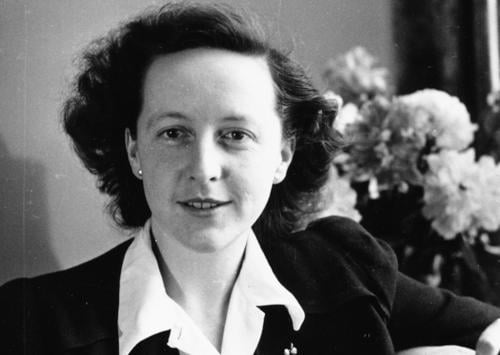
Interview with Lady Barbara Ward Jackson
1960 Discussing her book "Spaceship Earth,"and the ideas of the global village, inequality, and the Adlai Stevenson Institute of International Affairs.
-
Interview with Larry Collins and Dominique Lapierre
Jun. 11, 1965 Discussing the book "Is Paris burning?" and interviewing the authors Larry Collins and Dominique Lapierre.
-
Harry Jackson discusses his bronze cowboy sculptures
Mar. 19, 1981 Harry Jackson discusses his career as a singer, painter, and sculptor and the inspiration he took from fellow contemporaries and Italian sculpture. Between 10:00 and 11:00, Jackson remarks that Mary Wright "from the south fork of the Shoshone River" is in the studio with them.
-
-
Dr. C. L. R. James discusses his book "Black Jacobins"
1970 Trinidadian historian Dr. C.L.R. James discusses his book "The Black Jacobins: Toussaint L'Ouverture and the San Domingo Revolution." The book was originally published in 1938. At the end of the interview, the song "Voodoo American: Bya Bulako" by Michel LaRue is played (00:46:26-00:51:
-
Terkel comments and presents musical performance of the Burgundian Consort
May. 10, 1984 Presenting music with the Burgundian Consort; , Warren Luther, John Pellegrin and Albert Rawlins, Ronald Renbeck, Richard Simons.
-